
Netanyahu scrambles to avoid snap elections amid war on Iran
 5 Min Read
The Israeli PM races to pass a budget and secure his coalition's survival as the US-Israeli war on Iran enters its fifth week.
-
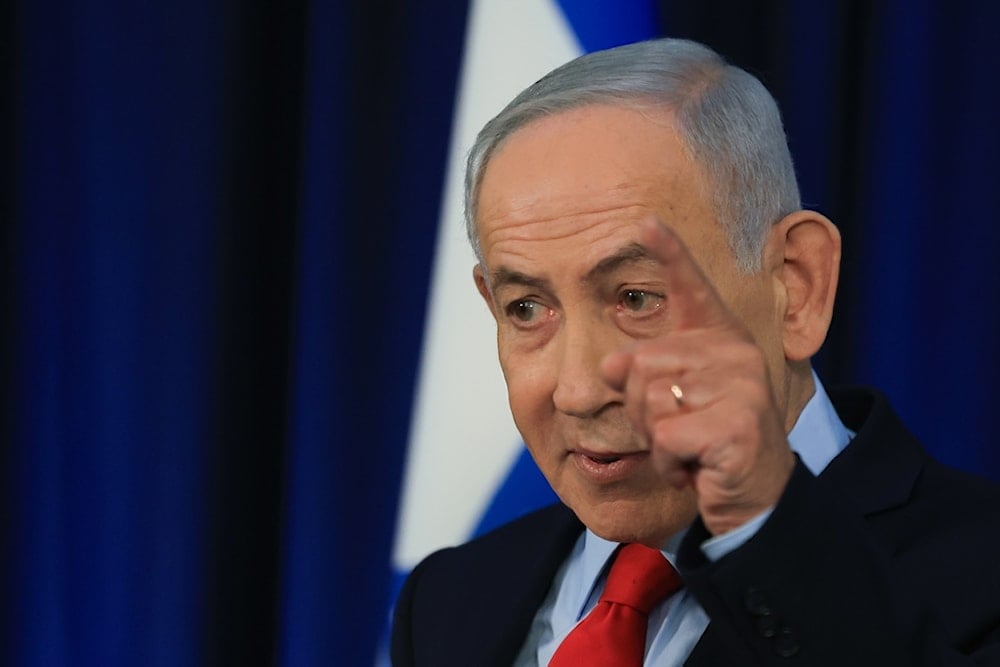
Israeli Prime Minister Benjamin Netanyahu speaks during a press conference in occupied al-Quds, Thursday, March 19, 2026 (AP)
Israeli Prime Minister Benjamin Netanyahu is racing to pass a budget and stave off early elections he would likely lose, with the war on Iran so far doing little to improve his standing in the polls nearly four weeks into the US-Israeli aggression.
In the war's first days, Netanyahu's camp saw a chance for his right-wing coalition to capitalize on the opening salvo that assassinated Sayyed Ali Khamenei by holding elections ahead of the expected October date, according to a source familiar with Netanyahu's political strategy.
One way to force snap elections would be to let parliament fail to pass the budget by March 31, which under Israeli law would trigger a vote within 90 days. As US-Israeli aggression killed a host of top Iranian figures, some of Netanyahu's confidants publicly floated the idea of a June vote.
But nearly four weeks into a war that has so far failed to achieve its stated objective of regime change in Iran, Netanyahu is now looking to stave off early elections, three members of his government told Reuters.
A war that brought no political gain
For Netanyahu, the war has helped him pivot attention away from Gaza and toward his joint campaign with the US against Iran, where Israeli consensus is the strongest. Surveys have shown wide support among Israelis for a war that Netanyahu says is meant to eliminate an existential threat.
But when it comes to votes, election polls show a picture largely unchanged since October 7, 2023, when the region was plunged into turmoil, following aggression on Gaza, which left Netanyahu's security credentials in tatters.
Polls consistently show around 40 percent of voters sticking with Netanyahu's coalition of nationalist and religious parties, 40 percent backing opposition parties, and a swing vote so far not moving to Netanyahu, said Gideon Rahat, a political scientist at the Hebrew University in al-Quds.
Even if Israelis rally in support of the war's goals, they are growing weary as it drags on with no decisive end or diplomatic resolution in sight, after a shorter round of fighting in June, Rahat said.
A poll published by the Times of Israel on March 19 showed Netanyahu's Likud party would win 28 of the Knesset's 120 seats, down from 34 at present. While Likud would be the largest party, its coalition would fall short of a majority, securing only 51 seats.
Buying time with budget maneuvers
Netanyahu's effort to avoid an early contest has included allocating funds to political allies to secure a majority vote for the budget in parliament and rushing it through the chamber's Finance Committee to meet next week's deadline.
With defense spending climbing sharply due to the war, there is less money available to satisfy demands from key constituencies whose backing Netanyahu needs in parliament, including ultra-Orthodox Jewish parties that left his government in 2025.
Those parties had threatened to vote against the budget if legislation was not first finalized, exempting ultra-Orthodox from mandatory military service, an issue that has plagued Netanyahu's alliance with them since 2023. But they appear to have backed down after Netanyahu's coalition allocated around five billion shekels for ultra-Orthodox schools this month.
Vladimir Beliak, an opposition member who sits on parliament's Finance Committee, said that by approving those funds, Netanyahu's government has opted for "coalition survival over fair distribution of resources."
Economic costs mount
With schools shut and workplaces only partially open, the war is costing the Israeli economy five billion shekels ($1.6 billion) per week, according to Finance Ministry estimates. Netanyahu's government has also had to approve an additional 32 billion shekels for defense costs since the war began.
Adding to Netanyahu's political challenges is his long-running corruption trial on charges of fraud, bribery, and breach of trust, which he denies. Netanyahu, with support from US President Donald Trump, has appealed to Israeli President Isaac Herzog for a pardon. A mid-trial pardon would be unprecedented, and the Israeli judicial system has argued against it.
As the war enters its fifth week, Netanyahu's strategy appears to be one of delay. "His strategy is buying time," said Rahat. With the budget deadline looming and polls showing no electoral boost from a war that has so far failed to deliver its promised objectives, Netanyahu faces a political future as uncertain as the war he helped unleash.


