
Nine European states, Ukraine launch joint missile defense coalition
 2 Min Read
Ukraine and nine European countries signed a joint declaration in Paris to build shared anti-ballistic missile capabilities, as Zelensky met allies to press for continued support against Russia.
-
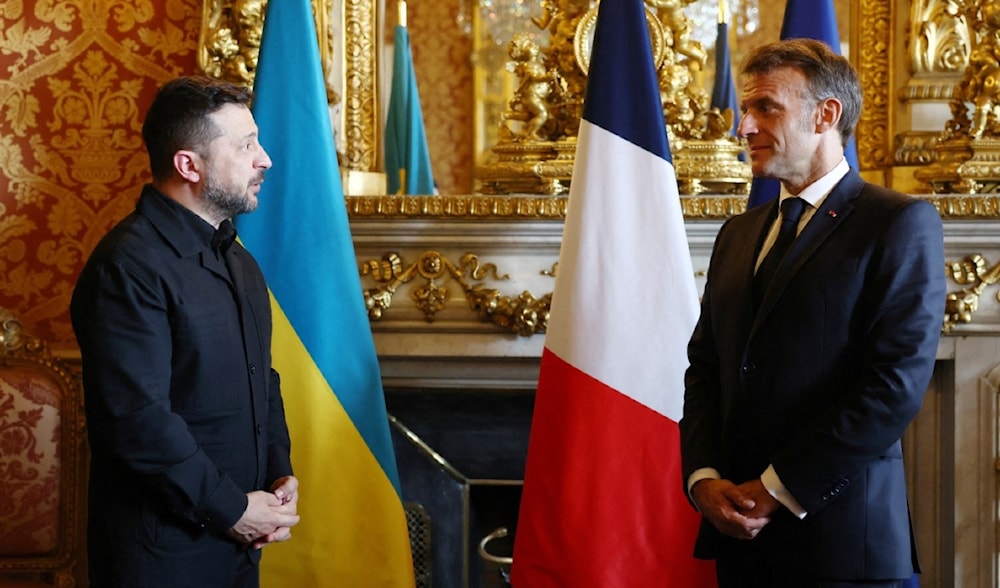
France's President Emmanuel Macron talks with Ukraine's President Volodymyr Zelensky after the Integrated Anti-Ballistic Missile Coalition meeting in Paris on July 13, 2026 (POOL / AFP)
Nine European countries and Ukraine announced a new coalition on Monday to build shared anti-ballistic missile capabilities, describing the effort as "purely defensive".
The joint declaration, issued in Paris, was signed by Denmark, France, Germany, Italy, the Netherlands, Norway, Spain, Sweden, the United Kingdom, and Ukraine.
It commits the group to pooling defense industrial capacity, research, and operational experience rather than pursuing separate national programs. "By bringing together our defense industrial base, our research, and our operational experience, we aim to build a shared anti-ballistic missile capacity for Europe," the statement said.
Ukrainian President Volodymyr Zelensky was in Paris for a meeting of Kiev's allies, part of a broader push to reaffirm military backing for Ukraine and increase pressure on Russia as the war enters its fifth year.
At least 25 heads of state attended the summit, with some remaining in France for the July 14 military parade marking Bastille Day, which will spotlight support for Ukraine this year.
Framing, function
The declaration states the coalition is aimed at building "a global solution of integrated missile defence architecture" and insists the initiative is "not against any people, but in defence of our own."
That language is standard among Western states seeking to present new military buildups as non-provocative, even as the coalition is explicitly built around countering Russian ballistic and cruise missile capabilities.
The statement singles out Ukraine's "unique experience" defending against sustained Russian missile strikes as a core asset for the coalition, positioning Kiev as a knowledge contributor rather than only a recipient of Western military aid.
Step beyond existing NATO defenses
The new coalition sits on top of established NATO missile defense infrastructure, including US Aegis Ashore installations in Romania and Poland and existing Patriot and SAMP/T deployments across the continent.
The move also folds Ukraine further into European security structures at a moment when its formal accession to NATO or the EU remains unresolved.


