
No plans for IAEA to inspect nuclear sites damaged from war: Baghaei
 4 Min Read
Iran denies any meeting with IAEA Director General Rafael Grossi on the agency's inspections and vows to continue operating under its existing safeguards procedures in line with the NPT.
-
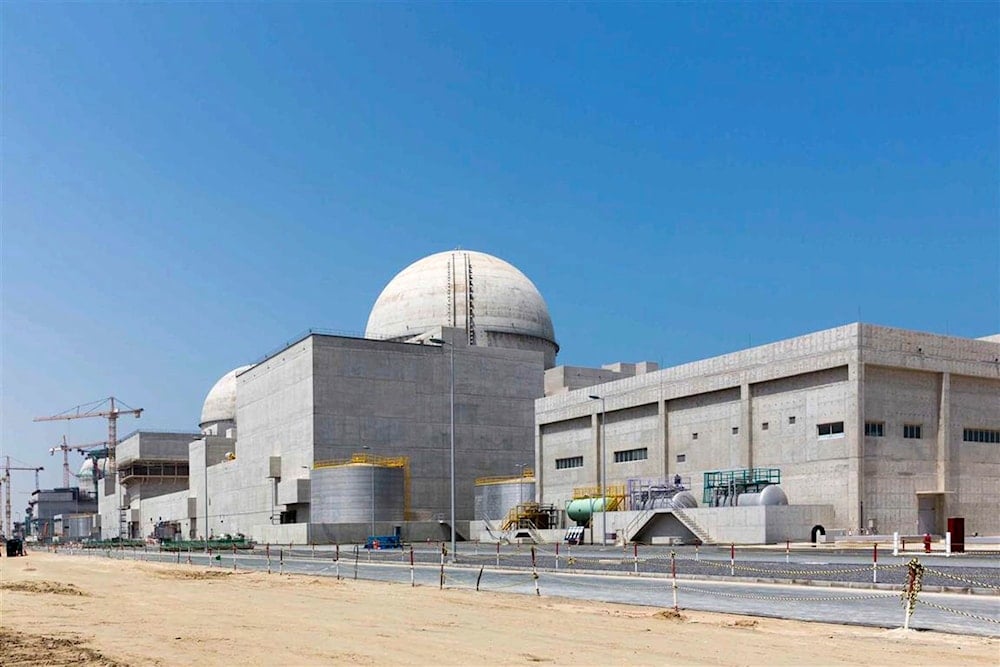
This undated photograph released by the United Arab Emirates' state-run WAM news agency shows the under-construction Barakah nuclear power plant in Abu Dhabi's Western desert (AP)
Iran’s Foreign Ministry spokesperson has firmly ruled out any visit by International Atomic Energy Agency (IAEA) inspectors to the country’s nuclear facilities that were recently damaged, while also dismissing US assertions regarding new nuclear negotiations, Mehr reported.
Speaking at his weekly press briefing on Tuesday, spokesperson Esmaeil Baghaei stated that Tehran has no program or mechanism in place for IAEA inspections of sites affected by US and Israeli aggression.
He further clarified that no meeting has been held with IAEA Director General Rafael Grossi on the matter and that Iran will continue to operate under its existing safeguards procedures in line with the Nuclear Non-Proliferation Treaty (NPT).
“There is currently no protocol for such inspections,” Baghaei said, responding to questions about the damaged facilities, rejecting recent US claims that nuclear talks were resuming and that inspectors might be deployed to Tehran, calling those assertions “unfounded".
Turning to the latest IAEA Board of Governors resolution, Baghaei thanked countries that “acted responsibly” by refusing to side with the United States and European states, namely Russia, China, and Niger. Conversely, he criticized nations that voted in favour, stating that “such double standards are unacceptable.”
Europe marginalized itself from talks with Iran: Baghaei
Baghaei has accused European parties of showing no genuine effort and adopting an irresponsible stance during recent discussions on the so-called snapback mechanism, saying they have effectively marginalized themselves from Iran-related negotiations over the past two years.
Baghaei advised European nations to change their approach if they seek a meaningful role in the process, stressing that their position will not improve through complaints alone and that they must revise their policy toward Iran and regional developments.
Responding to France’s claim that it has a role in Iran’s nuclear program and should be part of any final agreement, Baghaei dismissed the remarks as “empty talk from a position of irrelevance.”
He also pointed out a pattern among some European states of sidelining themselves while simultaneously attempting to obstruct any emerging diplomatic process.
The spokesman singled out France, urging Paris to adopt a more constructive stance toward regional developments and to cease making negative statements if it seeks influence in the negotiations.
Full discretion over assets
On the issue of Iran’s frozen overseas assets, the spokesperson underscored that Tehran enjoys full discretion over how it disposes of its unfrozen assets, asserting that no restrictions apply to their use.
"Iran now has access to and control over its previously frozen funds," he said, stressing, "Iran is determined to move forward in pursuit of its national objectives."
Addressing the circumstances surrounding the aggression against Iran, Baghaei stated, "We possess evidence indicating that certain countries in the region were involved in the aggression against Iran."
Washington obligated to halt Israeli aggression on Lebanon
Baghaei also addressed the situation in Lebanon, noting that the commitment to ending the war in Lebanon is an integral part of the Memorandum of Understanding.
He stressed that there is no justification for continued Israeli attacks on Lebanese territory, adding that Washington is obligated to pressure "Israel" to halt its strikes in southern Lebanon, further noting the Israeli war on Lebanon as a "complex issue", with final arrangements expected to be reached soon.
Cooperation with IAEA to resume as usual: Baghaei
Earlier on June 22, Iranian Foreign Ministry spokesperson Esmail Baghaei confirmed that Iran's cooperation with the IAEA "will continue as usual," in line with parliamentary and Supreme National Security Council decisions.
However, informed sources told IRNA that Tehran did not negotiate on the nuclear file during talks in Switzerland and accepted no new commitments.
The sources added that any formal nuclear talks under the Islamabad memorandum remain conditional on an end to the war between Iran and the United States.
Baghaei had previously clarified that the US and Iranian delegations merely exchanged positions during the quadrilateral meeting, stressing this did not amount to formal negotiations.


