
Pakistan’s interior minister arrives in Tehran amid US-Iran talks
 3 Min Read
Pakistan’s Interior Minister Mohsin Raza Naqvi arrives in Tehran as Islamabad mediates between Iran and the US, while Tehran discusses joint management of the Strait of Hormuz with Oman.
-
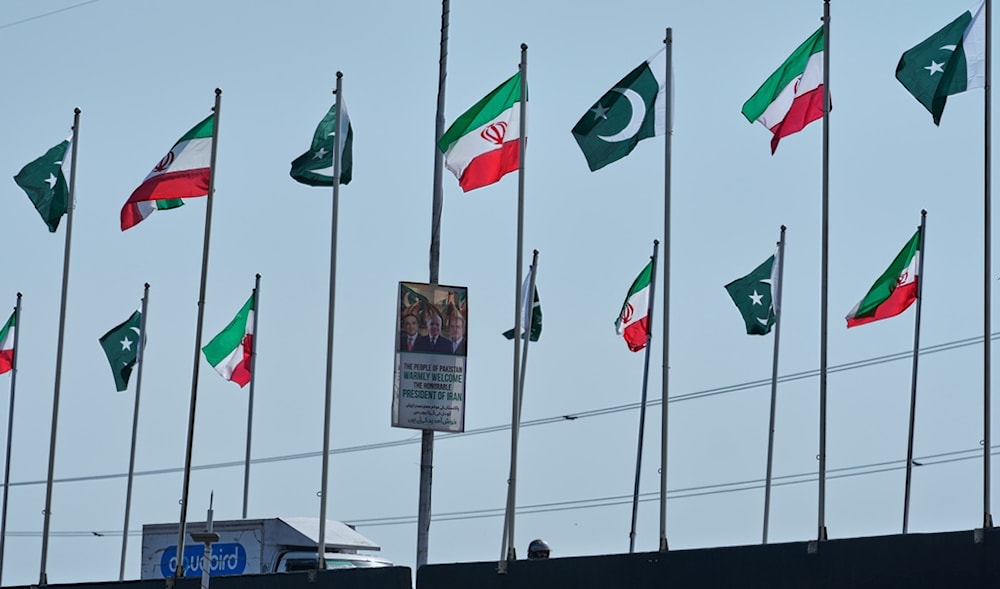
The welcoming billboard is displayed alongside an overhead bridge in Islamabad, Pakistan, on Tuesday, June 23, 2026. (AP)
Pakistan’s Interior Minister Mohsin Raza Naqvi arrived in Tehran on Tuesday for talks with Iranian officials, Mehr News Agency reported. The visit comes as Pakistan resumes mediation efforts between Iran and the United States to end the war and reach an agreement in the region.
Meanwhile, Tehran is holding talks with the Sultanate of Oman on an agreement for the joint management of the Strait of Hormuz, free from foreign interference.
The talks address the sovereignty of coastal states and measures to ensure their security, future arrangements for managing the strait, the establishment of a joint coordination center between Iran and the Sultanate of Oman to oversee maritime traffic, and the collection of necessary information from vessels transiting the Strait of Hormuz between the Sea of Oman and the Gulf in both directions.
Tehran maintains Hormuz sovereignty
The Islamic Republic of Iran maintains that the Strait of Hormuz will remain closed until the United States implements Tehran’s conditions outlined in the Islamabad memorandum of understanding.
Rather than returning to the conditions that existed before the war, Tehran has sought a new framework governing navigation through the Strait, with Iranian officials insisting that regional states should have the central role in securing and managing the waterway.
From Tehran's perspective, the continued sensitivity of oil prices to developments surrounding Hormuz demonstrates the strategic leverage the waterway provides: Washington may maintain sanctions and military pressure on Iran, but prolonged instability in one of the world's most important energy corridors carries substantial economic costs well beyond Iran itself.
Iran's Hormuz leverage pushes oil higher
This comes as oil prices climb as uncertainty surrounding the reopening of the Strait of Hormuz persisted amid stalled US-Iran negotiations, Reuters reported, citing market data.
Brent crude rose 5% in two days to around $88 a barrel, its highest level since July 31. Prices are now nearly 25% above the near-four-month lows recorded in early July.
"We're now in a bit of a Mexican standoff, if you'd like, in terms of who blinks first," said Tony Sycamore, a market analyst at IG.
"This is going to be almost a war of attrition now," he said. "You probably can see the (oil) market sitting around the $75 to $95 range while we wait to see who blinks first."
Read more: Any op. to seize Hormuz would be 'lengthy, costly and deadly': NBC


