
Pakistan welcomes ceasefire extension as US cancels Vance visit
 2 Min Read
Pakistan thanks US President Donald Trump for extending the ceasefire with Iran, while Washington cancels Vice President JD Vance’s planned visit amid stalled negotiations.
-
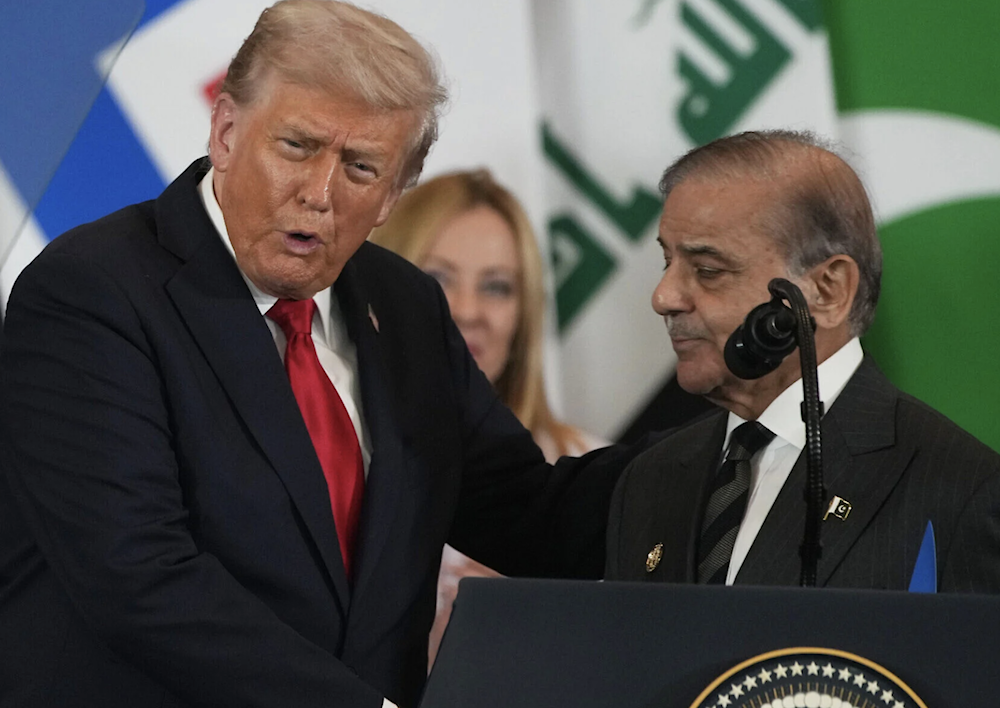
US President Donald Trump shakes hands with Pakistan's Prime Minister Shehbaz Sharif during the Gaza International Peace Summit in Sharm el-Sheikh, Egypt, October 13, 2025. (AP)
Pakistani Prime Minister Shehbaz Sharif expressed appreciation to US President Donald Trump for extending the ceasefire between Washington and Tehran, following a request from Islamabad.
Sharif voiced hope that both sides would adhere to the truce, stressing that maintaining the ceasefire is essential to preserving regional stability.
On my personal behalf and on behalf of Field Marshal Syed Asim Munir, I sincerely thank President Trump for graciously accepting our request to extend the ceasefire to allow ongoing diplomatic efforts to take their course.
— Shehbaz Sharif (@CMShehbaz) April 21, 2026
With the trust and confidence reposed in, Pakistan…
He also reaffirmed Pakistan’s commitment to ongoing diplomatic efforts aimed at resolving the war, emphasizing the need for a comprehensive agreement that would bring a lasting end to the war.
US suspends Vance visit amid uncertainty
In parallel, the White House announced that US Vice President JD Vance’s planned visit to Islamabad will not take place as scheduled.
A US official stated that the decision follows Trump’s announcement that Washington is awaiting a “unified proposal” from Iran before proceeding with further talks.
The official added that any updates regarding future face-to-face meetings would be communicated at a later stage.
Trump extends ceasefire, cites Iranian divisions
US President Donald Trump announced on Tuesday the extension of the ceasefire with Iran, while simultaneously maintaining a blockade and keeping US forces on high alert, in what appears to be a continued escalation despite ongoing diplomatic efforts.
In his statement, Trump claimed that the Iranian government is “seriously fractured,” and said the decision to delay further military action came following requests from Pakistan’s Field Marshal Asim Munir and Prime Minister Shehbaz Sharif to allow additional time for negotiations.
In contrast, Iran has informed the American side, via the Pakistani mediator, that its delegation will not travel to Islamabad on Wednesday, Tasnim News Agency reported on Tuesday.
The agency added that Iran had agreed on the ceasefire based on its 10-point ceasefire proposal, which the US initially accepted, as explicitly confirmed by Pakistan.
However, in the days that followed, the US began to backtrack on its commitments, including enforcing a ceasefire in Lebanon, which significantly complicated the diplomatic track.
Tasnim added that during the first round of negotiations in Islamabad, the United States had excessive demands, which, in essence, violated Iran's proposal.


