
Iran-US memorandum will shape future foreign relations: Pezeshkian
 3 Min Read
Iranian President Masoud Pezeshkian says the Iran-US memorandum will become the cornerstone of Tehran's foreign policy, as Iranian officials reaffirm readiness to respond to any renewed US aggression.
-
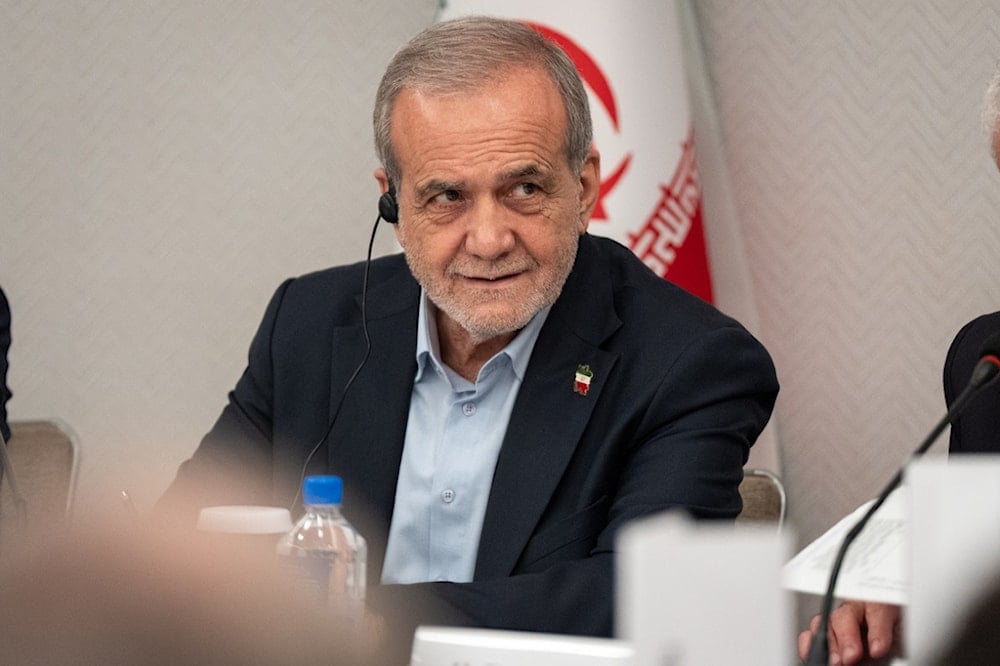
President of Iran Masoud Pezeshkian takes questions from the media during a news conference in New York on Sept. 26, 2025. (AP Photo/Angelina Katsanis)
The Iranian President Masoud Pezeshkian stated that the memorandum of understanding signed between Iran and the US was the result of the foresight of the Iranian Shura Council members.
"The memorandum that was signed is the result of the collective wisdom of Shura Council's members, and all members are in sympathy with it," Pezeshkian said in a post on X. "I believe this memorandum will be the center of gravity of our foreign relations in the future".
He continued, saying, "We must strive to compel the enemy to remain committed to what it has signed. The security of the country, the region, and our allies will be enhanced by this memorandum".
تفاهمنامهای که امضا شد حاصل خرد جمعی اعضای شعام بود و همه اعضا با آن همدلاند. باور دارم این تفاهمنامه مرکز ثقل روابط خارجی ما در آینده خواهد بود. باید بکوشیم دشمن را وادار کنیم به آنچه امضا کرده پایبند بماند. امنیت کشور، منطقه و همپیمانان ما با این تفاهمنامه ارتقا مییابد.
— Masoud Pezeshkian (@drpezeshkian) August 2, 2026
Read more: Iran rejects Trump claims of Strait of Hormuz deal: Fars
Iran warns US aggression will face decisive retaliation
On the militaristic level, Iranian officials have made clear that the Islamic Republic will not take any US aggression sitting down.
The acting Iranian Defense Minister, Brigadier General Majid Ibn al-Reza, stated on Sunday that the US is conducting psychological operations and cyber warfare against Iran, stating that the US threats are being taken seriously and that Tehran is ready to retaliate.
"We will not be surprised, and we will not stand idly by. Rather, we will use the threat as a basis to raise our level of readiness, strengthen our deterrence capabilities, and develop our power," Ibn al-Reza stated in a social media post.
Separately, Iran's National Security and Foreign Policy Committee of Iran's Parliament, Ebrahim Rezaei, said on Saturday that Iran's response will go beyond the limits of the Gulf region.
"Our response to any potential enemy attack will not be limited to the Persian Gulf region," he wrote in an X post. "We will respond to all enemy bases and to the origin of the attacks from anywhere."
Iranian officials have repeatedly warned that, despite the signing of the memorandum, Washington has continued pursuing pressure against the Islamic Republic through military threats, hostile rhetoric, and regional escalation.
Tehran has maintained that the agreement can only contribute to regional stability if the United States abandons coercive policies and fully complies with its commitments, while reaffirming that Iran's armed forces remain prepared to safeguard the country's sovereignty and respond to any violation of the memorandum.


