
Qatar, Iran discuss de-escalation efforts, mutual ties in phone call
 3 Min Read
Qatar’s PM reaffirms support for de-escalation in a call with Iran’s Ali Larijani, amid unrest and rising US interference in the Islamic Republic.
-
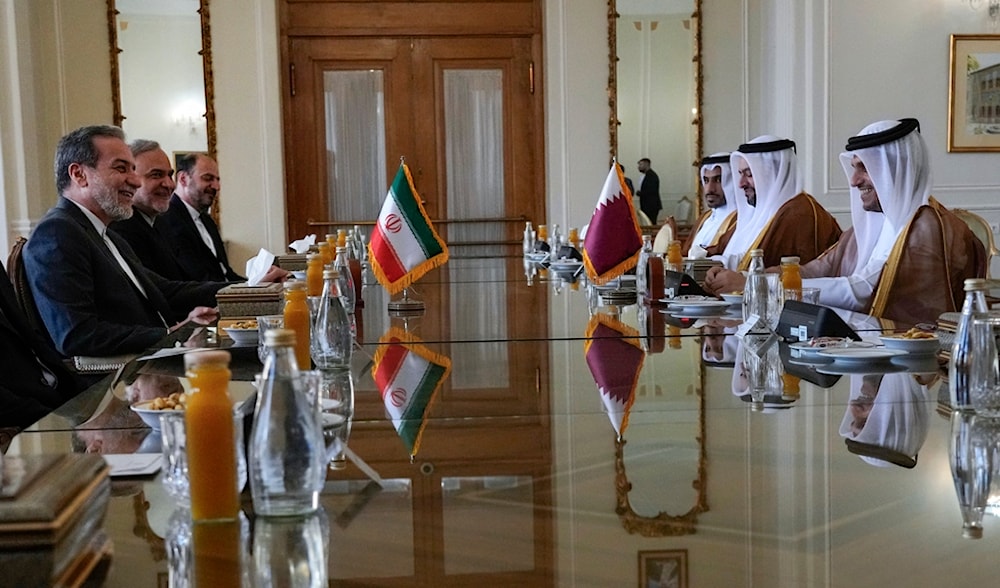
Iranian Foreign Minister Abbas Araghchi, left and Qatari Prime Minister and Foreign Minister Sheikh Mohammed bin Abdulrahman Al Thani, right, and their delegations meet in Tehran, Iran, Monday, Aug. 26, 2024. (AP)
Qatar’s Prime Minister Mohammed bin Abdulrahman Al Thani has reaffirmed Doha’s support for all efforts aimed at reducing regional tensions, according to a statement issued Tuesday by the Qatari Foreign Ministry.
The remarks came during a phone call between Al Thani and the Secretary-General of Iran’s Supreme National Security Council, Ali Larijani. The two officials discussed Qatar-Iran cooperation, ways to strengthen bilateral ties, the latest developments in the region, and several topics of mutual interest.
During the call, the Qatari Prime Minister reiterated Qatar’s support for peaceful solutions and de-escalation initiatives, emphasizing the importance of stability and security in the region.
The phone call comes amid ongoing unrest and acts of sabotage inside Iran. Iranian authorities continue to pursue those involved in riots and vandalism, revealing links between certain perpetrators and separatist groups serving the interests of the Mossad and the United States.
Gulf states urge US to avoid military action against Iran
A report by the Wall Street Journal published on Tuesday revealed that several Gulf Arab states have quietly moved to restrain Washington from escalating toward military confrontation or regime change in Iran, even as senior US officials signal that force remains a serious option.
According to the report, Saudi Arabia, Oman, and Qatar have privately urged the Trump administration not to pursue attacks on Iran, warning that such a move would destabilize global energy markets and ultimately harm the US economy. While the three states have avoided public commentary on the unrest inside Iran, Gulf officials told the newspaper that their concerns have been conveyed through diplomatic channels.
Despite those warnings, US officials cited by WSJ said a strike on Iran was “more likely than not,” revealing growing anxiety across the region that Washington may be preparing for escalation regardless of regional opposition.
Saudi Arabia, long portrayed as aligned with US pressure on Iran, has meanwhile sought to distance itself from any military operation. Saudi officials told the journal that Riyadh has assured Tehran it would not allow US forces to use Saudi airspace to conduct strikes on Iran and that the kingdom would not take part in any conflict should hostilities erupt.
Read more: Trump incites, backs riots in Iran amid sabotage operations


