
Renewed US aggression on Iran threaten oil markets: Atlantic Council
 3 Min Read
Atlantic Council analysts argue that renewed US aggression on the Strait of Hormuz could deepen instability in global energy markets while criticizing Washington's approach toward Iran.
-
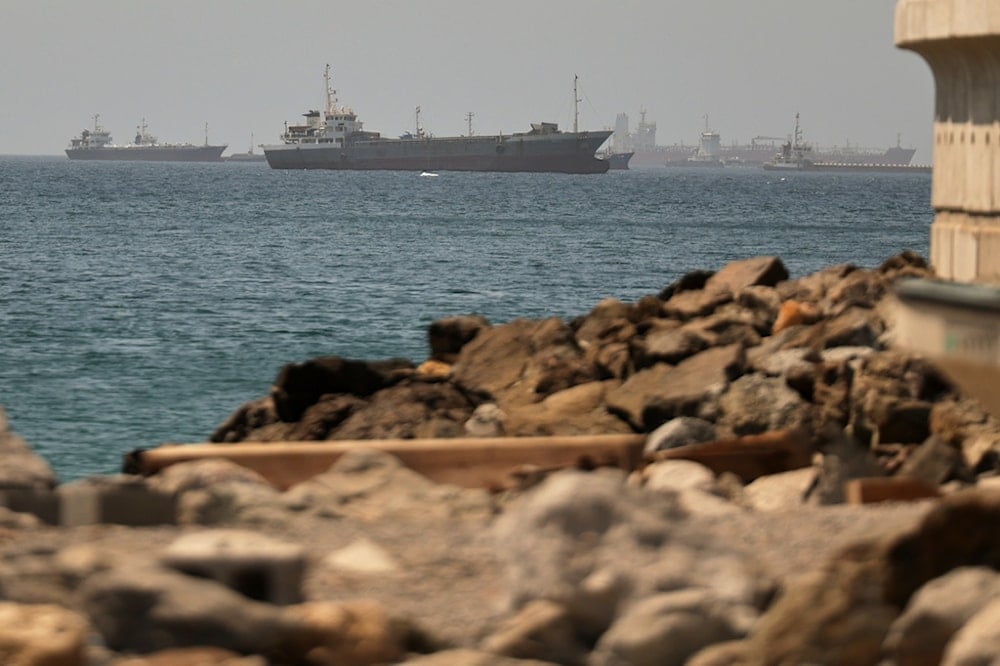
Tankers and cargo vessels are seen in the Gulf of Oman, along shipping routes linking the Strait of Hormuz and the Arabian Sea, Tuesday, June 16, 2026. (AP Photo)
An analysis published by the Atlantic Council argues that escalating tensions surrounding the Strait of Hormuz are likely to prolong uncertainty in global energy markets, while criticizing the Trump administration's war on Iran.
Written by David L. Goldwyn and Andrea Clabough, the opinion piece contends that the breakdown of a ceasefire and the absence of a lasting political settlement have left the strategic waterway at the center of an increasingly volatile regional standoff.
The authors argue that repeated cycles of military escalation followed by negotiations have failed to produce a durable resolution, leaving oil markets vulnerable to renewed disruptions.
According to the analysis, energy producers and consumers should no longer expect a return to what the authors describe as "normal" market conditions, warning that instability in the Strait of Hormuz could persist for the foreseeable future.
Read more: Trump faces four major risks if he resumes war on Iran: The Hill
Authors criticize Trump's approach toward Iran
Goldwyn and Clabough argue that the Trump administration fundamentally misjudged Iran's strategic calculations.
According to the authors, Washington viewed negotiations as a means of restoring stability and reopening maritime transit through the Strait of Hormuz, while Tehran approached the confrontation from what they describe as a broader long-term strategic perspective.
It should be made clear that it was the US that continued to break the memorandum of understanding signed between the two nations, crushing international hopes of bringing relative calm to the region to promote a symbolic win.
Iran, in turn, retaliated against the US aggression by targeting US sites in the region. The article argues that this divergence contributed to the collapse of ceasefire efforts and undermined prospects for a negotiated settlement.
Strait of Hormuz remains central to regional confrontation
The Atlantic Council analysis argues that the Strait of Hormuz will remain a principal point of friction as long as regional tensions persist.
The authors contend that renewed US naval measures and continued attacks on Iran risk increasing pressure on commercial shipping and energy exports.
The article also argues that any expansion of the confrontation to additional maritime routes, including the Bab al-Mandab Strait, where Ansar Allah has previously carried out operations in support of the Palestinian people throughout the war on Gaza, could place further strain on international energy markets.
The authors conclude that regional energy producers are increasingly investing in alternative export routes because they do not anticipate a durable political solution in the near future.
Authors warns uncertainty may persist
Goldwyn and Clabough argue that global energy markets remain exposed to prolonged geopolitical risks despite avoiding the sharp oil price spikes many analysts initially predicted.
According to the article, continued instability around the Strait of Hormuz could eventually tighten physical oil supplies and place additional pressure on energy-importing economies, particularly in the developing world.
The authors conclude that governments may ultimately need to consider additional emergency measures should maritime security deteriorate further.


