
Trump faces four major risks if he resumes war on Iran: The Hill
 5 Min Read
The Hill examines four major risks President Trump faces if the US returns to full-scale war against Iran, including military, economic, political, and diplomatic challenges.
-
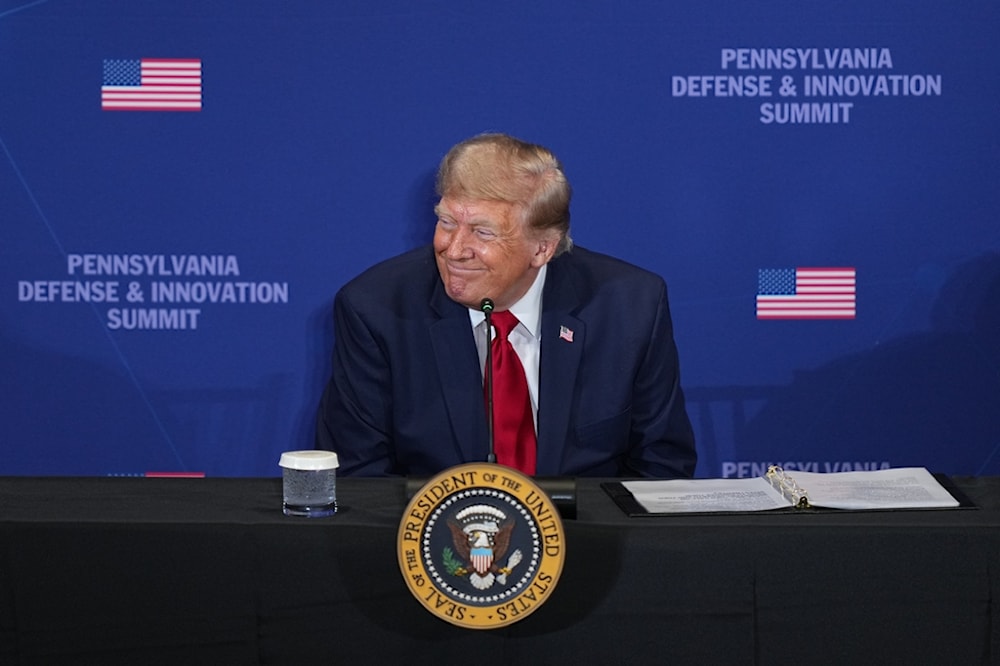
President Donald Trump listens at the United States Army War College in Carlisle, Pa., during the Pennsylvania Defense and Innovation Summit, Wednesday, July 15, 2026. (AP Photo/Matt Rourke)
US President Donald Trump faces growing risks if he abandons diplomacy and resumes a full-scale military operation against Iran, according to a report published by The Hill, as Washington weighs options to break the current stalemate over the Strait of Hormuz and pressure Tehran in nuclear negotiations.
According to the report, the US military has resumed strikes over the past week, focusing primarily on Iranian air defense systems, radar installations, and missile and drone launch sites near the Strait of Hormuz.
Axios reported that Trump convened senior advisors in the White House Situation Room to discuss potential large-scale strikes on strategic Iranian targets, while The Wall Street Journal said the administration is considering options ranging from attacks on the Pickaxe Mountain nuclear facility to deploying ground forces to seize Iranian islands.
The Hill noted that Trump is weighing these options after the United States and "Israel" attacked Iran for nearly 40 days before a ceasefire was reached in early April, warning that a return to a full-scale war could carry significant consequences both domestically and internationally.
Depleting military stockpiles
One of the most immediate concerns identified by The Hill is the strain another prolonged war would place on US weapons stockpiles.
The report cited US Central Command Commander Admiral Brad Cooper, who told lawmakers that more than 13,000 strike munitions were used during the previous phase of the war. An analysis by the Center for Strategic and International Studies (CSIS) also found that the campaign consumed nearly half of US Patriot missile inventories, more than half of THAAD interceptors, and over 45% of Precision Strike Missile stockpiles.
According to The Hill, Pentagon officials are seeking additional funding from Congress to replenish those weapons, warning that another major campaign against Iran could further undermine US preparedness for other potential wars, particularly in the Indo-Pacific.
Read more: Trump's return to war on Iran 'a dead end': FT
Economic recession
The report also warned that renewed fighting could trigger wider economic disruption by prolonging the closure of the Strait of Hormuz, a key artery for global energy supplies.
Trump acknowledged earlier this month that concerns over global energy shortages were among the factors behind Washington’s pursuit of a memorandum of understanding aimed at reopening the strategic waterway. Citing experts, The Hill reported that US strategic petroleum reserves remain at historically low levels, leaving the global economy more exposed to prolonged supply disruptions, higher inflation, and rising fuel prices.
The Organisation for Economic Co-operation and Development (OECD) has previously warned that sustained disruptions could slow global economic growth to levels not seen since the COVID-19 pandemic.
Trump's midterm prospects
According to The Hill, renewed aggression against Iran could also carry significant domestic political risks for Trump ahead of the US midterm elections. The report noted that Trump's approval ratings, particularly on economic issues, have closely tracked developments in the war on Iran, raising concerns among Republicans that a prolonged war could alienate voters.
Alex Rossell Hayes, lead data scientist at YouGov, told The Hill that war "started off unpopular, and that hasn't really changed," while a Quinnipiac University poll found that 60% of US voters believe the war was not "worth it." A Reuters survey also found that 79% of respondents expect the US military to remain involved in the war for "an extended period of time," up from 65% in March.
The report added that analysts believe the political impact of the war will ultimately depend on its effect on the US economy, particularly fuel prices and inflation, noting that Trump recently reinstated the US blockade on Iranian ports after Tehran reclosed the Strait of Hormuz, reducing shipping traffic through the strategic waterway.
While many congressional Republicans have urged Trump to intensify military operations against Iran, including efforts to break Tehran's control over the strait, The Hill said the president remains reluctant to launch a ground operation, leaving his strategy centered on diplomacy backed by continued airstrikes.
Fallout with Gulf allies
According to The Hill, renewed fighting could also strain Washington's relationships with its Gulf partners, whose territories have once again come under Iranian retaliatory missile and drone attacks.
Bahrain, Qatar, Kuwait, Oman, Jordan, and the United Arab Emirates have all faced security challenges linked to the war, while disruptions to shipping through the Strait of Hormuz continue to threaten regional energy exports and broader economic diversification efforts.
Although Gulf states have criticized Iran's actions, The Hill reported that regional governments broadly support efforts to preserve diplomatic arrangements and avoid a return to full-scale war, reflecting growing concern that further escalation would deepen instability across West Asia.
Read more: Trump's Iran strategy risks becoming America's next 'forever war': NYT


