
Republicans anxious over war on Iran, but block efforts to end it: WSJ
 6 Min Read
Republican lawmakers express rising concern over the economic and political costs of the war on Iran but continue to back Trump’s military choices.
-
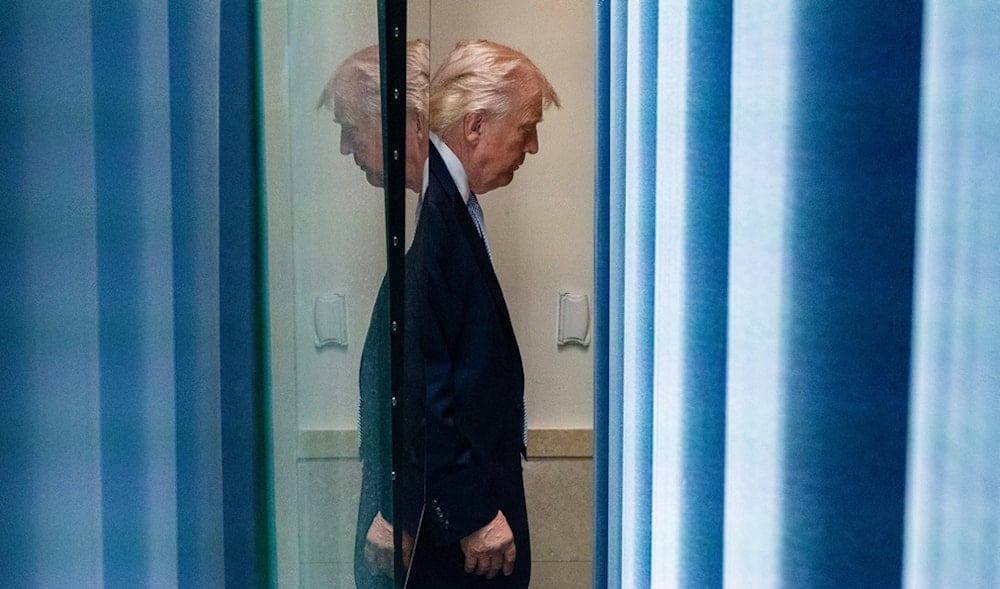
President Donald Trump departs after speaking with reporters in the James Brady Press Briefing Room at the White House, Monday, April 6, 2026, in Washington. (AP)
Nearly two months into the war on Iran, Republicans in Congress are showing increasing anxiety and impatience with the aggression, even as most continue to oppose efforts to end or limit President Donald Trump’s military operations.
Lindsay Wise, who covers Congress in the Wall Street Journal, writes that despite defending the administration's approach, many GOP lawmakers are expressing growing frustration over the lack of a clear endgame and growing economic consequences linked to the offensive.
Rep. Tim Burchett (R., Tenn.) said he is hearing frequent complaints from constituents about rising costs linked to disruptions such as the closure of the Strait of Hormuz. “I wish it was over tomorrow. Yesterday, actually,” Burchett said, adding that voters are increasingly concerned about high gas and fertilizer prices and may ultimately hold Republicans responsible.
Rep. Lauren Boebert (R., Colo.) also voiced discomfort with the war, saying she opposes prolonged military aggression. “I mean, I have military-age kids, and I don’t want to see this,” she said. “I don’t want to see anybody’s child have to go there and have the potential of losing their life.”
Despite these concerns, Wise recalls that both lawmakers and most House Republicans opposed a resolution that would have required Trump to seek congressional approval before continuing military operations.
The measure narrowly failed in the House, 213–214, while a similar war powers resolution was also defeated in the Senate.
Economic pressures driving political friction
The economic impact of the US-Israeli war on Iran is becoming a central concern for lawmakers, particularly rising energy costs and supply chain disruptions tied to regional instability.
According to Wise, both senators and representatives have pointed to pressure from constituents over high fuel prices and broader inflationary effects.
Sen. Josh Hawley (R., Mo.) said there is growing urgency to end the war quickly, even as he voted against limiting Trump’s war powers. “We need an exit strategy that will bring down energy prices in this country quickly,” Hawley said, noting that voters frequently raise concerns about costs.
Rep. Burchett also warned that prolonged instability could create political consequences for Republicans if economic conditions worsen.
War Powers votes narrowly fail in Congress
Congress, however, has so far declined to restrict the president’s authority over the war on Iran, though recent votes have been closely divided.
A House resolution aimed at forcing Trump to halt military operations without congressional authorization failed by a single vote. The Senate also blocked a similar measure.
The proposals included exceptions allowing the use of force to defend the United States and its allies.
The narrow margins suggest growing unease within both chambers, even as most Republicans continue to support the administration’s position.
Divisions within the Republican Party
While the majority of Republicans remain aligned with the president, a small but notable group has expressed opposition or reservations.
In the Senate, Sen. Rand Paul (R., Ky.) supported advancing a war powers resolution, while Sen. John Fetterman (D., Pa.) voted against it. In the House, Rep. Thomas Massie (R., Ky.) voted in favor, and Rep. Jared Golden (D., Maine) opposed the measure. Rep. Warren Davidson (R., Ohio) voted “present.”
Other Republicans have signaled conditional support for continued military operations.
Sen. Todd Young (R., Ind.) said it is “time to wrap it as quickly as we can,” while suggesting future funding votes may require clearer authorization of military force.
Sen. John Curtis (R., Utah) said he would not support additional war funding without formal approval or a declaration of war.
Sen. Jim Justice (R., W.Va.) warned about the risks of prolonging the conflict, saying, “Every day that it drags on it makes it more and more and more difficult for people to understand why we’re there.”
Trump’s strategy and timeline uncertainty
President Trump has said the Iran war, which began in late February, aims to dismantle Iran’s nuclear program and weaken its military capabilities. As both objectives failed, the US recently agreed to a renewable ceasefire under Iran's terms, while also forcing "Israel" to halt its aggression on the Iranian and Lebanese fronts.
However, Wise points to looming doubt as lawmakers remain uncertain about the timeline and objectives, with growing pressure for a defined exit strategy.
Sen. Jon Husted (R., Ohio) emphasized that the operation must remain short-term, saying it should last “weeks and not months.”
Constitutional debate over War Powers
The debate in Congress is also intensifying over constitutional war powers and the 60–90 day requirement for presidential authorization of extended military action.
Some lawmakers have suggested that the administration may soon be required to seek formal approval if the war continues. The White House is also expected to request tens of billions of dollars in supplemental military funding, adding further pressure on Congress to define its position.
Meanwhile, Democrats have pledged to continue forcing votes on war powers in an effort to pressure Republicans into taking a firmer stance.
Sen. Tim Kaine (D., Va.) said his party will continue introducing resolutions weekly until the war ends.
He said Republicans appear increasingly uncomfortable with the war’s economic and human costs, suggesting that continued pressure may eventually shift votes. “We’re sort of like, ‘Have you seen enough yet? Have you seen enough yet?’” Kaine said.
Republicans argue for more warmongering
Despite growing impatience, Wise said many Republicans remain cautious about cutting off the aggression abruptly.
Sen. Todd Young warned that immediate withdrawal could create serious risks, including potential consequences for troops in the field. “What happens if you immediately pull troops out?” he said. “These contingencies have not been seriously dealt with.”
Read more: House Democrats push for JD Vance–led commission to oust Trump


