
Rubio's oil squeeze on Cuba risks backfiring, analysis warns
 5 Min Read
An analysis argues that while Marco Rubio has long supported regime change in Cuba, mounting humanitarian risks, political calculations, and Trump’s preference for deal-making may push him toward a limited economic accommodation instead of forcing a collapse.
-
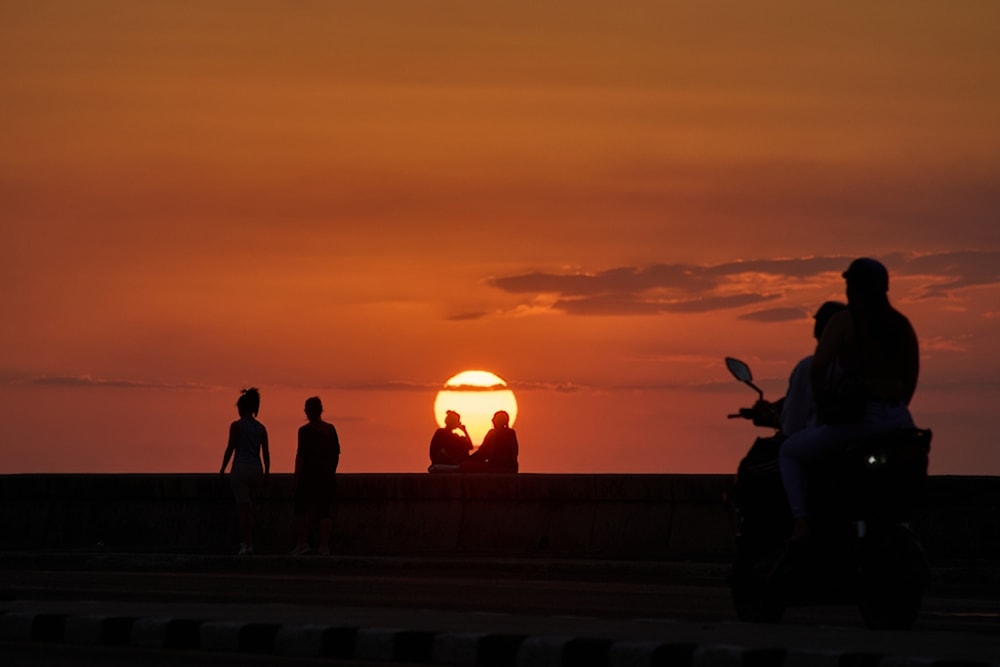
People spend the afternoon on the Malecón at sunset, in Havana on February 18, 2026. (AP Photo/Ramon Espinosa)
An analysis published by writers Lee Schlenker and Joseph Brennan for Responsible Statecraft on Wednesday examines growing signs that Washington’s tightening grip on Cuba’s energy lifelines may be colliding with political realities inside the Trump administration.
Over recent weeks, the White House has expanded measures aimed at restricting the island’s access to imported fuel. A January executive action authorizes steep tariffs on countries that supply oil to Cuba, effectively pressuring third states to curtail shipments or risk economic penalties in their trade with the United States. The move follows disruptions to flows from Cuba’s principal suppliers, including Venezuela and Mexico, which have played a central role in sustaining the island’s electricity grid and transport systems.
The result has been intensified fuel scarcity across Cuba, contributing to rolling blackouts, transportation slowdowns, and strain on municipal infrastructure. Garbage collection and water pumping systems have reportedly been affected in Havana, while energy shortages have weighed on tourism and small business activity.
Rubio’s Cuba dilemma
The analysis focuses on the position of Marco Rubio, who has for decades advocated regime change in Havana but may now be navigating conflicting pressures. While Rubio has long aligned himself with Cuban-American hardliners who favor maximal sanctions, Schlenker and Brennan suggest that the humanitarian and political fallout of total state collapse could complicate his trajectory, particularly if he harbors national electoral ambitions beyond Florida.
During a recent Senate hearing, Rubio struck a notably cautious tone, stating, “I think we would like to see the regime there change. That doesn’t mean that we’re going to make a change, but we would love to see a change.” The wording appeared to signal preference without commitment to direct intervention.
Recent reporting indicates that Washington has quietly allowed limited licenses for certain Cuban private entities to import fuel for their operations, potentially to avert systemic infrastructure failure. Axios also reported that Rubio has spoken with Raúl Guillermo Rodríguez Castro, grandson and close aide to former Cuban leader Raúl Castro, in what sources describe as informal contacts outside official diplomatic channels.
The pattern resembles Washington’s recalibrated approach toward Venezuela in recent years, where pressure remained in place but evolved into selective economic accommodations rather than immediate regime overthrow. Schlenker and Brennan argue that a similar dynamic may be emerging in Cuba: leverage through energy pressure, paired with quiet exploration of economic openings.
However, critics outside Washington frame the situation differently.
Sanctions as coercion
Cuban officials and a range of Latin American analysts characterize the current measures not as tactical leverage but as economic coercion directed at a civilian population. They argue that restricting fuel, a foundational input for electricity, hospitals, water systems, and food distribution, amounts to what some describe as siege economics. By threatening third countries with tariffs if they supply oil to Cuba, Washington is accused of extending its domestic law extraterritorially, compelling smaller states in the Caribbean basin to choose between their trade ties with Havana and their economic relationship with the United States.
For regional observers, the present escalation represents continuity rather than innovation. They place it within the broader history of US attempts to reshape Cuba’s political system through economic isolation, from Cold War embargo policies to the Helms-Burton framework of the 1990s. In this view, energy restrictions form part of a long-standing strategy designed to induce scarcity severe enough to provoke internal political fracture.
Some warn that the humanitarian consequences, including blackouts, transport paralysis, and weakened sanitation systems, could generate migration pressures, which would then be cited as evidence of Cuban state failure rather than the outcome of external constraint. From that perspective, the policy risks deepening hardship among ordinary Cubans while leaving the governing structures intact.
Others counter that sustained pressure remains necessary to extract reforms. The debate now unfolding in Washington appears to center less on whether Cuba should change and more on how far the United States is willing to push energy restrictions without triggering destabilization that could reverberate across the region.
For now, the administration’s approach reflects a tension between coercion and containment, tightening Cuba’s fuel supply while leaving limited space for selective economic openings. Whether that balance holds, or collapses into either full accommodation or wider rupture, may depend as much on domestic US politics as on events inside Havana.
Read more: Hezbollah blasts blockade on Cuba, calls for unity against unjust US


