
Russia, Ukraine exchange over 300 prisoners after talks in Abu Dhabi
 2 Min Read
Ukraine and Russia exchanged more than 300 prisoners after talks in Abu Dhabi, as US envoy Steve Witkoff said significant work remains to end the war.
-
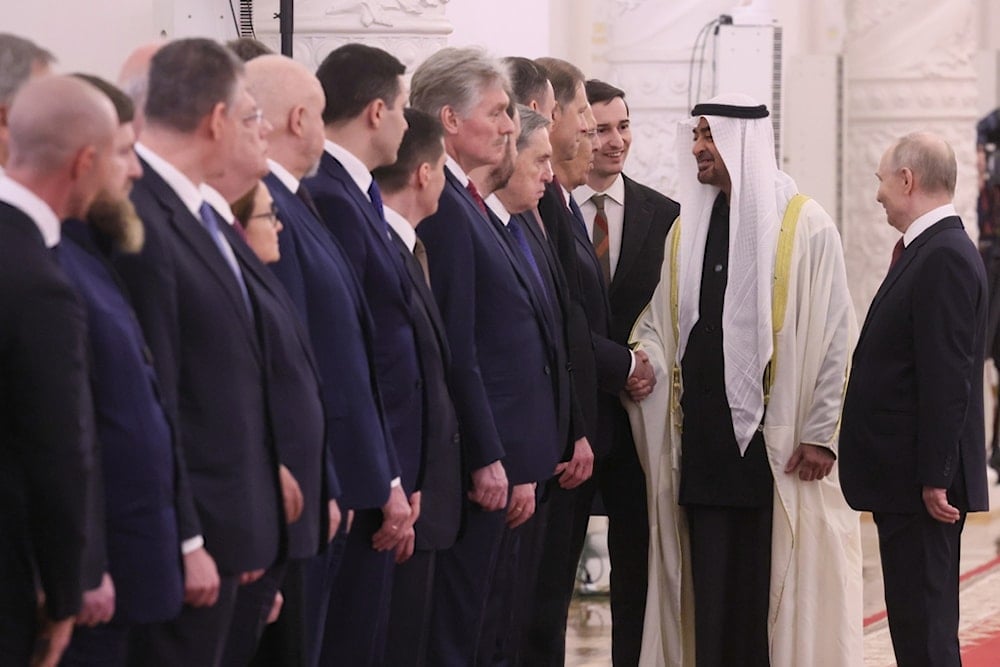
Russian President Vladimir Putin introduces members of the Russian delegation to UAE President Sheikh Mohamed bin Zayed Al Nahyan before their talks at the Grand Kremlin Palace in Moscow, Thursday, January 29, 2026 (AP)
Russia and Ukraine exchanged more than 300 prisoners on Thursday following talks described as “productive” by participants in Abu Dhabi, as Washington acknowledged that major obstacles remain to ending the nearly four-year war.
US envoy Steve Witkoff announced that delegations from the United States, Ukraine, and Russia had agreed to exchange 314 prisoners, marking the first such swap in five months. Russia’s Defense Ministry later confirmed that 157 prisoners were released by each side.
“Today, delegations from the United States, Ukraine, and Russia agreed to exchange 314 prisoners — the first such exchange in five months,” Witkoff said on social media during the second day of negotiations.
While welcoming the agreement, Witkoff cautioned against expectations of a broader breakthrough, saying that “significant work remains” toward reaching a comprehensive settlement to end the war.
Talks continue amid battlefield pressure
The negotiations come as diplomatic efforts intensify to halt what remains Europe’s deadliest conflict since World War II, with hundreds of thousands killed and millions displaced.
Kiev described the first day of negotiations on Wednesday as “substantive and productive,” a characterization echoed by Russian negotiator Kirill Dmitriev.
“There is definitely progress, things are moving forward in a good, positive direction,” Dmitriev said.
No progress on territorial disputes
Despite optimistic language from negotiators, neither side offered updates on the most contentious issue of territorial control, nor was there any indication of concessions from Moscow, which entered the talks insisting on its core demands.
Dmitriev also accused European countries of attempting to “disrupt the progress” of the talks.
The Abu Dhabi discussions mark the latest attempt to de-escalate the conflict, though substantive disagreements continue to cast doubt over prospects for a near-term political resolution.
Read more: Western troop plans for Ukraine are ‘dead,’ Russian envoy to UK says


