
Russia calls on Iran, US to implement MoU, safeguard Strait of Hormuz
 3 Min Read
Russia calls on the US and Iran to fully implement their memorandum, urging concrete measures to safeguard navigation and regional stability in the Strait of Hormuz.
-
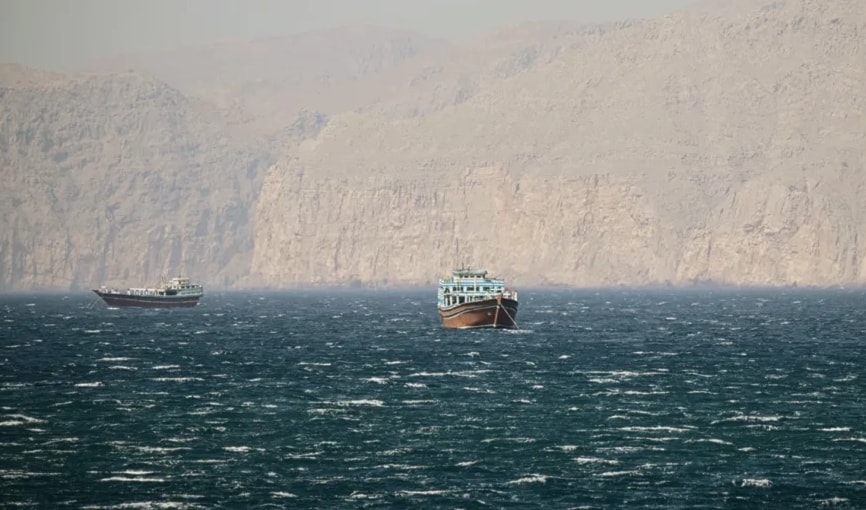
Boats anchored off Oman’s Musandam Peninsula by the Strait of Hormuz, undated (AFP)
Russia has called on the United States and Iran to take concrete actions to guarantee the safety of maritime navigation in the strategic Strait of Hormuz, following the recent signing of a bilateral memorandum between the two long-standing adversaries, RIA Novosti reported.
In an interview for RIA Novosti on Tuesday, Russian Deputy Foreign Minister Georgy Borisenko emphasized Moscow’s expectation that both parties will fully implement the terms of the agreement.
"We expect that the memorandum signed by the United States of America and the Islamic Republic of Iran will be implemented on all fronts, including freedom of navigation in the Strait of Hormuz," Borisenko stated. "And we hope that the conflicting parties will take comprehensive steps to ensure the stability and security of both shipping and the overall situation in the region."
The remarks come two days after US Vice President JD Vance claimed on June 25 that Washington and Tehran had agreed to establish a direct communication channel aimed at de-escalating tensions and addressing outstanding disputes. Iran has denied the existence of such a channel.
The memorandum, which was remotely signed by both sides on the night of June 18, is designed to bring an end to the military hostilities initiated by the US and "Israel" in a joint aggression on February 28. According to the document, the agreement also outlines a clear timeline for reciprocal actions: the United States is to lift its naval blockade, while Iran is to restore normal shipping operations in the Strait of Hormuz, one of the world’s most critical chokepoints for oil and gas transit.
'Reciprocity or nothing': Iran lays down the law on US deal
Iranian President Masoud Pezeshkian has underscored that any understanding between Tehran and Washington is strictly conditional on mutual reciprocity, stating that Iran will honor its commitments only if the United States fully adheres to the terms of their recently signed memorandum.
Speaking on the matter, Pezeshkian reiterated that Iran's response to "unjustified statements and baseless threats" remains rooted in rationality and national dignity, backed by firm defensive readiness.
On June 29, Iran's Foreign Ministry confirmed that its current priority is the full and serious execution of the memorandum's provisions, with all diplomatic efforts now directed toward ensuring compliance on both sides.
In a significant development, Tehran acknowledged that Washington has already issued the necessary authorizations under the tenth clause of the agreement, which pertains to Iranian oil sales. Iranian officials said they are closely monitoring the implementation of this provision to ensure it proceeds as stipulated.
Separately, Iran is actively following up on the eleventh clause, which addresses the release of frozen Iranian assets abroad. While developments are reportedly ongoing, no final resolution has been announced.
Earlier, Pezeshkian had warned that the overall outcome of negotiations with the United States hinges entirely on strict adherence to all mutually agreed commitments. He cautioned that statements made outside the framework of the talks risk undermining the fragile progress achieved so far.


