
Rutte rejects plans for independent European Army, defends NATO
 3 Min Read
NATO chief Mark Rutte warns against a separate European army, saying it would weaken defense efforts and benefit the Russian threat.
-
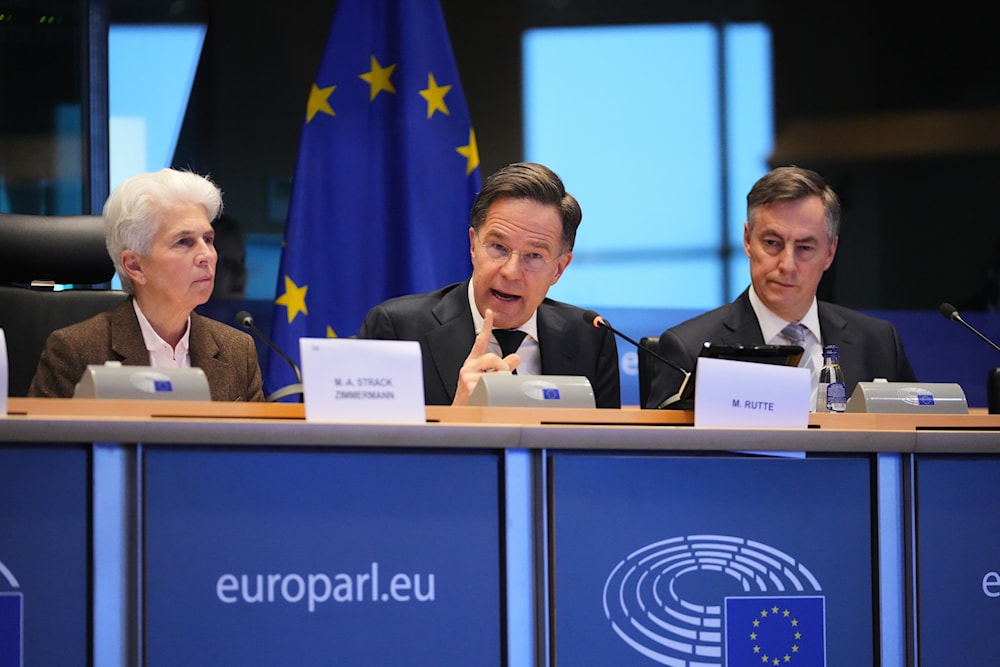
NATO Secretary General Mark Rutte, center, addresses the Security and Defense Committee at the European Parliament in Brussels, Monday, Jan. 26, 2026 (AP)
NATO Secretary General Mark Rutte on Monday rejected proposals for a separate European army, warning that such a move could weaken the continent’s defenses and play into Russian President Vladimir Putin’s hands.
Speaking to the European Parliament in Brussels, Rutte told advocates of a European force independent of the US-led NATO alliance to “keep dreaming". He argued that while European nations should take greater responsibility for their own security, as US President Donald Trump has urged, this should be done within the framework of NATO rather than through a standalone military force.
The remarks come amid growing debate in Europe about the bloc’s strategic autonomy, sparked in part by tensions over Greenland and questions about Trump’s commitment to transatlantic security. Spanish Foreign Minister Jose Manuel Albares and European Defense Commissioner Andrius Kubilius have recently raised the prospect of a European army, but Rutte dismissed the idea as impractical and costly.
“I think there will be a lot of duplication and I wish you luck if you want to do it, because you have to find the men and women in uniform, they’ll be on top of what is happening already,” Rutte said. “It will make things more complicated. I think Putin will love it. So think again.”
He also cautioned that a European army would require billions in additional spending, including the development of an independent nuclear capability, which could jeopardize the continent’s reliance on the US nuclear umbrella. “You will lose then…the ultimate guarantor of our freedom,” he said.
Despite the uncertainty surrounding NATO commitments, Rutte reaffirmed that the United States remains a strong ally, emphasizing that cooperation within NATO remains the most effective path to ensuring European security.
US under Trump forcing Europe to pursue its independence
The recent proposal for a European military force has gained fresh attention as some EU leaders argue that the continent needs greater strategic autonomy in the face of shifting US commitments and rising geopolitical tensions. Albares has been one of the most vocal proponents, calling for a move “toward a European army” that could better defend the bloc’s values and security interests on January 21.
Another key voice in the debate is Kubilius, who has suggested creating a standing European force of around 100,000 troops and even a new European Security Council to guide collective defence decisions. His proposal is partly aimed at addressing concerns about the future of US troop presence in Europe and the need for quicker, unified action.
The idea of a joint European army is not entirely new: past initiatives like the Helsinki Headline Goal and earlier calls for strategic autonomy have laid conceptual groundwork for deeper defense cooperation. Political momentum has fluctuated over decades, with renewed urgency driven by events like Russia’s war in Ukraine and questions about transatlantic reliability.
Supporters argue a unified force would strengthen Europe’s ability to protect itself and act decisively in crises, while critics warn it could duplicate NATO and strain national resources. The debate reflects a broader struggle over how Europe balances cooperation with individual member states’ defence policies and transatlantic alliances.


