
Sanctuary city battle flares between Trump and NYC mayor
 4 Min Read
New York City's Mayor reaffirms the city's sanctuary laws, prompting sharp criticism from the Trump administration and the DHS.
-
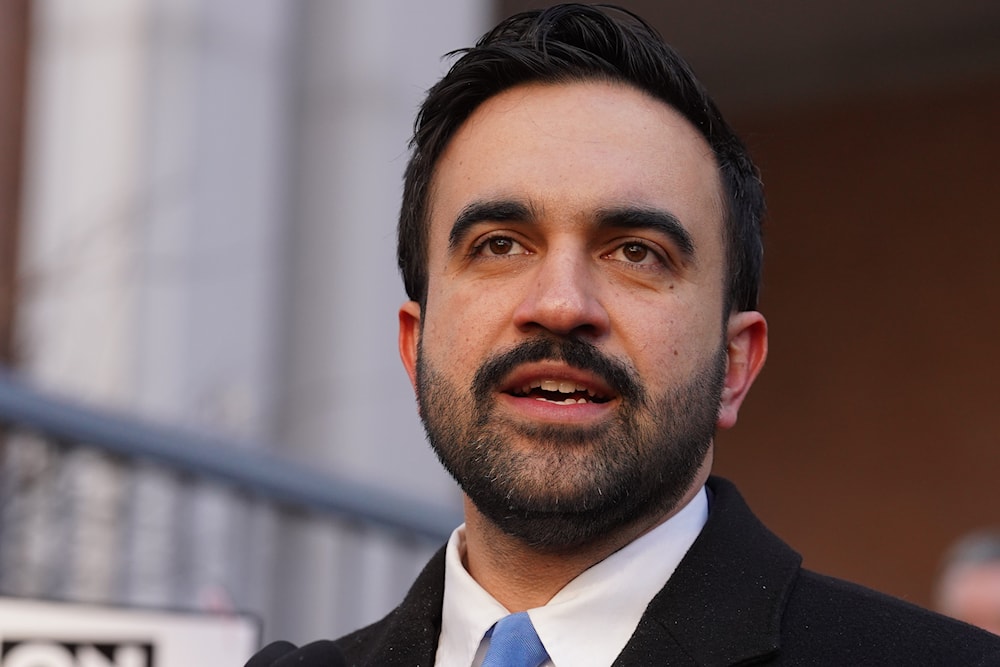
Mayor Zohran Mamdani speaks in front of members of the New York State Nurses Association union during a picket outside Mount Sinai West Hospital, Tuesday, Jan. 20, 2026, in New York (AP)
US President Donald Trump’s administration sharply criticized Mayor Zohran Mamdani on Friday after he issued an executive order reaffirming the city’s sanctuary laws, arguing the directive will make the city “less safe".
Mamdani’s order instructs all municipal agencies to comply with existing sanctuary protections, which prevent city employees from assisting federal authorities in most immigration enforcement actions.
The directive also requires certain public-facing agencies, including the NYPD, to provide employees with updated training on sanctuary restrictions. The order does not introduce any new limitations beyond existing laws.
Still, Tricia McLaughlin, a spokesperson for Trump’s Department of Homeland Security, expressed concern over the mayor’s action, saying, “Mamdani will make New Yorkers less safe as a direct result of this policy." She also demanded the mayor “agree to release criminals in New York City’s custody to ICE before they are released back onto the Big Apple’s streets to victimize and prey on more Americans.”
At a Friday press conference, Mamdani defended his order, saying, “These are policies that keep New Yorkers safe. These are policies that are motivated by delivering public safety, not in spite of public safety.”
The DHS rebuke follows Trump’s threat last month to “significantly” cut federal funding for sanctuary jurisdictions nationwide, with a Feb. 1 deadline for cities to roll back protections. That deadline passed without any immediate funding reductions in New York City.
Why is Trump targeting sanctuary cities?
Sanctuary laws in the United States are policies adopted by local and state governments that limit cooperation with federal immigration enforcement, such as refusing to honor most US Immigration and Customs Enforcement (ICE) detainers or asking about immigration status during policing. They are meant to focus local resources on community safety rather than federal immigration operations.
Trump’s opposition to sanctuary laws is rooted in his long‑standing political narrative that such policies “protect criminals” and endanger American communities, a theme he returned to repeatedly in 2025 and 2026 as part of a broader immigration crackdown.
Democratic‑run cities, states in the crosshairs
Legal and political analysts have noted that Trump’s attacks are not only about enforcement but also serve as leverage to pressure Democratic‑run cities and states, with lawsuits filed by the Justice Department against Boston and other sanctuary jurisdictions as part of efforts to force compliance with federal priorities.
On January 25, 2017, Trump signed Executive Order 13768, limiting federal grants for jurisdictions that refused to comply with immigration enforcement and declaring that sanctuary jurisdictions would not be eligible for many federal funds.
On April 28, 2025, Trump issued a new executive order to identify sanctuary jurisdictions and threaten funding cuts, saying such local policies were obstructing federal law and creating “intolerable national security risks,” and declaring he was prepared to use federal funding as leverage.
In January 2026, he escalated that rhetoric, announcing that starting February 1, 2026, federal payments to sanctuary cities and states would be halted because, he claimed, they “do everything possible to protect criminals at the expense of American citizens” and “breed…crime and violence.”
Long-rooted tensions
These tensions between the Trump administration and NYC Mayor Mamdani are no news. On September 30, 2025, while campaigning for mayor, Mamdani vowed to resist Trump’s threat to withhold federal funds from New York City if he won, saying, “No, we will fight for every single dollar that the city currently receives from the federal government.”
After his election in early November 2025, Trump publicly criticized Mamdani’s victory speech, calling it “anger toward me” and saying, “I thought it was a very angry speech. Certainly angry toward me, and I think he should be nice to me.”
On November 21, 2025, despite months of tension, Trump and Mamdani met at the White House, where Trump said, “I think you’re going to have, hopefully, a really great mayor,” signaling a brief thaw after earlier disputes.
However, in January 2026, Mamdani condemned the detention of a city council employee by federal immigration agents, calling it “an assault on our democracy, on our city, and our values,” reigniting the rift over enforcement practices.
And most recently, on February 6, 2026, the Trump administration rebuked Mamdani for reinforcing sanctuary protections, with DHS asserting his policies would make “New Yorkers less safe.”


