
Sayyed Khamenei warns against actions that undermine Iran social unity
 3 Min Read
Iranian Leader Sayyed Khamenei praises government efforts and warns against actions or statements that could weaken national morale and social unity.
-
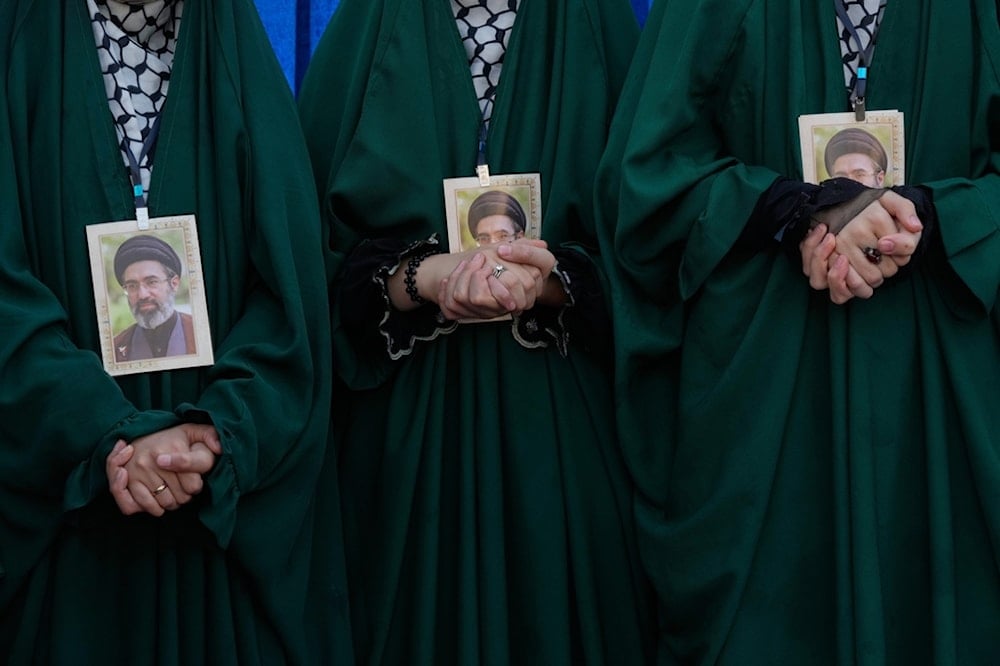
Iranian girls with portraits of Leader Ayatollah Mojtaba Khamenei wait for rituals to start during Arbaeen, in Tehran, Iran, Tuesday, Aug. 4, 2026. (AP Photo/Vahid Salemi)
Iranian Leader Ayatollah Sayyed Mojtaba Khamenei has called for preserving social unity and avoiding rhetoric that could undermine public morale, stressing the need to highlight Iran’s capabilities and national strengths.
In a message marking Government Week, Khamenei praised positive measures taken by the government, particularly by the president, whom he characterized as sincere and dedicated.
He said the government had achieved significant results despite various US and Israeli enemy restrictions and conspiracies, as well as mounting sanctions and blockades.
Khamenei stressed the importance of clarifying and highlighting “Iran’s strength and capabilities” and focusing on them, while avoiding statements that “cause despair and weaken national and public motivation” and “illusory manipulations.”
“I categorically declare; committing anything that harms social unity is prohibited,” Khamenei said.
Read more: The war on Iran is creating risks for the US far beyond West Asia: CNN
Hardened Iranian leadership
The Independent reported Friday that West Asia has changed since the February 28 attacks, but not as Washington and Tel Aviv anticipated. The operations aimed not only to damage Iran’s military and nuclear capabilities, but also to remove its leadership and pave the way for a more Western-aligned government. Instead, Iranian officials martyred in the opening attacks were replaced and the political system remained intact.
Barbara Leaf, a former US ambassador and assistant secretary of state for Near Eastern affairs, said the war had produced a more hardened Iranian leadership. “That is going to be exceptionally difficult to deal with, to say the least,” Leaf said. Iran's “confidence has grown over the months that it cannot only survive, but it can prevail, it can reset the regional landscape.”
Gulf states reassess US security ties
The war has also exposed contradictions in Washington’s security arrangements with the Gulf. US weapons, intelligence and air defenses remain important to regional states, but the presence of American forces also made Gulf territory part of a war many governments had sought to avoid.
Gulf states had already begun questioning Washington’s reliability following earlier regional crises, including the 2019 attacks on Saudi oil facilities. The war has accelerated efforts to diversify security partnerships with Turkey, Pakistan and China, although Gulf states remain heavily dependent on US military capabilities.
Israeli gains fail to produce political change
For "Israel", the war has similarly highlighted the gap between military gains and strategic results. Israeli forces inflicted significant damage on Iran and expanded operations into Lebanon, but Iran retained its regional influence, and Hezbollah survived, while prospects for Saudi normalization with "Israel" deteriorated.
Six months into the war, Iran has suffered major losses but resisted efforts to remove its leadership or fundamentally reshape its policies. While The Independent stops short of calling the outcome an Iranian victory, its assessment points to a key result: Washington and Tel Aviv have failed to achieve the political transformation they envisioned when the war began.


