
Sharif warns Pakistan Afghanistan ceasefire remains highly fragile
 4 Min Read
Pakistan’s PM Shehbaz Sharif says the Afghanistan ceasefire is still fragile, urging pressure on the Taliban as border tensions and security risks escalate.
-
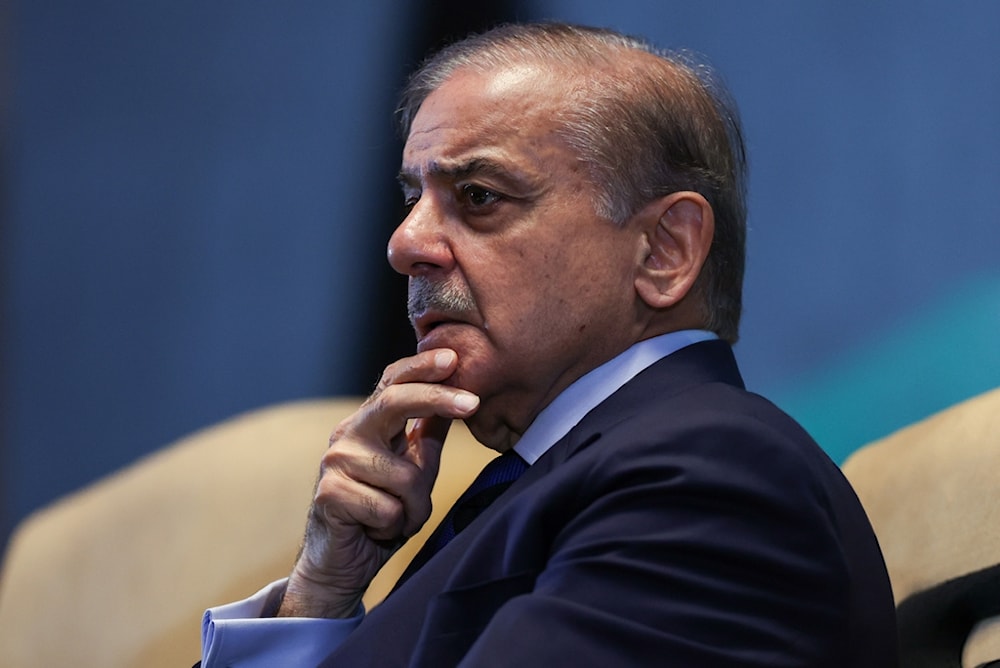
Pakistan's Prime Minister Shehbaz Sharif looks on during a business and investment conference he attended with Malaysia's Prime Minister Anwar Ibrahim during Sharif's official visit, in Kuala Lumpur, Malaysia, Monday, October 6, 2025 (AP)
Pakistan’s Prime Minister Shehbaz Sharif said on Saturday that the ceasefire agreement between Pakistan and Afghanistan remains “extremely fragile,” despite ongoing diplomatic efforts to stabilize the border. His remarks came during the International Forum for Peace and Trust in Ashgabat, the Turkmen capital.
Sharif expressed gratitude to Qatar, Turkey, Saudi Arabia, the United Arab Emirates, and Iran for what he described as their sincere commitment to supporting dialogue and helping both sides reach a lasting ceasefire, even as conditions on the ground remain volatile.
The prime minister warned of what he called an “impending terrorist threat from Afghanistan,” urging the international community to apply sustained pressure on the Taliban authorities to fulfill their counterterrorism obligations. He stressed that Pakistan is taking the necessary measures to address these risks but said the Taliban must act to restrain “terrorist groups operating from Afghan territory.”
Border tensions escalate after 2025 clashes
Relations between Islamabad and Kabul have been strained since the Taliban’s return to power in 2021, driven by border security disputes and the activity of armed groups such as Tehrik-i-Taliban Pakistan. The tensions have resulted in mutual accusations and economic pressure, including restrictions on cross-border trade.
The situation worsened in 2025 following Pakistani airstrikes in October, border clashes in December, and the subsequent suspension of trade between the two countries. These escalations revived calls for dialogue and de-escalation to prevent further deterioration.
On October 19, Qatar’s Foreign Ministry announced that Pakistan and Afghanistan had reached an immediate ceasefire during talks in Doha, agreeing to hold additional meetings to ensure the ceasefire’s continuity and establish monitoring mechanisms for its implementation.
Pakistan, Afghanistan hold peace talks
Afghanistan and Pakistan have held a round of peace talks in Saudi Arabia, agreeing to maintain a fragile ceasefire as both sides attempt to ease escalating tensions following deadly border clashes earlier this year.
Three Afghan officials and two Pakistani officials, including one based in Istanbul, told Reuters that the meetings were convened in recent days under a Saudi initiative. While the discussions did not produce a long-term peace agreement, both delegations affirmed their commitment to upholding the current ceasefire, which has largely held in recent weeks.
The talks come after months of heightened friction. In October, intense border clashes between Afghan and Pakistani forces left dozens dead, marking the worst such violence since the Taliban returned to power in Kabul in 2021. A ceasefire brokered in Doha the same month succeeded in halting hostilities, but a subsequent round of negotiations in Istanbul collapsed without progress.
Reasons behind collapse
The issues at the heart of the collapse centered on militancy: Islamabad insisted Kabul take responsibility for groups like the Tehrik-e-Taliban Pakistan (TTP), whose attacks inside Pakistan had Islamabad blame on Afghan safe havens. Kabul, on its part, rejected these demands, arguing it could not guarantee Pakistan’s internal security and that such expectations exceeded its capacity.
Talks resumed briefly on November 6, 2025, but by November 8, 2025, the dialogue collapsed again. An Afghan spokesperson said the breakdown was due to Islamabad’s insistence that Afghanistan should shoulder full responsibility for Pakistan’s security, a demand Kabul considered “unreasonable".
Despite the collapse, both Kabul and Islamabad publicly maintained that the ceasefire brokered on October 19, 2025, remained in effect, at least nominally. However, a brief exchange of fire along the border on the same days of the failed talks underscored how fragile the ceasefire really was.


