
Sheikh Akram Al-Kaabi: Iraq must end US control over its oil revenues
 3 Min Read
Iraqi Resistance leader Akram Al-Kaabi rejects US pressure over Iraq's oil revenues, calling for direct oil sales and an end to Washington's economic influence.
-
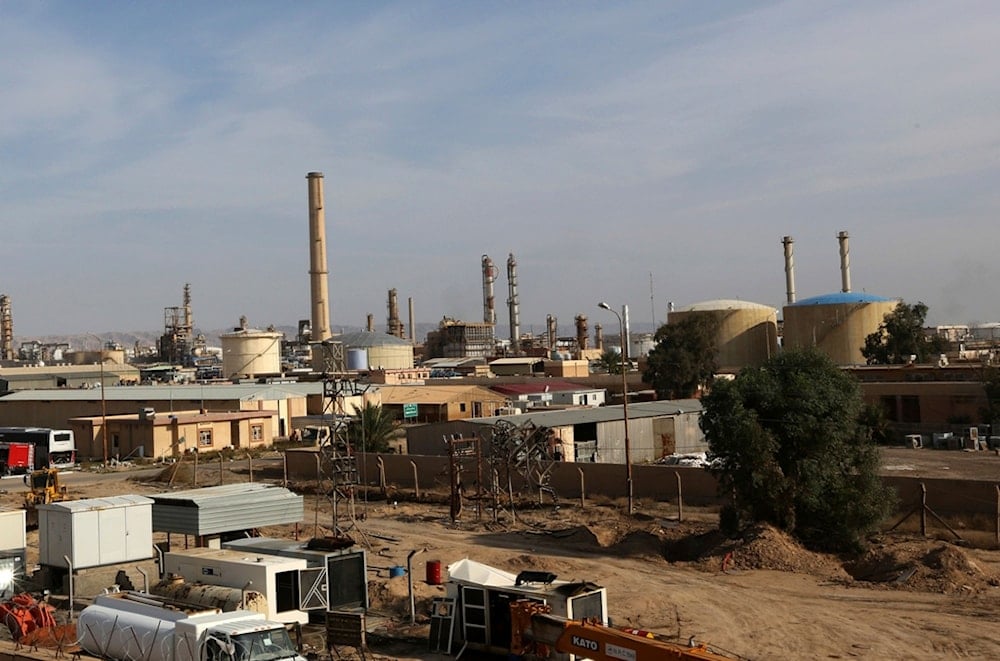
An oil refinery is seen in the city of Beiji, some 250 kilometers (155 miles) north of Baghdad, Iraq on Dec. 8, 2014 (AP Photo/Hadi Mizban)
Secretary-General of the Islamic Resistance Movement Nujaba, Sheikh Akram Al-Kaabi, rejected arguments that Iraq must comply with US demands over the Popular Mobilization Forces and the Iraqi Resistance because Washington controls the country's oil revenues.
Al-Kaabi said some individuals have sought to justify Iraq's compliance with what he described as the demands of the "American axis of evil," particularly those associated with US envoy Tom Barrack concerning the Popular Mobilization Forces and the Resistance.
He said these justifications center on the argument that revenues from Iraqi oil sales are received by the United States and that any dispute with Washington could therefore obstruct the transfer of Iraq's budget.
— الشيخ اكرم الكعبي (@Akram_Alkabee) August 9, 2026
Al-Kaabi described this rationale as unacceptable, questioning how a sovereign state could allow its economy and natural resources to remain dependent on another power.
He argued that instead of weakening Iraq's sources of strength and compromising its sovereignty, Baghdad should pursue policies that protect its national interests and restore control over its economic resources.
Read more: In coordination with Baghdad, Damascus deploys forces near Iraq border
Al-Kaabi calls for direct Iraqi oil revenues
Al-Kaabi called for expanding the channels through which Iraq sells its oil and ending "the US monopoly over Iraqi oil revenues."
He said Iraq should receive oil-sale proceeds directly from buyers rather than allowing the revenues to pass through what he described as a US-controlled mechanism.
He also pointed to Iraq's removal from Chapter VII of the UN Charter, arguing that Baghdad now has greater freedom to determine the entities and mechanisms through which it sells its oil.
For Al-Kaabi, the issue extends beyond financial arrangements and goes to the heart of Iraqi sovereignty.
He argued that maintaining dependence on US-controlled financial and oil mechanisms leaves Iraq vulnerable to political pressure and constrains its ability to make independent decisions on matters concerning its security and national interests.
Iraqi Resistance rejects US influence over Iraq's resources
Al-Kaabi also criticized remarks attributed to the US Secretary of State that "American investments in Iraq are part of American national security."
He said the statement demonstrates what he characterized as the strategic nature of US involvement in Iraq, arguing that Washington's interests extend to the country's resources and wealth under the cover of investment.
The Nujaba secretary-general said confronting such influence is among the central responsibilities of the Iraqi Resistance.
He stressed that the Resistance would not remain silent over what he described as the theft and exploitation of Iraq's resources and the undermining of the livelihoods of its people.
His remarks come amid continuing debate in Iraq over the future of the Popular Mobilization Forces, the role of the Iraqi Resistance, and the extent of US military, political, and economic influence in the country.
Read more: Iraq's Al-Nujaba rejects disarmament calls as 'red line'


