
Shoigu proposes BRICS resource reserves for mutual assistance
 2 Min Read
Russia has proposed that BRICS member states establish joint resource reserve funds for mutual assistance, including hydrocarbons, fertilizers, oil, LNG and medicines, to ensure countries can rely on collective reserves during crises.
-
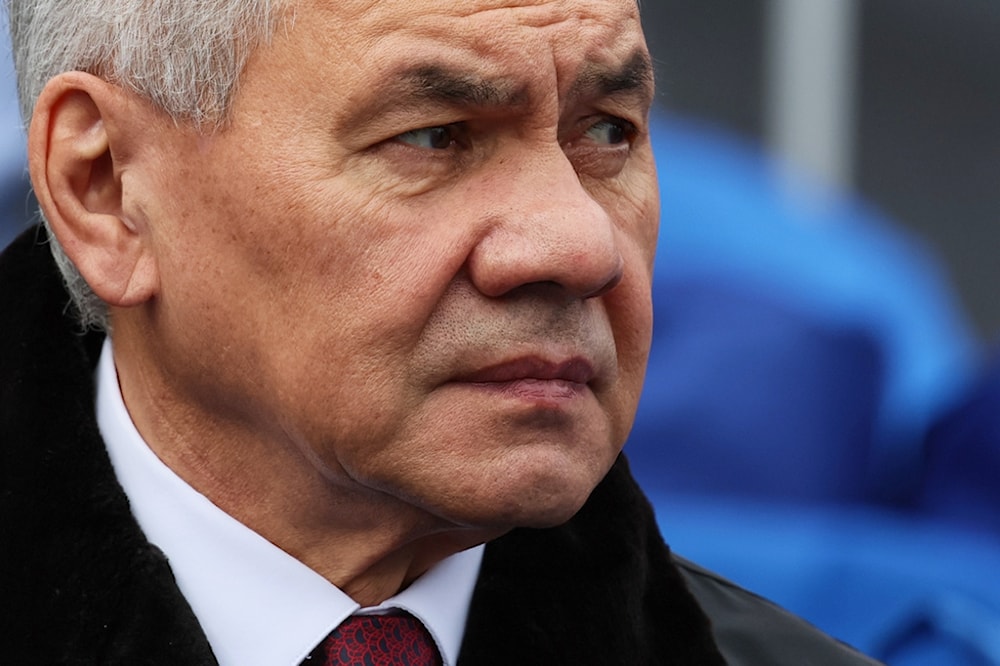
Russian Security Council Secretary Sergei Shoigu attends the Victory Day military parade in Moscow, Saturday, May 9, 2026, during celebrations of the 81st anniversary of the Soviet Union's victory over Nazi Germany during World War II. (AP)
Russia has proposed that BRICS member states establish joint resource reserve funds for mutual assistance, including hydrocarbons, fertilizers, liquefied natural gas, oil, and medicines, to ensure countries can rely on collective reserves during crises, Russian Security Council Secretary Sergei Shoigu has announced.
Speaking to journalists following his visit to India, where he participated in a meeting of BRICS high-ranking security officials, Shoigu said: "The second Russian proposal is to establish reserves of various resources. This undoubtedly includes hydrocarbons, and of course everything that is scarce that we faced during the crisis in the Persian Gulf."
He explained that the framework would cover fertilizers, liquefied natural gas, oil and medicines, creating a "binding framework" so that each BRICS country could count on these reserves during emergencies. "If it has a situation of this kind, then the BRICS countries will use their reserves," he added.
Resource reserves would buffer against market volatility
Shoigu noted that the media often report when countries tap their strategic oil or LNG reserves, explaining that this happens when countries use reserves to regulate domestic prices, help neighbors, or "make money at the right place when prices are at their peak."
The proposal reflects Russia's push for deeper economic integration within BRICS, particularly in the energy and resource sectors.
The group, which includes Brazil, Russia, India, China, South Africa, Iran, Egypt, Ethiopia, Indonesia and the UAE, has been seeking to reduce its dependence on Western-dominated financial and resource systems.
BRICS cooperation amid global uncertainty
The proposal comes as global energy markets remain volatile following the US-Israeli war on Iran, which disrupted shipping through the Strait of Hormuz and strained supply chains.
BRICS countries, many of which are major energy importers or exporters, have a shared interest in stabilizing resource markets.
Shoigu's proposal aligns with broader BRICS efforts to create alternative financial and economic mechanisms that are less dependent on Western institutions.
The establishment of resource reserve funds could enhance the group's resilience to external shocks and reduce its vulnerability to Western sanctions or market manipulation.
Read More: Russia reaffirms commitment to BRICS national currency payments


