
South Korea's Yoon sentences to 5 years for obstructing justice
 3 Min Read
Former South Korean President Yoon Suk Yeol was sentenced to five years in prison for multiple charges related to his brief 2024 martial law declaration.
-
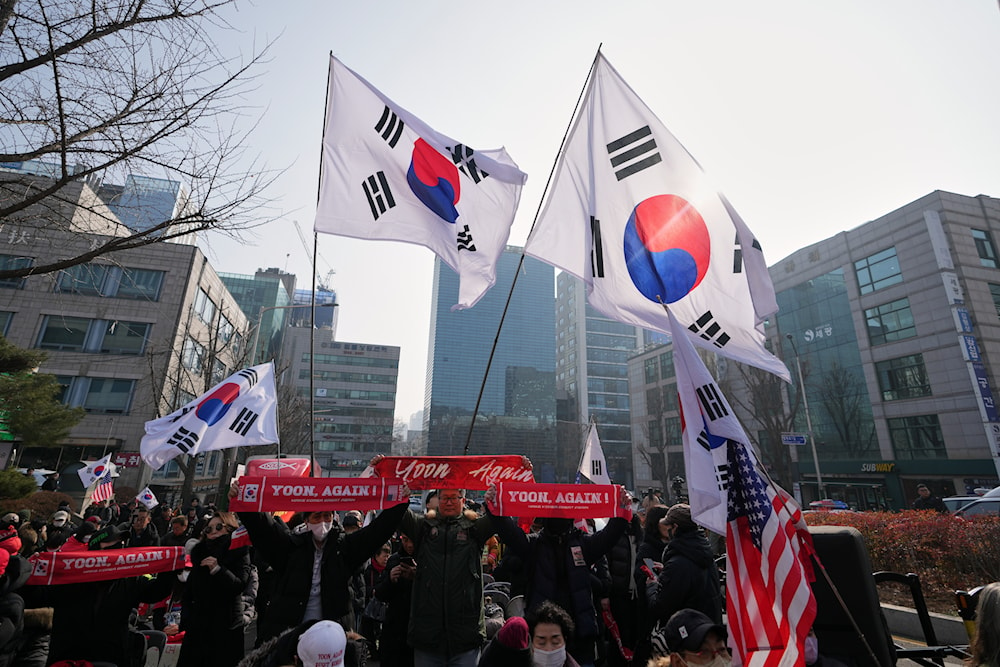
Supporters of former South Korean President Yoon Suk Yeol hold signs and flags outside Seoul Central District Court, in Seoul, South Korea, on January 16, 2026. (AP Photo/Lee Jin-man)
Yoon Suk Yeol, the former president of South Korea, has been found guilty on multiple charges linked to his surprise declaration of martial law in December 2024. A South Korean court sentenced him on Friday to five years in prison, marking a historic moment in the country’s judicial and political history.
The court's ruling is the first in a series of trials related to Yoon’s abrupt imposition of martial law, which lasted only six hours before being overturned by South Korea’s parliament, including lawmakers from Yoon’s own party.
The charges on which Yoon was convicted include:
- Failing to follow due process before declaring martial law
- Fabricating official documents
- Destroying potential criminal evidence by wiping official phone data
- Obstructing authorities from executing an arrest warrant
- Constitutional Violations
In delivering the verdict, Judge Baek Dae-hyun emphasized the seriousness of Yoon’s actions.
The judge also said, “Despite having a duty, above all others, to uphold the Constitution and observe the rule of law as president, the defendant instead displayed an attitude that disregarded the... Constitution,” adding that “The defendant's culpability is extremely grave."
Yoon’s legal team stated that they intend to appeal the ruling. His lawyer, Yoo Jung-hwa, criticized the decision. “We express regret that the decision was made in a politicised manner,” she said.
Death penalty sought in separate insurrection trial
Friday’s verdict is only the beginning of Yoon’s legal challenges. He still faces additional charges, most notably masterminding an insurrection.
Prosecutors have requested the death penalty in that case, with a ruling expected in February.
Yoon’s martial law declaration in 2024 stunned both domestic and international observers, especially as it came without the legal steps normally required for such a move. The swift response by South Korea’s legislature to revoke the declaration underscored the country's institutional resilience.
The trials are being closely watched across South Korea and beyond, as they could shape both the country's legal precedent and its democratic norms in the years ahead.
Impeachment, political fallout
On December 3, 2024, President Yoon declared martial law, accusing the opposition of conspiring with the DPRK in a supposed plot against the state. Within hours, the South Korean parliament voted to cancel the declaration.
Yoon complied and issued a public apology.
According to the report, Yoon also ordered military and police forces to enter the National Assembly in an attempt to dissolve it. Lawmakers managed to enter the building, some even climbing over fences, and held an emergency vote to revoke the decree. The lack of military support and no external threat led to the collapse of the operation.
Just 11 days later, on December 14, the parliament voted to impeach Yoon over his attempt to unlawfully consolidate power. The new evidence added charges of treason and incitement of foreign aggression to Yoon’s ongoing legal battles, making conviction in his criminal trials increasingly likely


