
Spain calls for UN reform, backs woman for top post
 3 Min Read
Spain's prime minister called for reforming the United Nations and urged that the next secretary-general position be held by a woman, citing growing pressure on global governance systems.
-
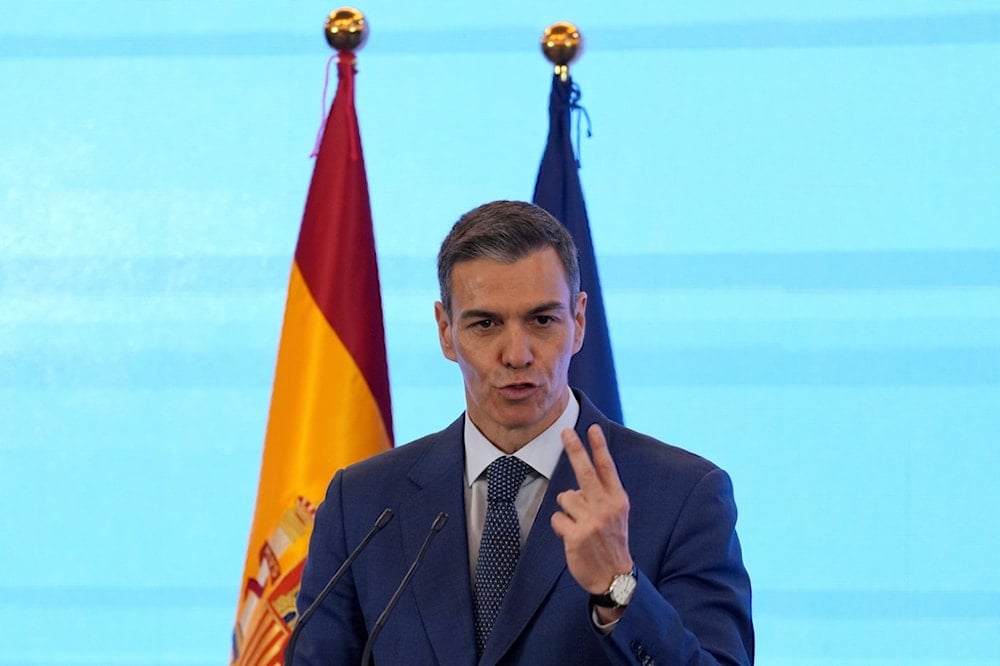
Spain's Prime Minister Pedro Sanchez gestures as he speaks during a press conference in Beijing, China, Tuesday, April 14, 2026. (AP Photo/Ng Han Guan)
Spain’s prime minister, Pedro Sánchez, called for sweeping changes to the United Nations on Saturday, arguing that the institution must adapt to mounting global challenges and consider female leadership in its next term.
Speaking at the “In Defense of Democracy” gathering in Barcelona, Sánchez said, “We believe that it is high time for the United Nations to be renewed, improved and, why not, led by a woman.”
Debates over the effectiveness of international institutions have intensified in recent years, with Sánchez warning that the current global governance framework is under increasing strain. He stressed that multilateral systems and international law are facing growing pressure, urging efforts to both safeguard and modernize existing mechanisms.
The Spanish leader also pointed to key areas requiring attention, including the governance of digital spaces and widening social inequalities. He called for stronger action against disinformation and online platforms that promote hatred, alongside greater measures to protect minors on the internet.
UN credibility crisis
The remarks come amid a growing body of evidence from UN mechanisms and major human rights organizations holding "Israel" responsible for committing grave breaches of international law in Gaza, including war crimes, crimes against humanity, and acts of genocide. These include the widespread destruction of civilian infrastructure, mass displacement of the population, and the restriction of essential aid, measures that legal experts say amount to collective punishment and deliberate targeting of civilian life.
In Lebanon, rights groups and UN officials have documented unlawful and deliberate Israeli attacks on civilians and civilian infrastructure, including the use of white phosphorus in populated areas and strikes that did not even spare journalists, despite a ceasefire that "Israel" has repeatedly flouted; by early 2026, UNIFIL and the Lebanese government had counted more than 15,000 Israeli violations.
In Iran, UN experts, legal scholars, and major rights organizations have condemned US- and Israeli-led strikes as unlawful uses of force in violation of the UN Charter, with mounting evidence pointing to grave breaches of international humanitarian law. The campaign has included large-scale attacks on civilian infrastructure and densely populated areas, raising serious concerns about indiscriminate and disproportionate force.
Despite this mounting record, the United Nations has faced sustained criticism for failing to enforce its own principles, as repeated violations by the United States and "Israel" continue without meaningful accountability. The inability, or unwillingness, of international institutions to act decisively has reinforced perceptions of a double standard in the application of international law, particularly when powerful states are involved.
The United Nations General Assembly is set to begin a series of “interactive dialogues” with candidates for the next secretary-general on April 21, giving member states an opportunity to outline their expectations. The successful candidate will take office on January 1, 2027, for a five-year term.
Read more: Guterres warns international law 'trampled' in Middle East


