
Three Qatar, UAE-linked LNG tankers transit Strait of Hormuz
 3 Min Read
Limited LNG shipments move through the Strait of Hormuz, with Qatar and the UAE seeking to maintain supply to global buyers.
-
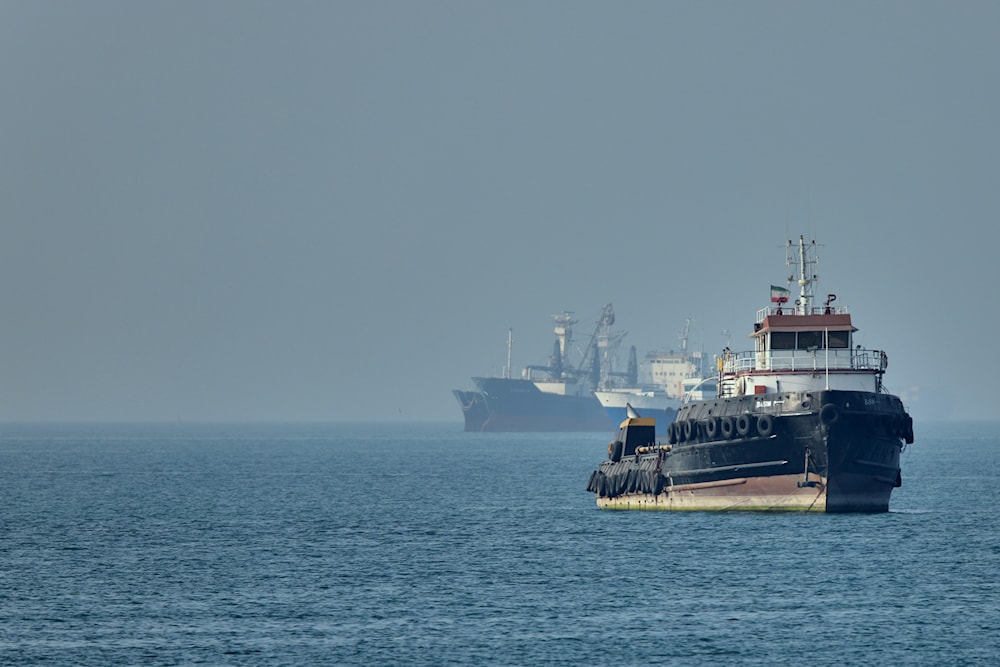
An Iranian tugboat floats in the foreground as cargo ships sit at anchor in the Strait of Hormuz off Bandar Abbas, Iran, Monday, May 4, 2026 (AP)
Three tankers carrying liquefied natural gas (LNG) have reportedly crossed the Strait of Hormuz in recent days, as exporters in Qatar and the United Arab Emirates attempt to maintain limited fuel flows despite major disruptions in the key maritime passage, particularly due to the US blockade of the waterway.
The Al Rayyan vessel was tracked north of Muscat, Oman, after passing through the Strait of Hormuz and is en route to China, according to ship-tracking data compiled by Bloomberg. The tanker had stopped broadcasting its signal around May 22 while near Qatar’s Ras Laffan export facility in the Gulf.
Another Qatari-linked vessel, the Fuwairit, also transited the strait between Sunday and Monday. The ship reportedly stopped transmitting its signal while partially inside the chokepoint before reappearing north of Muscat. It is now heading toward Pakistan, according to tracking data.
Qatar and UAE push exports
LNG exporters across the Gulf are accelerating efforts to move cargoes that have been delayed since the United States and "Israel" launched the joint aggression against Iran in late February.
A separate tanker loaded at Abu Dhabi National Oil Company’s Das Island export terminal also successfully exited the Strait of Hormuz over the weekend and was observed heading toward India, Bloomberg reported.
The movements suggest that, despite heightened risks, exporters in Qatar and the UAE continue to serve key Asian buyers, including China, Pakistan, and India, which remain heavily reliant on Gulf energy supplies.
Shipping flows remain far below pre-war levels
The Strait of Hormuz has remained effectively restricted as diplomatic negotiations between the United States and Iran continue. The waterway normally handles roughly a fifth of global LNG trade, making it one of the world’s most strategically important energy corridors.
Vessels operating in the region have increasingly disabled tracking signals while passing through the strait, reflecting persistent security concerns and the risk of interception or escalation.
Since the escalation of the aggression by the United States and "Israel" against Iran, only a small number of LNG shipments have successfully passed through the chokepoint. Industry estimates suggest just seven LNG cargoes have completed the passage, compared to roughly three tankers transiting daily under normal conditions before the war.
Why is the Strait of Hormuz important?
Iran blocked the Strait of Hormuz after the US and "Israel" attacked its territories and energy infrastructure, and effectively leveraged its geographic location as a tool of pressure against the aggressors.
When a deal was reached on April 8, conditions in the strait returned to normal until "Israel" launched nationwide attacks on Lebanon, which killed nearly 400 civilians in a matter of minutes, in violation of the agreement. The US then moved to blockade Iran and the Strait of Hormuz, actively militarizing the waterway, and further launched sporadic attacks against Iranian ports and vessels.
However, Iran has allowed dozens of vessels to safely transit Hormuz, including those carrying Qatari LNG, through a designated route protected and monitored by the Iranian Navy.
Iranian officials have repeatedly stressed that Iran's strategy for managing the Gulf and the Strait of Hormuz will secure the region’s future.


