
Iran warns UN: US naval blockade is a war crime threatening civilians
 4 Min Read
Iran has warned the UN that the US naval blockade on Iranian ports is threatening the basic rights of the Iranian people and constitutes a war crime, demanding immediate intervention from the human rights chief.
-
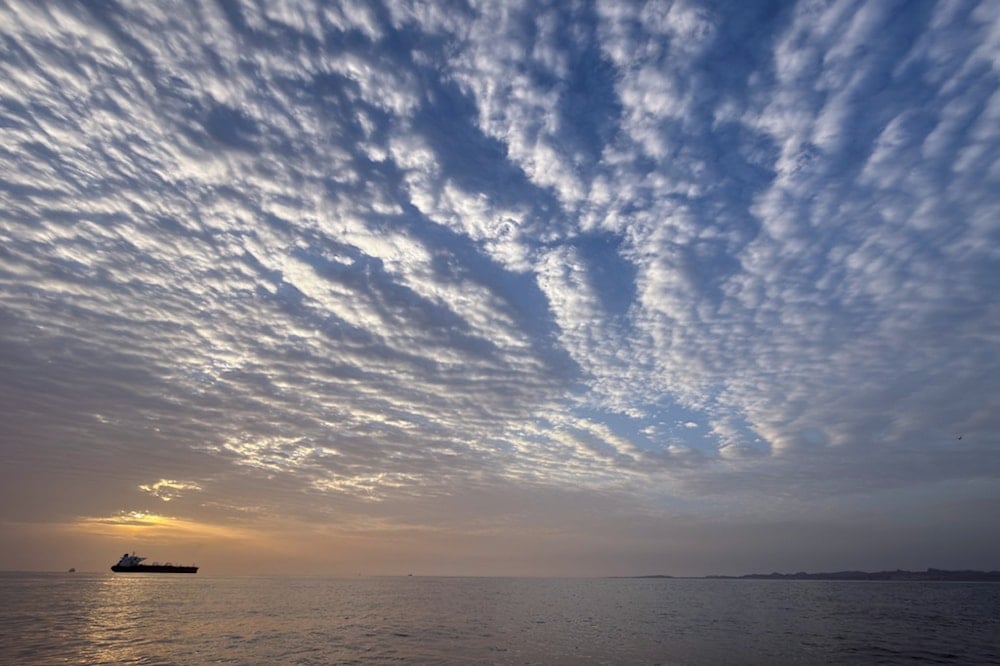
The sun rises behind a tanker anchored in the Strait of Hormuz off the coast of Qeshm Island, Iran, Saturday, April 18, 2026 (AP Photo/Asghar Besharati)
Iran's envoy to the United Nations in Geneva has warned that the illegal US naval blockade on Iranian ports is threatening the fundamental rights of the Iranian people, and has called for immediate intervention by the UN human rights chief, stating that the blockade constitutes a war crime under international law.
In a letter addressed to UN Human Rights Commissioner Volker Türk, Iran's permanent representative to the UN in Geneva, Ali Bahreini, demanded urgent attention to the humanitarian and human rights repercussions of the US‑imposed blockade on Iranian ports. Bahreini explained that the unilateral naval blockade, imposed in the context of continued pressure against Iran, has already resulted in wide‑ranging human rights consequences across the country.
The Iranian envoy warned that if the blockade continues, it will place the basic rights of the Iranian people under genuine threat, including the right to development and access to essential goods and services. He emphasised that the blockade contradicts the principles of international law and constitutes a war crime due to the severe harm it inflicts on civilians.
US continues to violate ceasefire with naval blockade
The United States has been violating the ceasefire agreement brokered on April 8, following the US‑Israeli aggression against Iran that began on February 28. Instead of adhering to the truce, Washington imposed a naval blockade on the Strait of Hormuz, preventing ships from reaching or leaving Iranian ports.
Iran has repeatedly stated that the blockade is an illegal act of war under international law. Tehran has also made clear that its own restrictions on shipping through the strait are lawful defensive measures taken in response to unprovoked US‑Israeli aggression. Iranian officials have consistently demanded the complete lifting of all restrictions on Iranian shipping as a precondition for any lasting resolution to the conflict.
The UN has not yet publicly responded to Iran's formal request for intervention.
Context: Iran's warning that any naval blockade is an act of war
Iran has repeatedly warned that the US naval blockade constitutes an act of war and that Tehran reserves the right to confront and break it. Major General Mohsen Rezaei, a member of Iran's Expediency Discernment Council, stated: "The naval blockade is an act of war, and confronting it is our right, but our patience has limits."
Rezaei added, "We will break the American naval blockade, and our armed forces are preparing themselves." In an interview with Iranian state television, he advised the US military to end the blockade "before the Sea of Oman becomes their graveyard."
Rezaei also clarified Iran's position on the Strait of Hormuz, stating that "the Strait of Hormuz is open to trade, but it will be closed to military buildups and any attempts to destabilize security." He also revealed that the Iranian army and the Islamic Revolutionary Guard Corps had confronted US forces during what he described as an attempt by Washington to reopen the strait, adding that one American destroyer was severely damaged after being struck by Iranian missiles.
The warnings from Iranian military and political officials have been consistent: the blockade is illegal under international law, it constitutes a war crime due to its severe impact on civilians, and Iran will not hesitate to use military force to break it if necessary. Tehran has also made clear that the strait will remain under Iranian control as long as US and Israeli warships threaten its territorial waters.
Read More: Iran will confront, break any US naval blockade if imposed: Rezaei


