
Trump, Starmer discuss Ukraine-Russia, Iran-US talks in Geneva
 4 Min Read
Among the topics of discussion between the UK and US presidents was the need to secure access for humanitarian aid in Gaza.
-
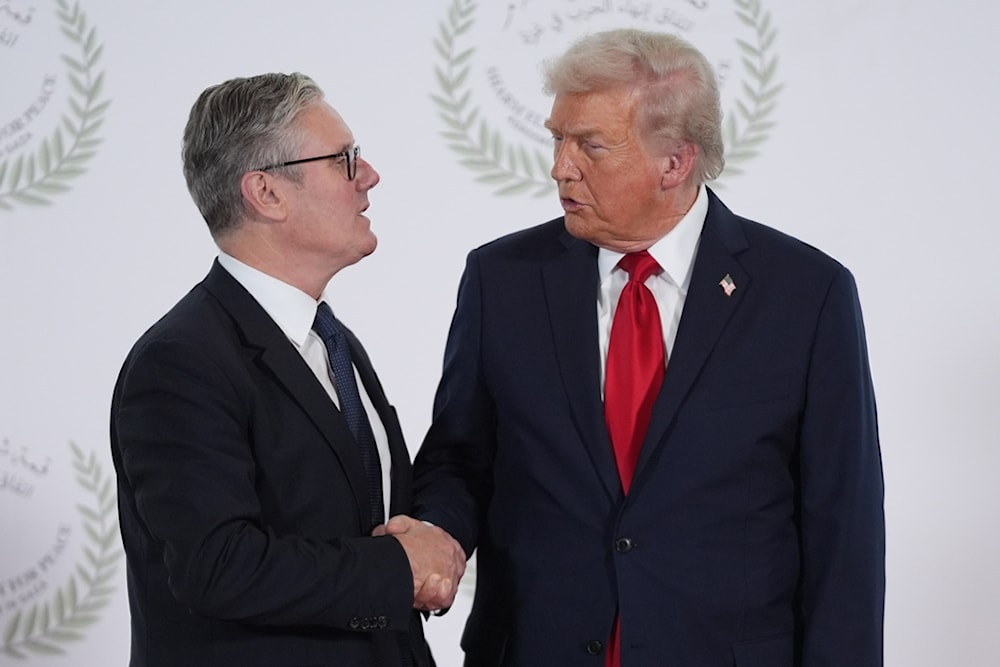
US President Donald Trump greets Britain's Prime Minister Keir Starmer during the Gaza "peace" summit, Monday, Oct. 13, 2025, in Sharm al-Sheikh, Egypt. (AP, Pool)
British Prime Minister Keir Starmer and US President Donald Trump spoke late Tuesday about three major international negotiations, Downing Street said. The conversation touched on the current Russia-Ukraine peace talks, a separate US-Iran nuclear negotiation track, and the crisis in Gaza.
During the conversation, Starmer stressed the need to expand humanitarian access to Gaza, reflecting the UK government's stated concern over worsening civilian conditions amid ongoing assaults. It is, however, important to note that London has continued to provide diplomatic backing to "Israel" and has not imposed a full arms embargo, opting instead for a partial suspension of certain export licences while maintaining broader security cooperation, a policy that has drawn criticism from rights groups and opposition figures who argue it undermines calls for accountability.
Geneva peace talks: Third round between Ukraine and Russia
Trump and Starmer also discussed the ongoing diplomatic efforts surrounding the war in Ukraine, as delegations from Russia and Ukraine gathered in Geneva for a new round of US-brokered negotiations. The Switzerland meetings come after earlier sessions in Abu Dhabi failed to bridge fundamental divides, meaning that the current talks are expected to address more substantive issues, such as territorial arrangements, long-term security guarantees, and the conditions for a potential ceasefire.
Negotiators concluded the first day of the Geneva sessions, focusing discussions on "practical issues and the mechanics of possible solutions," according to Ukraine’s negotiating team. US envoys, including Steve Witkoff and Jared Kushner, have been active in trying to keep dialogue moving, but there has been no major breakthrough to date.
Ukrainian President Volodymyr Zelensky has publicly pushed back against pressure to make concessions, reaffirming that any peace proposal involving territorial compromises would be rejected by the Ukrainian public if put to a referendum.
Trump has also been urging Kiev to make faster progress toward a deal, telling reporters, "Ukraine better come to the table fast. That’s all I’m telling you." Zelensky later described that emphasis as "not fair" if it focuses on pressuring Ukraine more than Russia. "I hope it is just his tactics and not the decision," he said in a recent interview.
European diplomats, from Germany, France, and the UK, are participating on the sidelines of the talks, indicating broader Western engagement in the diplomacy, even as differences persist over how to balance military support and negotiated settlement strategies.
US-Iran nuclear talks: Principles agreed, harder work ahead
At the same time as the Ukraine negotiations, US-Iran nuclear discussions have been underway in Geneva, separated from the Ukraine talks but running parallel geographically and diplomatically. Iranian Foreign Minister Abbas Araghchi said Tehran and Washington reached an understanding on "guiding principles" intended to shape future talks.
While affirming that this step lays the groundwork for continued dialogue, he added that "this does not mean we will reach an agreement soon," warning that much more detailed work remains before any formal deal could be concluded.
Analysts note that the talks come after a period of military posturing and strategic signaling from both sides. Tehran has insisted that its broader strategic assets are not on the negotiation table, while Washington has pressed for tighter limits on Iran’s nuclear activities and clearer "verification" measures.
US officials, meanwhile, have characterized the progress as cautious but meaningful enough that the Iranian delegation is expected to come back with detailed proposals within weeks, suggesting the immediate risk of military aggression has eased somewhat.
Read more: Iran, US cite progress in talks but red lines remain


