
Iran, US cite progress in talks but red lines remain
 4 Min Read
Iran and the US report progress in Geneva nuclear talks, but Vice President JD Vance says key US red lines remain unresolved.
-
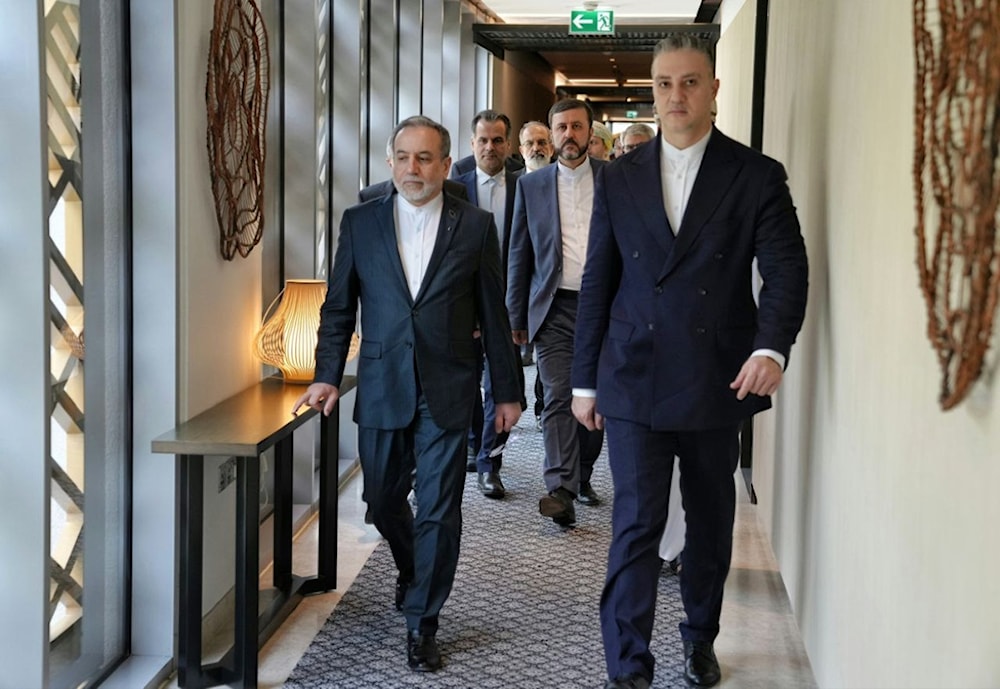
Iranian Foreign Minister Abbas Araghchi, left, heads to the venue for indirect talks between Iran and the US, in Muscat, Oman, Friday, Feb. 6, 2026. (Iranian Foreign Ministry)
Iran and the United States reported progress after the indirect, Omani-mediated talks in Geneva on Tuesday, with Tehran saying the sides agreed on “guiding principles” for a potential deal, while US Vice President JD Vance cautioned that key American red lines had yet to be acknowledged.
Speaking after the talks, Iranian Foreign Minister Abbas Araghchi said the discussions were “more constructive” than the previous round earlier this month and resulted in broad agreement on a framework to move forward.
“Ultimately, we were able to reach broad agreement on a set of guiding principles, based on which we will move forward and begin working on the text of a potential agreement,” Araghchi told state television. He added that once draft texts are prepared, they would be exchanged and a third round of talks scheduled.
However, in Washington, Vance struck a more cautious tone, saying that while both sides agreed to continue discussions, Tehran had not yet accepted all US demands.
“In some ways, it went well; they agreed to meet afterwards,” Vance said in an interview with Fox News. “But in other ways, it was very clear that the president has set some red lines that the Iranians are not yet willing to actually acknowledge and work through.”
Vance stressed that diplomacy remained the preferred path but warned that President Donald Trump retained the authority to decide when talks had reached their limit.
Regional tensions and military pressure
The talks, facilitated by Omani Foreign Minister Badr Albusaidi, come amid heightened regional tensions and increased US military deployments near Iran.
The US has ordered two aircraft carriers to the region. The first, the USS Abraham Lincoln, was positioned roughly 700 kilometres from Iran’s coast as of Sunday, placing dozens of fighter jets within operational range. A second carrier was dispatched over the weekend.
Iranian Leader Sayyed Ali Khamenei warned in a speech that while warships are dangerous, “even more dangerous is the weapon capable of sinking it.”
Iran has long sought relief from sweeping US sanctions, including restrictions on its oil exports. Tehran has insisted that the Geneva talks focus strictly on the nuclear issue, while Washington has previously pushed to expand discussions to include Iran’s ballistic missile programme and its regional alliances.
Albusaidi described the latest round as having made “good progress” but cautioned that “much work is left to be done,” underscoring the remaining gaps despite signs of diplomatic momentum.
Iran maintains its position, says talks 'productive'
Meanwhile, Iran agreed to mediated talks if the United States commits to the proposed agenda, which is limited to the nuclear issue and lifting US sanctions imposed on the Islamic Republic. Iran has rejected any attempt to broaden discussions beyond those issues.
Tehran also reiterated that uranium enrichment remains a sovereign right and a non-negotiable principle within its civilian nuclear program.
Iranian Foreign Minister Abbas Araghchi also disclosed certain details after Tuesday's talks in Geneva, stating that the nature of the talks was constructive and "more productive."
"I can say that at this round, compared to the last one, we brought up absolutely serious issues for discussion, the atmosphere was more productive. Various ideas were put up for discussion, and we had serious discussions on these ideas, and finally we found a strategic route that we will follow, along which we will move and reach a text of a possible agreement," Araghchi said on Iranian television, following talks with the United States in Geneva.
According to Araghchi, the parties worked out the basic principles during the Geneva talks that will guide efforts toward a potential agreement on the Iranian nuclear dossier. He cautioned, however, that identifying principles does not necessarily guarantee a final deal.
"The time has not been determined yet. We agreed that the parties will work on the texts of a possible agreement, then we will exchange these texts, and then we will determine the date of the third round of negotiations," Araghchi said.


