
Trump issues new bans, tightens entry rules for foreign nationals
 3 Min Read
The US president signed a proclamation expanding travel restrictions to 25 additional countries, citing national security concerns and deficiencies in vetting systems.
-
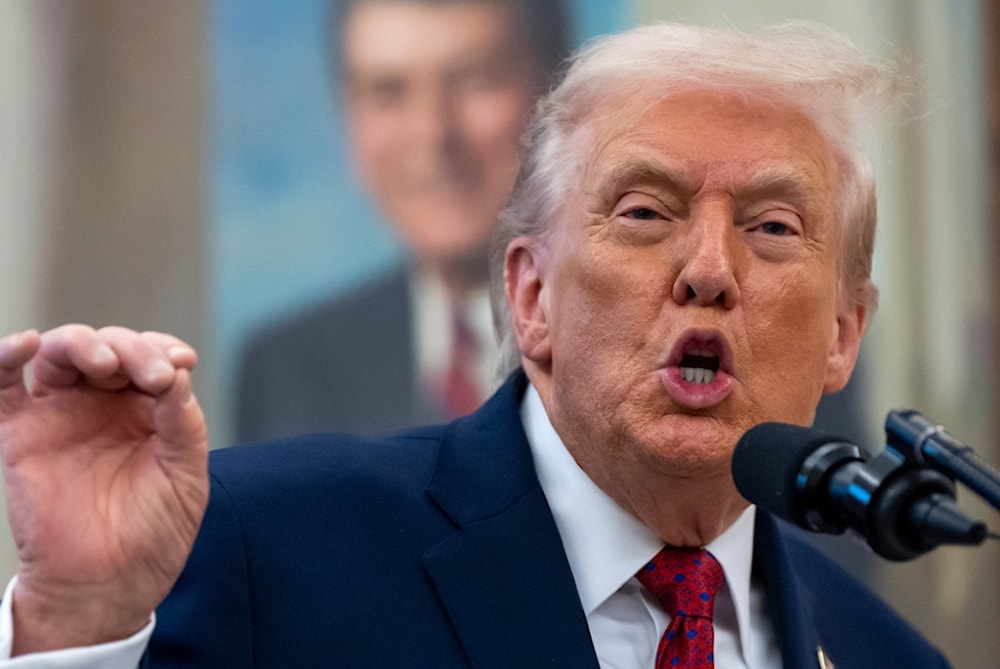
US President Donald Trump speaks during a Mexican Border Defense Medal presentation in the Oval Office of the White House, Monday, December 15, 2025, in Washington. (AP)
US President Donald Trump has signed a new proclamation expanding and strengthening travel restrictions on nationals from countries identified as posing persistent "national security risks."
The new order builds on Proclamation 10949 and Executive Order 14161, which established country-specific screening and vetting requirements during Trump’s first term.
The updated policy continues full or partial entry restrictions for nationals from over 40 countries, citing failures in information-sharing, identity verification, and repatriation cooperation.
Read more: Trump administration halts certain green card applications
Palestinian Authority documents included in full restrictions
Among the most notable changes, the proclamation adds full entry restrictions on individuals holding travel documents issued by the Palestinian Authority. These individuals will now face the same travel limitations as nationals from countries deemed high-risk unless they qualify for specific exceptions.
The decision marks a significant policy shift and places holders of Palestinian documents alongside countries such as Syria, Iran, Somalia, and Yemen, which remain fully restricted under the updated order.
While the proclamation allows for exceptions in categories, such as lawful permanent residents, diplomats, and certain visa holders, the inclusion of Palestinian Authority-issued documents narrows access for thousands of stateless individuals seeking entry to the United States.
Palestinian Authority officials had previously had their visas denied ahead of a UN summit on Palestinian statehood in August of this year.
Full bans extended to five new countries, two upgraded
In addition to the Palestinian Authority, full restrictions were newly imposed on Burkina Faso, Mali, Niger, South Sudan, and Syria. Countries like Laos and Sierra Leone, previously under partial limitations, now face full restrictions.
These join 12 nations already under full bans, including Afghanistan, Iran, Libya, Somalia, and Yemen.
Read more: Colombian president responds to US visa ban over 'Israel' criticism
Partial restrictions imposed on 15 more nations
The proclamation also imposes partial restrictions on nationals from 15 additional countries, including Angola, Benin, Nigeria, Senegal, Zambia, Zimbabwe, and others. These restrictions vary by visa class and are tailored to country-specific risk assessments.
Meanwhile, restrictions on Burundi, Cuba, Togo, and Venezuela remain in place.
The only country removed from the ban list is Turkmenistan, which the administration said had shown significant progress in cooperating with US vetting procedures. Nonimmigrant visas for Turkmen nationals are now permitted, though immigrant visa bans remain.
Trump administration narrows visa waivers, family-based entries
The new order tightens visa waivers, particularly for family-based immigrant visa applicants, citing “demonstrated fraud risks.” While case-by-case waivers are still permitted, the policy limits broad carve-outs applied in earlier versions.
Applicants from restricted countries may still apply for entry under select visa categories, including for athletes, diplomats, or those whose presence serves US national interests.
Legal precedent, background
The Supreme Court previously upheld similar travel restrictions imposed during Trump’s first term, affirming that the policy falls within presidential authority to control entry based on national security grounds.
The Court ruled that the policy “is squarely within the scope of Presidential authority” and serves “legitimate purposes,” including preventing the entry of nationals who cannot be adequately vetted.


