
Trump moves to revoke citizenships in expanded denaturalization push
 3 Min Read
The Trump administration has expanded its denaturalization campaign, targeting naturalized US citizens and citing a myriad of unfounded accusations.
-
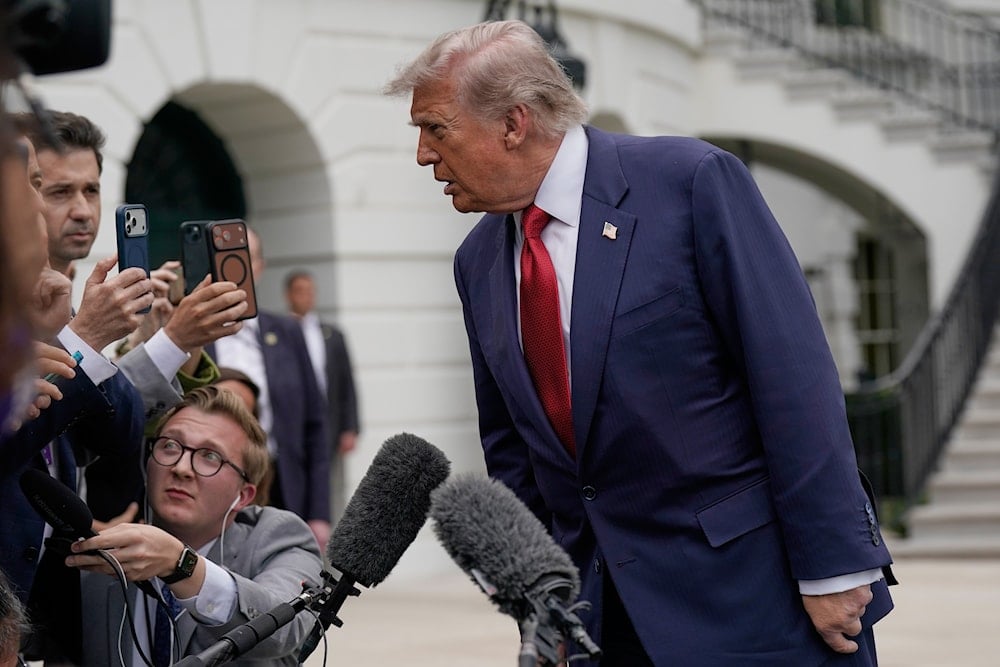
US President Donald Trump speaks to reporters as he walks to board Marine One on the South Lawn of the White House on May 8, 2026, in Washington (AP)
The Trump administration has announced a major expansion of its denaturalization campaign, targeting foreign-born American citizens allegedly involved in fraudulently obtaining US citizenship, CBS News reported.
On Friday, the Justice Department unveiled denaturalization cases in federal courts across the country against approximately a dozen US citizens born overseas. Officials said those targeted were allegedly accused of serious crimes, immigration fraud, or alleged ties to terrorism.
The move marks a significant escalation in the government’s use of denaturalization, a complex legal process historically used sparingly by prior administrations.
The Justice Department’s latest cases involve naturalized US citizens originally from Bolivia, China, Colombia, Gambia, India, Iraq, Kenya, Morocco, Nigeria, Somalia, and Uzbekistan. Authorities also included individuals allegedly using false identities to secure immigration benefits, as well as one individual allegedly involved in sham marriages as part of an immigration fraud scheme.
In a separate announcement, the Justice Department said it is also seeking to denaturalize Manuel Rocha, a former American diplomat who admitted to serving as a Cuban spy in a high-profile criminal case. The case has drawn additional attention to the administration’s broader US citizenship revocation strategy.
How the denaturalization process works
Denaturalization is a legal mechanism allowing the federal government to revoke citizenship if it proves that an individual obtained naturalization illegally or through fraud. The process generally involves Justice Department lawyers filing either civil or criminal cases in federal court.
Under US law, denaturalization may occur if authorities demonstrate that a naturalized citizen concealed relevant information or misrepresented facts during the immigration or naturalization process. Individuals stripped of citizenship lose the legal protections and rights associated with being American citizens and typically revert to their prior legal status, often permanent residency.
Former citizens may then become subject to deportation depending on the allegations.
Trump officials defend crackdown on immigration fraud
In an interview for CBS News earlier this week, Acting Attorney General Todd Blanche previewed the administration’s expanded crackdown on immigration. He said he believes there are “a lot of individuals who are citizens who shouldn't be.”
Addressing concerns among the roughly 24 million naturalized citizens in the US, Blanche claimed that only “a very small percentage” should be concerned.
Those who did not illegally obtain citizenship, he added, have nothing to fear from the administration’s enforcement campaign. “We should disincentivize people from committing fraud when they're going to become a citizen of this great country,” Blanche said.
The expansion of the Justice Department denaturalization effort is likely to raise concerns among immigrant communities and advocacy groups monitoring Trump’s broader immigration agenda. Critics have historically argued that wider use of denaturalization could create uncertainty among naturalized citizens, while supporters say the policy is necessary to "address fraud and national security risks."
The latest expansion signals that denaturalization may become a more visible component of Trump's immigration policy moving forward.


