
Trump–Netanyahu rift over Iran war risks fragile ceasefire: Bloomberg
 3 Min Read
US-Israeli divisions deepen over the strategy of the war on Iran, with Netanyahu challenging ceasefire terms by continuing to attack Lebanon, as Strait tensions persist and the ceasefire is threatened.
-
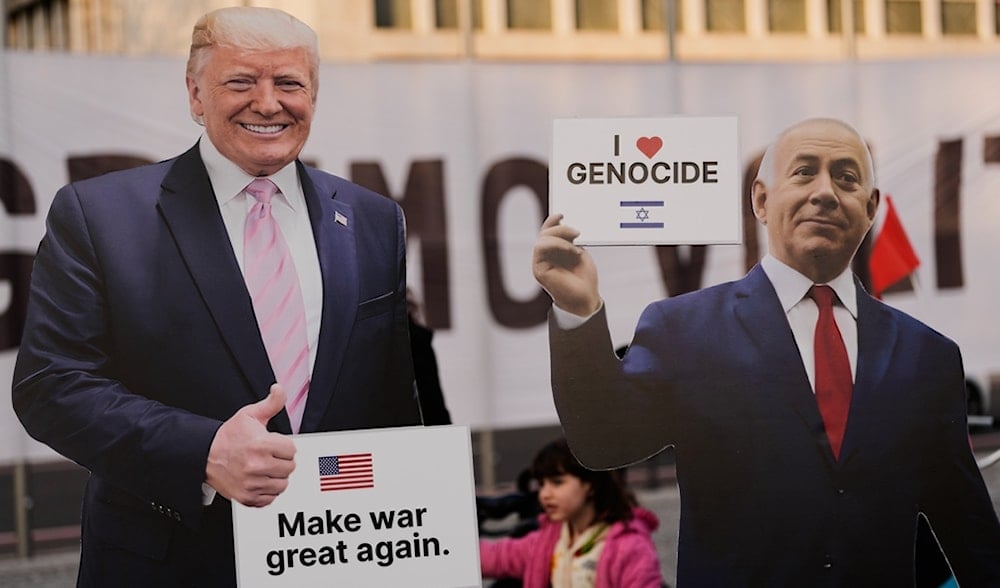
Life size effigies of President Donald Trump, left, and Israeli Prime Minister Benjamin Netanyahu, are set near the Parliament building by left wing protesters in Ljubljana, Slovenia, March 20, 2026. (AP)
Deepening political and strategic divisions between US President Donald Trump and Israeli Prime Minister Benjamin Netanyahu over the Iran war are threatening to complicate a secure and durable ceasefire, Bloomberg reported in an investigation by Ben Bartenstein.
The fragile truce comes as "Israel" continues aggressive attacks on Lebanon, and Iran maintains pressure through its leverage over the Strait of Hormuz, raising concerns among diplomats that the war could escalate further despite ongoing diplomatic efforts, including planned US-Iran talks in Islamabad.
According to Bloomberg, Netanyahu quickly challenged elements of the ceasefire agreement announced by Trump, even as Israeli forces intensified their aggression on Lebanon, including some of the worst massacres of the latest aggression. The escalation reportedly triggered warnings from Tehran that the truce could collapse before formal negotiations even begin.
Trump, according to US officials cited in the report, intervened in a call with Netanyahu urging restraint, after which "Israel" reportedly agreed to scale back some operations. However, Netanyahu later signaled that attacks on Lebanon would continue, despite parallel diplomatic discussions with Beirut.
These have resulted in significant casualties and mass displacement, while Israeli forces have issued evacuation warnings across multiple Lebanese areas, intimidating the people and deliberately provoking panic.
Rift over diplomacy with Iran
Bloomberg reports that Netanyahu has strongly opposed renewed diplomatic engagement with Iran, in contrast to growing momentum within parts of the US administration pushing for negotiations. "Israel" is not directly involved in the Islamabad talks scheduled for Saturday, where US and Iranian officials are expected to meet.
While Trump has publicly downplayed disagreements with Netanyahu, the report highlights growing friction within the alliance that previously aligned closely on military escalation against Iran.
Iran’s continued influence over the Strait of Hormuz remains a central pressure point in the war, with Tehran using its leverage over the vital shipping route to pressure global energy markets. The resulting economic strain has added urgency to US efforts to stabilize the situation through negotiations.
The report also highlights internal divisions within Trump’s foreign policy circle, with figures such as Vice President JD Vance and Secretary of State Marco Rubio reportedly favoring a more cautious diplomatic approach, while other advisors previously supported continued military pressure on Iran.
Diplomats and analysts cited by Bloomberg warn that the lack of a unified strategy risks leaving the US trapped in an open-ended confrontation, particularly if "Israel" continues escalation while Iran resists concessions on its nuclear program.
Outlook: Fragile ceasefire and unresolved war
Despite the announcement of a ceasefire window, officials quoted in the report caution that the underlying war remains unresolved. "Israel" is reportedly determined to continue its aggression against Lebanon, while Tehran has shown little willingness to concede on core nuclear demands.
As tensions persist, analysts warn that the US risks being drawn deeper into a regional war with no clear exit strategy, as political fault lines between Trump and Netanyahu increasingly shape the trajectory of the war.


