
Trump seeks speedy end to war on Iran as it drags on futilely
 6 Min Read
The US president privately tells associates he wants to end the war on Iran within weeks, but faces no easy exit as Tehran rejects direct talks.
-
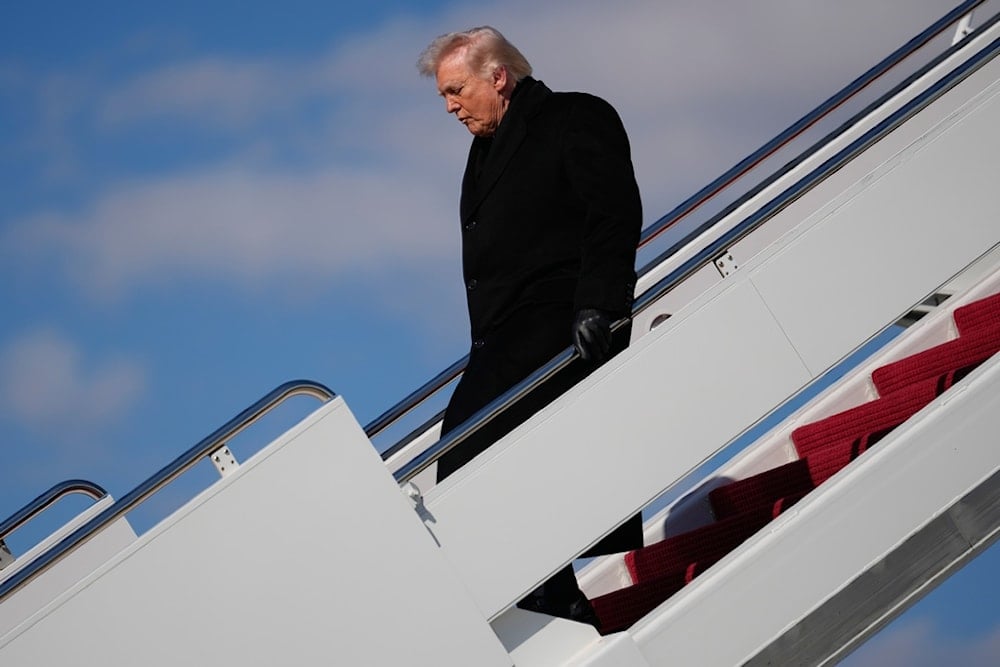
US President Donald Trump arrives on Air Force One, Wednesday, March 18, 2026, at Joint Base Andrews, Md., after attending the casualty return at Dover Air Force Base, Del. (AP)
US President Donald Trump has told associates in recent days that he wants to avoid a protracted war on Iran and hopes to bring the war to an end in the coming weeks, nearly one month into a war that has achieved none of its stated objectives, the Wall Street Journal reported.
The president has privately informed advisors he thinks the war is in its final stages, urging them to stick to the four-to-six-week timeline he has outlined publicly, the WSJ noted, citing people familiar with the matter. The problem is that Trump has no easy options for ending the war, and peace talks, if any, remain at a nascent stage as Iran outrightly rejected his 15-point plan.
A war distracting from other priorities
In discussions with outside political allies, Trump's attention has at times shifted to other topics, including the coming midterm elections, as well as his decision to send immigration agents to airports and strategies to move legislation to tighten voter-eligibility rules through Congress. Trump told an associate that the war was distracting him from his other priorities, one of the people said.
The president appears ready to shift to his next big challenge, another person who spoke to him recently said, though Trump did not say what that might be. Some allies would like him to focus on regime change in Cuba, while close advisors want him to focus on concerns about the cost of living, which have been exacerbated by the war.
White House Press Secretary Karoline Leavitt insisted Trump remains focused on "fully achieving the military objectives against the terrorist Iranian regime," adding that "the president's sole focus is always victory."
Read more: US seeks urgent funds for interceptor stocks drained by war on Iran
Walking back threats, deploying more troops
Trump this week signaled renewed interest in reaching a diplomatic settlement, walking back a weekend threat to strike Iran's power plants. Intermediaries in the region have traded opening proposals from Tehran and Washington, though Iran has rejected direct talks. At the same time, the US is already escalating, deploying thousands of additional troops from the Army's 82nd Airborne Division to the Middle East, joining more than 2,000 Marines already headed to the region.
One idea Trump has floated to advisors: securing US access to some of Iran's oil as part of any deal to end the war, according to a senior administration official. The official said there is no current planning underway for that outcome.
Leavitt told reporters Wednesday that the US will hit Iran "harder than they have ever been hit before" if Tehran does not make an agreement to end the war. "President Trump does not bluff and he is prepared to unleash hell."
Read more: US troops refuse being 'pawns' as dissent over Iran war grows
Ground invasion concerns
Trump is willing to order US troops on Iranian soil but is reluctant to do so, in part because it could upend his goal of a speedier end to the war. So far, nearly 300 American troops have been wounded and 13 have been killed.
War Secretary Pete Hegseth said Tuesday, "We see ourselves as part of this negotiation as well. We negotiate with bombs."
Trump said earlier this week that Hegseth and Gen. Dan Caine, chairman of the Joint Chiefs of Staff, were "quite disappointed" by the prospect that the war could be over soon. "They were not interested in settlement, they were interested in just winning this thing," Trump said.
Read more: Iranian strikes force US troops out of bases: NYT
No easy exit
Ending the war is not up to Trump alone. The US and Iran are far from reaching an agreement to stop the confrontation, and Tehran has rejected direct talks with Washington. Without a deal or a firm military victory, Trump is likely to face the continued blocking of the Strait of Hormuz, which would continue to roil global energy markets. "Israel", which launched the war alongside the US on February 28, could continue its operations independently. Gulf countries that have been the target of weeks of retaliatory strikes are now considering entering the war.
People close to the president cautioned that it is often difficult to predict what decisions Trump might make about the war, noting that as the war has unfolded, he has vacillated behind the scenes between embracing diplomacy and ramping up strikes. Some people close to Trump are urging him to go harder, saying regime change in Iran could be legacy-defining.
Pressure awaiting back home
Trump has for weeks sought to characterize the war as a temporary distraction, calling it an "excursion" and a "military operation". On Tuesday, he said, "This war has been won. The only one that likes to keep it going is the fake news."
Meanwhile, political pressures mount at home. On Tuesday, a Democrat flipped a South Florida state legislative seat that includes Trump's Mar-a-Lago estate. Republicans worry the war could worsen their political problems as high costs and Trump's poor approval numbers weigh down candidates in key statewide races.
As he contends with a war that has not gone as planned, Trump took time on Friday to attend a $1,200-per-person fundraising gala at Mar-a-Lago. "I didn't know I was going to be here today," Trump told the crowd. "I am supposed to be prosecuting the war, but the war's going very well."
Read more: Senior Iranian official outlines conditions for ending war: Exclusive


