
Trump threatens 25% tariffs on EU autos
 3 Min Read
Donald Trump announced plans to impose 25% tariffs on EU auto imports, escalating trade tensions with the European Union and raising the risk of retaliation.
-
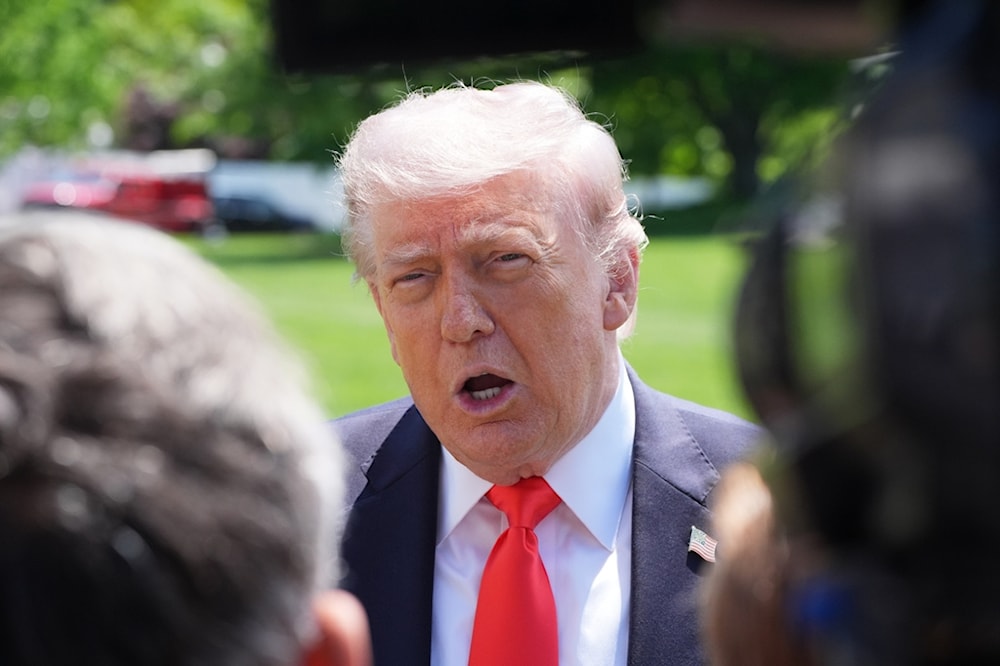
President Donald Trump speaks with reporters before departing on Marine One from the South Lawn of the White House, Friday, May 1, 2026, in Washington. (AP)
US President Donald Trump has announced plans to raise tariffs on cars and trucks imported from the European Union to 25%, signaling a renewed escalation in transatlantic trade tensions.
In a post on Truth Social, Trump justified the move by accusing the bloc of failing to adhere to an existing trade agreement.
"I am pleased to announce that, based on the fact the European Union is not complying with our fully agreed to Trade Deal, next week I will be increasing Tariffs charged to the European Union for Cars and Trucks coming into the United States. The Tariff will be increased to 25%," he wrote.
The proposed measure would significantly raise costs for European automakers exporting to the US, though Trump indicated that vehicles produced within the United States by European manufacturers would be exempt from the tariffs.
Escalating trade dispute
The announcement comes amid ongoing friction over a trade framework reached last year, which had set lower tariff ceilings and was intended to ease barriers between the two sides.
However, implementation of that agreement has remained incomplete, with both sides accusing each other of failing to meet commitments.
The move also reflects a broader pattern in Trump’s economic policy, which has relied heavily on tariffs to pressure trading partners and incentivize domestic production. Previous measures have already imposed substantial duties on imported vehicles and parts, and Washington has repeatedly threatened further increases, at times proposing tariffs of up to 50% on European goods.
Pattern of pressure
The latest announcement is widely seen as part of a longer cycle of tariff escalation rather than an isolated decision. Since 2025, the US has introduced or threatened multiple rounds of duties targeting European exports, using tariffs as leverage in negotiations over market access and trade terms.
Analysts note that such measures are often deployed as bargaining tools, with tariff threats used to extract concessions rather than solely as economic policy. This approach has contributed to ongoing uncertainty in transatlantic trade relations.
Economic stakes
The potential impact is significant. The EU is one of the United States’ largest trading partners, with total trade reaching roughly €1.7 trillion in recent years, making stability in the relationship critical for both economies.
The automotive sector is particularly exposed, especially in countries such as Germany, where car exports form a central pillar of the economy.
Analysts warn that higher tariffs could reduce EU exports to the US and force companies to reconsider production strategies, including shifting manufacturing to American plants to avoid duties.
Risk of retaliation
The announcement has raised concerns about a possible escalation into a broader trade conflict. The EU has already prepared countermeasures targeting billions of euros worth of US goods and has signaled it is ready to respond to what it considers unjustified trade barriers, including through retaliatory tariffs.
At the same time, European officials have sought to balance deterrence with diplomacy, often delaying immediate retaliation in favor of negotiations. New instruments, including mechanisms designed to counter economic coercion, are also being considered as part of the bloc’s response toolkit.
Economists warn that such measures could disrupt supply chains, increase consumer prices, and weigh on global growth, particularly at a time of heightened geopolitical uncertainty.


