
Trump top aides hold secret Camp David meeting on Iran, Yemen: Axios
 3 Min Read
Trump’s top officials met at Camp David to discuss the war on Iran and Saudi Arabia’s offensive against Yemen.
-
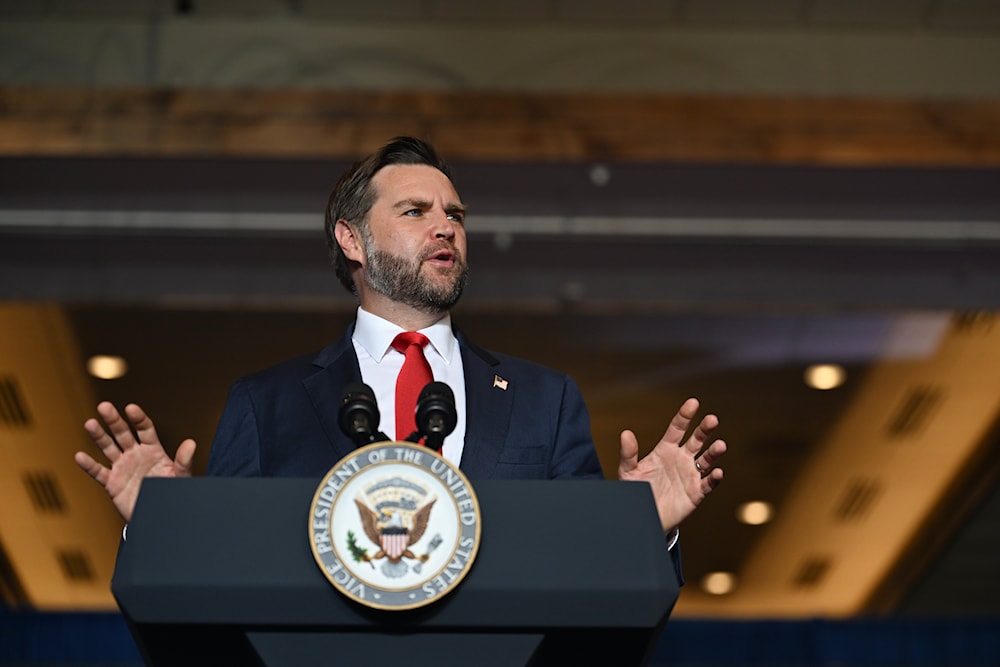
Vice President JD Vance delivers remarks as the guest speaker at a rally aimed at boosting local Republican candidates, including Eric Flores in Texas' 34th Congressional District, Wednesday, Sept. 30, 2026, in Harlingen, Texas (AP)
US President Donald Trump's top cabinet members met for hours at Camp David on Friday to discuss next steps in the wars in Iran and Yemen, three US officials told Axios.
The meeting was not announced by the Trump administration, and according to the officials, the last time a similar meeting took place was in June 2025, just days before "Israel" launched its war on Iran. United States Vice President Vance chaired the meeting, the officials said.
Among the other participants were Secretary of State Marco Rubio, Secretary of War Pete Hegseth, White House envoy Steve Witkoff, CIA director John Ratcliffe, and chairman of the Joint Chiefs of Staff Gen. Dan Caine.
"Things were decided or at least deeply discussed," one of the officials said, referring to the crisis in the Middle East.
With negotiations stalled, Trump is considering resuming major combat operations in Iran. "Now I have to make a decision: either Iran signs the deal, or it won't exist any longer," he said on Thursday.
At the same time, Trump is being asked to join Saudi Arabia's offensive on Yemen, with the Saudis urging the president to conduct airstrikes against the Yemeni Armed Forces; however, Trump has been leaning against it. US officials say he could change his mind.
On Friday afternoon, while his advisors were at Camp David, Trump was asked by reporters what his next move on Iran will be. "If I told you, you would have a major story," he said. "But you will see. It is working out very well. Iran is not doing well."
Trump rejects Iran's Strait of Hormuz plan, mulls renewed war
This closely follows US President Donald Trump's rejection of a proposal from Tehran for a seven-day Hormuz reopening plan and is considering new strikes after the US midterm elections, The Wall Street Journal reported on September 26, citing US officials.
According to the WSJ, Trump doubts that Iran will accept the conditions set by Washington and has told his aides that further strikes are likely. The report also said the United States informed Iran and mediators involved in the talks that Trump does not plan to lift the naval blockade of the Strait of Hormuz.
Iranian Foreign Minister Abbas Araghchi said Tehran delivered a seven-day plan to the United States through Qatar that would pave the way for reopening the Strait of Hormuz, stressing that maritime traffic cannot return to normal under economic pressure.
Speaking to reporters outside the United Nations headquarters in New York, Araghchi accused Washington of resorting to threats and assassinations against Iran, saying that more than 5,000 Iranians were killed during the US-Israeli aggression against the country.
Tehran has also outlined seven conditions for restoring maritime traffic through the strategic passage, demanding that Washington fulfill these conditions before the reopening of the strait.
These conditions include:
- Ending all military and hostile actions, including those in Lebanon;
- Releasing frozen Iranian assets;
- Lifting the naval and oil blockade;
- Removing economic and political sanctions;
- Withdrawing US naval and air forces from near Iran;
- Providing compensation for war-related damages
- Ending US threats and insults.
"When the United States accepts our conditions, the seven-day plan to open the strait begins," Araghchi said.


