
Trump rejects Iran's plan for Hormuz, weighs renewed aggression: WSJ
 3 Min Read
Trump rejects Iran’s seven-day plan to reopen the Strait of Hormuz as Washington rules out lifting its naval blockade, the WSJ reports.
-
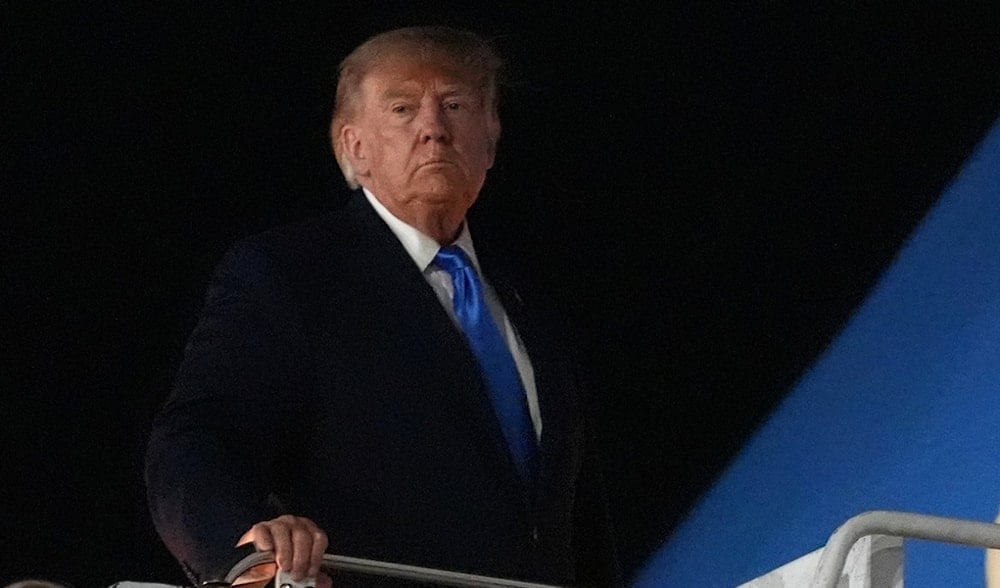
President Donald Trump boards Air Force One at John F. Kennedy International Airport, Tuesday, Sept. 22, 2026, in New York (AP Photo/Julia Demaree Nikhinson)
US President Donald Trump has rejected a proposal from Tehran for a seven-day reopening of the Strait of Hormuz and is considering new strikes after the US midterm elections, the Wall Street Journal (WSJ) reported Friday, citing US officials.
According to the WSJ, Trump doubts that Iran will accept the conditions set by Washington and has told his aides that further strikes are likely.
The report also said the United States informed Iran and mediators involved in the talks that Trump does not plan to lift the naval blockade of the Strait of Hormuz.
Araghchi reveals Iran’s 7-day plan to reopen Hormuz
Iranian Foreign Minister Abbas Araghchi said Tehran has delivered a seven-day plan to the United States through Qatar that would pave the way for reopening the Strait of Hormuz, stressing that maritime traffic cannot return to normal under economic pressure.
Speaking to reporters outside the United Nations headquarters in New York, Araghchi accused Washington of resorting to threats and assassinations against Iran, saying that more than 5,000 Iranians were killed during the US-Israeli aggression against the country.
Tehran has also outlined conditions for restoring maritime traffic through the strategic passage.
Iran has demanded that Washington fulfill seven conditions before the reopening of the strait, including ending all military and hostile actions, including those in Lebanon; releasing frozen Iranian assets; lifting the naval and oil blockade; removing economic and political sanctions; withdrawing US naval and air forces from near Iran; providing compensation for war-related damages; and ending US threats and insults.
“When the United States accepts our conditions, the seven-day plan to open the strait begins,” Araghchi said.
Washington's economic downfall
While Trump resorts to military and economic pressure against Iran, yields climbed to their highest levels in 19 years earlier this month as oil prices surged on the war and expectations grew that the Federal Reserve would raise interest rates.
The Fed raised its benchmark rate by 25 basis points earlier this month as inflation remained firmly above its 2% target, and investors have raised their bets on another hike in October to 70% as Brent crude for November delivery climbed to around $100 a barrel.
Trump is now reportedly considering a 90-day halt on diesel exports to give American households some relief before the midterm elections. However, US Energy Secretary Chris Wright has cautioned that an export ban is a crude instrument that could weaken US fuel supplies over time.
Meanwhile, the European Commission has warned Washington against cutting off US diesel exports, saying the move would harm both economies at a time when Europe relies on US fuel more heavily than ever.
Commission spokesperson Olof Gill said on Thursday that any disruption would risk damaging the EU and the US alike.
Read more: Ghalibaf to US: Enjoy 1970s rates, gas prices and bell-bottoms


