
EU warns Trump diesel export ban would hurt both sides
 4 Min Read
Brussels urges Washington to consult before any US diesel export ban, as Europe's reliance on American fuel deepens and pump prices hit records.
-
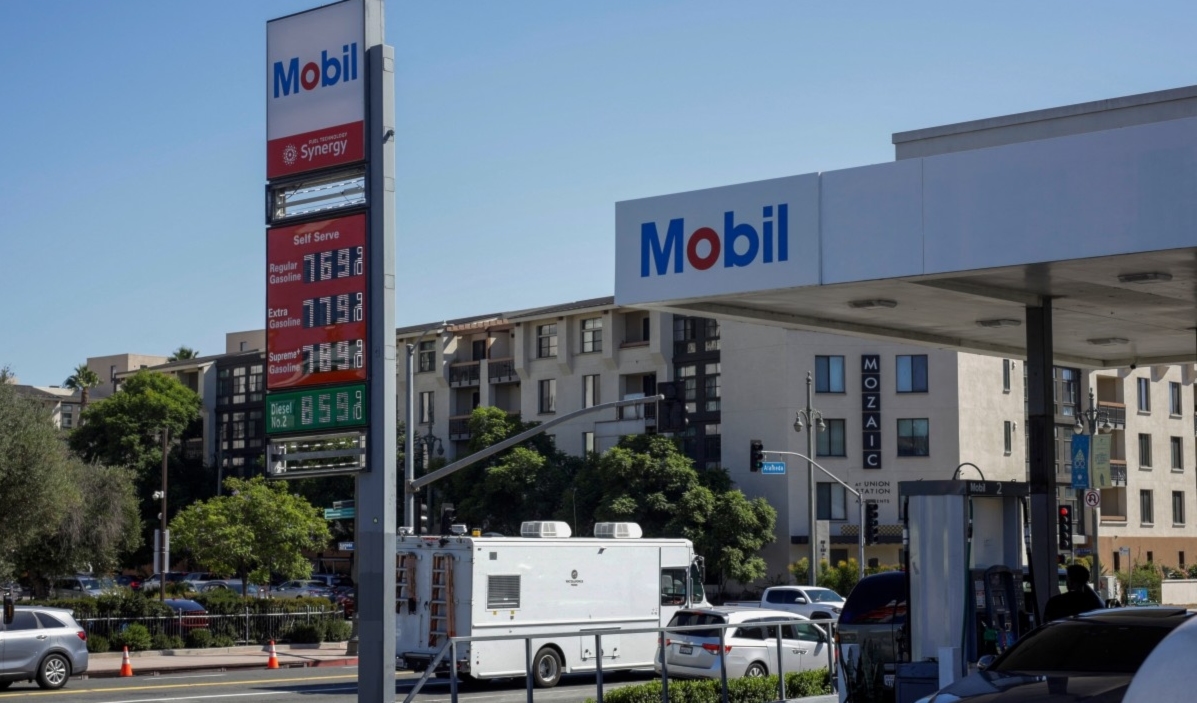
Gas prices above $7 a gallon for regular gasoline and $8 a gallon for diesel are displayed at a Mobil gas station in Los Angeles on September 23, 2026 (MICHAEL IP/AFP)
The European Commission has warned Washington against cutting off US diesel exports, saying the move would harm both economies at a time when Europe relies on US fuel more heavily than ever.
Commission spokesperson Olof Gill said on Thursday that any disruption would risk damaging the EU and the US alike. He said Brussels expects close partners to consult each other before taking steps that affect shared markets, adding that high-level contacts with the US administration are ongoing.
Trump weighs 90-day ban ahead of midterms
US President Donald Trump is reportedly considering a 90-day halt on diesel exports to give American households some relief before the midterm elections. The average US diesel price has climbed to a record $6.52 a gallon.
Trump said he had told his team to keep the fuel at home, pointing to the large volumes the US produces. "I've said let's not send out the diesel," he said.
Not everyone in his administration is on board. US Energy Secretary Chris Wright has cautioned that an export ban is a crude instrument that could weaken US fuel supplies over time.
Rising fuel costs have become a growing political problem for the Republican Party. Trump has also called on Ukraine to stop striking refineries inside Russia as prices climb.
How Europe came to depend on US cargoes
Europe's exposure to a US ban has grown sharply this year. Output from war-damaged refineries in West Asia and Russia has fallen steeply, and US diesel has filled much of the gap. It accounted for about a third of Europe's diesel imports so far this year and around half by August.
Josh Michalowski, who leads European diesel pricing at commodities data provider Argus Media, told The Guardian that a US ban would be devastating for European supply because the continent would have difficulty finding replacement volumes.
Analysts do not expect European pumps to run dry. The continent refines about 70 percent of the diesel it uses and keeps fuel in reserve. The main danger is cost. Benedict George, head of European products at Argus, told The Guardian that losing US cargoes would force European buyers to compete with Asian importers for the limited supply available from the Gulf and India, in a market that is already tight.
George said even a moderately serious move by the White House would cause some panic among buyers who have come to depend on US shipments. For now, he said, trading has stayed calm as the market waits to see how far Washington is prepared to go.
Prices already at record highs
The threat comes as diesel prices across Europe sit at historic levels. Pump prices have hit records in Germany and the Netherlands, prompting calls for governments to protect households from further increases.
Diesel has risen faster than crude oil because of severe disruption to refineries in the Gulf and Russia, much of it linked to the crisis in the Strait of Hormuz. The gap between diesel and crude prices, known as the crack spread, reached a record earlier this month and may widen further.
The strain on consumers is already large. European drivers have been paying about €203 million more for diesel every day since the start of the US war on Iran, according to an analysis by Transport & Environment reported by the Financial Times. Diesel now costs around 40 percent more than it did in January. European Commission President Ursula von der Leyen said last week that fossil fuel imports had cost the bloc an extra €90 billion since the war began.
Europe is particularly vulnerable because diesel makes up more than 40 percent of its petroleum consumption, the highest share of any region and double the US level.


