
Iran war drives US fuel prices higher as oil supply disruptions deepen
 5 Min Read
US gasoline and diesel prices are rising as damage to Saudi oil infrastructure and disruption around Hormuz threaten deeper supply shortages and higher costs.
-
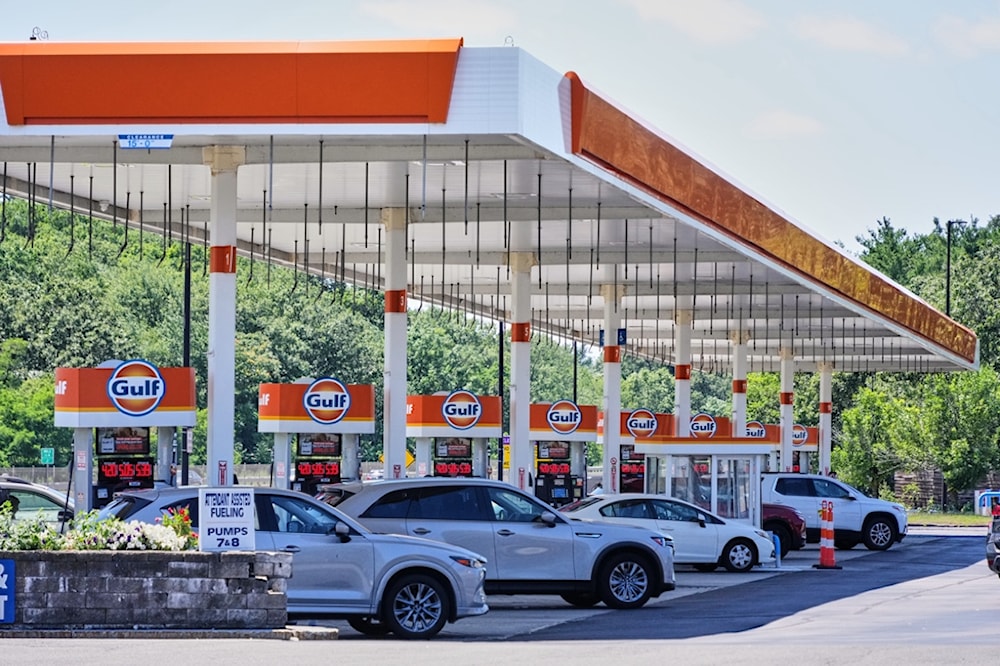
Cars line up at the pumps of a Gulf Oil station on the Massachusetts Turnpike near Boston on Sunday, July 19, 2026. (AP Photo/Gene J. Puskar)
US gasoline and diesel prices are set for further increases as disruptions to global oil supplies caused by the US war on Iran deepen, with analysts warning that the latest damage to Saudi Arabia’s oil infrastructure could prolong the energy shock.
The national average for regular gasoline reached $4.44 per gallon on September 17, according to AAA, while diesel climbed to a record $6.40. California recorded an average diesel price of $8.35.
The latest increases come as damage to Saudi Arabia’s 1200 km (745-mile) East-West pipeline threatens to further restrict crude exports, while oil shipments through the Strait of Hormuz remain below pre-war levels.
Read more: Trump weighs renewed large-scale attacks on Iran: Axios
US fuel prices climb as oil disruption deepens
AAA data show that the national gasoline average has risen 16 cents in a week to $4.44, more than $1 above its level a year earlier. Diesel has risen even more sharply, reaching a new record.
The price increases have been particularly pronounced in parts of the US Midwest. According to AAA figures cited in the source report, gasoline prices rose by 25 cents per gallon in Iowa, 23 cents in Wisconsin, and 22 cents in Michigan between Wednesday and Thursday.
The surge comes as crude oil prices remain around $100 per barrel, with continued disruption around the Strait of Hormuz contributing to volatility in global energy markets.
Analysts cited in the report expect another round of increases as wholesale costs work their way through the US fuel market.
Tom Kloza, chief energy adviser for Gulf Oil, warned of “staggering increases at the pump for both gasoline & diesel,” while GasBuddy petroleum analyst Patrick De Haan said gasoline and diesel were set for a sharp increase over the following 48 hours.
Saudi pipeline damage threatens longer supply shock
The latest pressure on oil markets follows retaliatory strikes by Yemen that damaged Saudi Arabia’s East-West pipeline, a critical alternative route for transporting crude from the kingdom’s eastern oil fields to export terminals on the Red Sea.
The pipeline has become particularly important because of the disruption to shipping through the Strait of Hormuz.
US Energy Secretary Chris Wright said the pipeline would be operational again within days. However, analysts who reviewed satellite imagery of the damage have offered a considerably longer timeline.
Andrew Lipow, a consultant specializing in oil infrastructure, told The Washington Post that images of the pipeline “show a significant amount of damage” and estimated repairs could take “a month or two.”
“They will need to replace piping, valves, all the electrical stuff,” Lipow said. “It is not like you can just go to Costco and pick that stuff up off-the-shelf.”
Satellite imagery reviewed by The Washington Post showed damage to at least two pumping stations along the pipeline. Another station approximately 130 miles east of the first was also damaged, according to the report.
The Washington Post reported that imagery showed a large plume of smoke from the western side of the second station on September 10.
Read more: From al-Mokha to Bab al-Mandab: YAF's strategic advance takes shape
Midwest fuel markets face sharper increases
The energy disruption is being compounded by refinery problems inside the United States.
An outage at the ExxonMobil refinery in Joliet, Illinois, has added pressure to fuel markets in the Midwest. The refinery normally produces approximately 11 million gallons of gasoline and diesel per day and is a major supplier to the region.
At the same time, analysts say refinery damage from the wars in West Asia and Ukraine has constrained the production of gasoline and diesel.
The combination of crude shortages, refinery disruptions and higher wholesale prices is creating conditions for additional increases at US pumps.
Liz Thomas, chief market strategist at SoFi, posted on X that diesel could reach $6.65 per gallon by election day based on worsening market trends.
We noted that diesel prices could rise to $6.65/gal by election day based on trends five days ago. Well, trends have worsened--diesel surpassed $6.26/gal already. I think the odds of a diesel export ban announcement before midterms is high. https://t.co/JmdtYKrwth pic.twitter.com/rS2TUJAbXs
— Liz Thomas (@LizThomasStrat) September 15, 2026
US motorists have already paid an estimated additional $107 billion for gasoline and diesel as a result of the war that began with US and Israeli hostilities against Iran on February 28.
Washington weighs response as energy crunch deepens
The rapid increase in fuel prices is putting pressure on the US administration and Congress to respond.
One option under discussion is restricting or banning diesel exports, with Senate Majority Leader John Thune saying he was open to considering such a measure.
“We’ll be looking at any proposal that is a viable solution, but I do think if we have the supply in this country and we’re exporting it right now that might be one way of getting at it,” Thune said, according to Bloomberg.
However, economists and energy analysts have warned that restricting exports could worsen the broader supply problem.
“The diesel problem is a refining capacity and crude quality problem layered on a war,” Tracy Shuchart, senior economist at NinjaTrader, wrote on X. “An export ban addresses neither and makes both worse.”
This headline today seems to have many frazzled: *THUNE SAYS HE IS 'OPEN TO CONSIDERING' AN EXPORT BAN ON DIESEL
— Tracy Shuchart (𝒞𝒽𝒾 ) (@chigrl) September 15, 2026
An export ban on deisel would have the OPPOSITE effect as intended, imho. Here are my thoughts on WHY:
A diesel export ban would work against its own intent for…
Read more: Oil surge, Fed rate hike bets rattle global markets


