
Trump warns of ‘very traumatic’ consequences if US-Iran talks fail
 3 Min Read
US President Donald Trump urges progress in US-Iran negotiations, warning of serious consequences and possible escalation if talks fail.
-
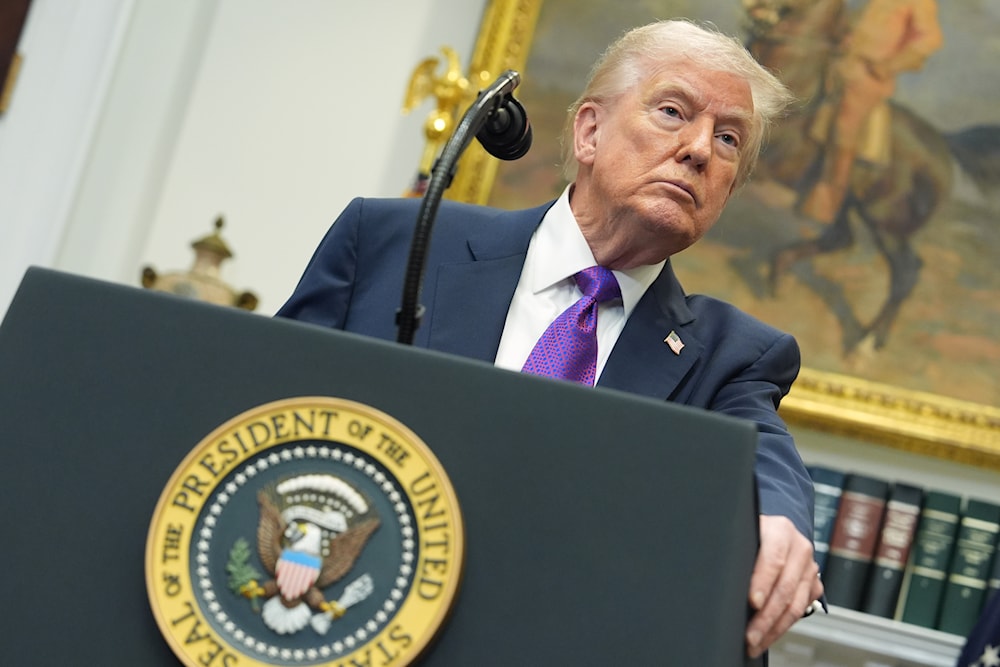
President Donald Trump listens to a question from a reporter during an event, in the Roosevelt Room of the White House, Thursday, Feb. 12, 2026, in Washington. (AP)
US President Donald Trump said on Thursday that Washington must reach a deal with Iran, warning that failure to do so would have serious consequences.
“We have to make a deal with Iran. We have to make a deal, otherwise it’s going to be very traumatic,” Trump told reporters, underscoring what he described as the urgency of negotiations between the two countries.
The US president added that he remains open to continued talks with Tehran but cautioned that the United States is prepared to escalate if diplomacy fails. “I’ll talk to them as long as I like, and we’ll see if we can get a deal with them. And if we can’t, we’ll have to go to phase two,” he said.
Trump did not elaborate on what “phase two” would entail, but described it as “very tough” for Iran, adding, “I’m not looking for that.”
During the same press conference, US President Donald Trump called out Israeli President Isaac Herzog for not giving Israeli Prime Minister Netanyahu a pardon, stating that "I think the people of Israel should really shame him. He's disgraceful for not giving it. He should give it," Trump said.
Iran-US talks continue
Iran’s Secretary of the Supreme National Security Council, Ali Larijani, said on February 11 that no date has yet been set for the next round of talks with the United States, emphasizing that “both sides are interested in continuing” the negotiations. He added that consultations in the relevant capitals are necessary to ensure the discussions are productive.
Speaking in an interview with Iranian state television from Qatar, Larijani denied reports suggesting he had conveyed a message to Washington. He clarified that Tehran had no written message for the United States, explaining that “our Omani friends held some contacts, raised certain issues with us, and provided written notes that were handed to me for follow-up and review in Tehran.”
Meanwhile, US President Donald Trump said he had wrapped up talks with Israeli Prime Minister Benjamin Netanyahu, describing the discussions as positive and focused on US-Iran negotiations as well as recent developments in Gaza.
The Trump-Netanyahu meeting comes as Washington and Tehran engage in indirect negotiations mediated by Oman in Muscat. The first round of talks, held on February 6, was described by Iranian officials as a “good start,” with discussions limited strictly to the nuclear file.
Iranian Foreign Minister Abbas Araghchi emphasized that the talks did not extend to Tehran’s ballistic missile program or its regional alliances. Reuters also cited regional diplomatic sources confirming that missile capabilities were not addressed in the Muscat discussions.
US officials, however, have signaled interest in broadening the scope of negotiations to include Iran’s missile program and regional influence: a position Tehran has firmly rejected.
Israeli media, including Channel 12, reported that Gulf states have conveyed to Trump that “Israel” risks obstructing diplomatic momentum by pushing for confrontation with Iran. The outlet also suggested that Tehran continues to shape both the venue and framework of negotiations, strengthening its regional position.


