
Trump warns Taiwan against independence push after China visit
 3 Min Read
The US president has warned Taiwan against pursuing formal independence, signaling after talks with Xi Jinping that Washington wants to avoid war.
-
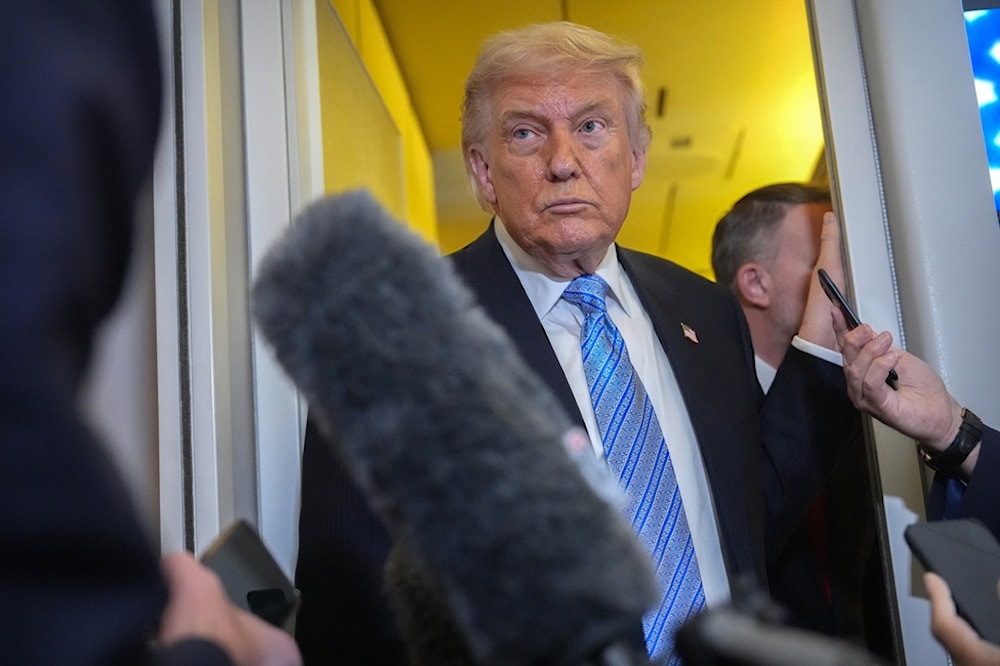
US President Donald Trump speaks to reporters aboard Air Force One, Friday, May 15, 2026, as he returns from a trip to Beijing, China (AP)
US President Donald Trump warned Taiwan on Friday against pursuing formal independence, stressing that Washington does not want to encourage steps that could provoke a military confrontation with China.
Speaking in an interview with Fox News' Bret Baier following discussions with Chinese President Xi Jinping in Beijing, Trump said the United States seeks to preserve stability across the Taiwan Strait rather than support moves toward official separation from China.
"We're not looking to have wars, and if you kept it the way it is, I think China's going to be OK with that," Trump said. He added that Washington was not interested in backing a declaration of independence by Taipei.
"But we're not looking at somebody saying, 'let's go independent because the United States is backing us,'" the US president stated.
Taiwan arms tensions
The comments followed two days of high-level meetings in Beijing that exposed major differences in how Washington and Beijing view the future of US-China relations, despite both sides publicly describing the summit as constructive.
According to Chinese and Western reports, Xi repeatedly stressed during the talks that Taiwan remains "the most important issue" in relations with the United States and warned that mishandling the matter could push the two countries toward confrontation.
The Taiwan issue was further complicated by discussions surrounding a proposed $14 billion US weapons package for Taipei, reportedly one of the largest arms sales ever considered for the island. Reuters previously reported that the package could include advanced missile defense systems and other military equipment aimed at strengthening Taiwan’s deterrence capabilities.
Ahead of the summit, Beijing publicly warned Washington against proceeding with additional arms transfers to Taiwan, with Chinese officials describing the island as "the core of China’s core interests."
Trump later confirmed aboard Air Force One that arms sales to Taiwan had been discussed directly with Xi during the meetings and said he would decide "over the next fairly short period of time" whether to move forward with the package.
At the same time, Trump declined to clarify whether the United States would militarily defend Taiwan in the event of a conflict with China, saying only, "I’m not going to say that. There’s only one person that knows that and you know who it is? Me."
Beijing-Washington divide
The summit agenda extended beyond Taiwan and included discussions on the war on Iran, maritime security in the Strait of Hormuz, trade disputes, fentanyl trafficking, artificial intelligence, and possible Chinese purchases of US aircraft and energy products.
China considers Taiwan part of its territory under the "One China" principle and has repeatedly condemned US military and political engagement with Taipei as interference in its internal affairs.
Although Washington officially recognizes the "One China" policy, it continues to maintain unofficial relations and defense cooperation with Taiwan, supplying the island with arms, a position Beijing views as one of the most dangerous flashpoints in US-China relations.
Read more: Trump claims Xi agreed to buy soy, energy and 200 Boeing jets


