
Trump was warned US war on Iran would strengthen its leadership
 3 Min Read
US intelligence warned that strikes on Iran could strengthen its leadership, not overthrow it, as Tehran continues its retaliatory operations against "Israel" and US bases in the region.
-
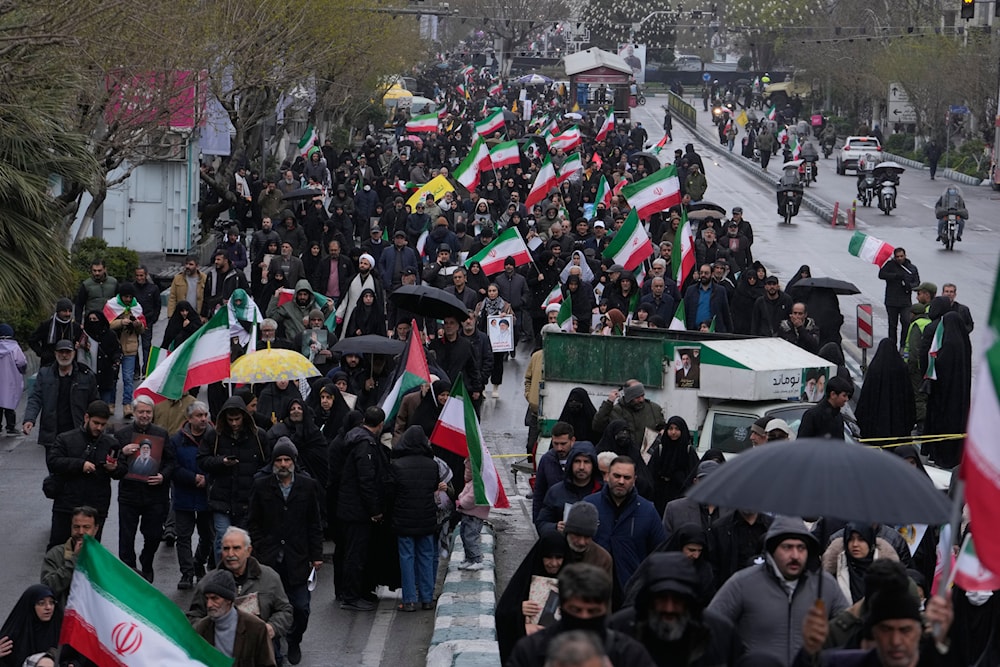
Demonstrators attend the annual anti-Israeli Quds Day rally in Tehran, Iran, on March 13, 2026. (AP Photo/Vahid Salemi)
US intelligence officials warned that US strikes on Iran could ultimately strengthen the country’s leadership, even as Washington pressed ahead with military action.
Several analysts told The Washington Post (WP) that a "weakened but more hardline" government would likely consolidate power. The assessment suggested that Iran’s leadership, under a potential new leader, Sayed Mojtaba Khamenei, would work closely with the Islamic Revolution Guard Corps (IRGC), maintaining the state’s influence.
Sources said US President Donald Trump received “very sobering briefings” ahead of authorizing the strikes, including warnings that the IRGC would likely emerge stronger. “It wasn’t just predictable,” sources told the newspaper. “It was predicted. He was told in advance.”
Despite intelligence assessments casting doubt on changing Iran's leadership, US and Israeli forces have continued their aggression, spreading across the region.
Mass protests erupt in Tehran against US–Israeli aggression
On that note, thousands gathered in Tehran’s Revolution Square on Sunday to condemn the US–Israeli aggression against Iran, expressing support for the country’s leadership and armed forces. Demonstrators waved Iranian flags and held banners denouncing the attacks while chanting slogans in support of the military and affirming national unity in the face of the ongoing aggression.
According to Al Mayadeen’s correspondent, popular rallies have been held daily in Tehran and other Iranian cities, reflecting broad public mobilization in support of the Islamic Revolution and the country’s political leadership. The correspondent noted that the demonstrations send a message of internal resilience, indicating that external pressure and military escalation have failed to fracture Iranian society.
The rallies also come amid what participants describe as renewed revolutionary momentum, driven by external threats and the continued confrontation with the United States and "Israel." According to the report, the demonstrations are viewed domestically as an extension of the battlefield, emphasizing that public mobilization is as significant as military developments during the ongoing confrontation.
Trump faces hard choices in a war he can’t exit
On a related note, almost three weeks after launching a war on Iran, US President Donald Trump is facing a stark choice: remain in the war to pursue the "highly ambitious goals" he set or attempt to withdraw from a widening confrontation that is generating powerful military, diplomatic, and economic shockwaves.
The Trump administration has quickly discovered that both options carry significant risks. Each path is fraught with consequences that Trump and his team appear to have underestimated when they brought the United States, alongside Israeli forces, into the largest war in West Asia in nearly a quarter-century.
The war has already produced growing casualties, rising oil prices, and escalating regional instability, forcing Washington to weigh whether to deepen its military campaign or seek a path toward de-escalation.
Trump could choose to continue fighting an adversary that has demonstrated a capacity to impose rapidly growing economic and strategic costs on the United States and its allies. However, prolonging the war would expose more American personnel to danger, increase financial burdens, and risk further strain on international alliances.


