
Turkey 'not target of missile' launched from Iran
 4 Min Read
The missile's debris fell in Hatay’s Dörtyol district with no casualties reported.
-
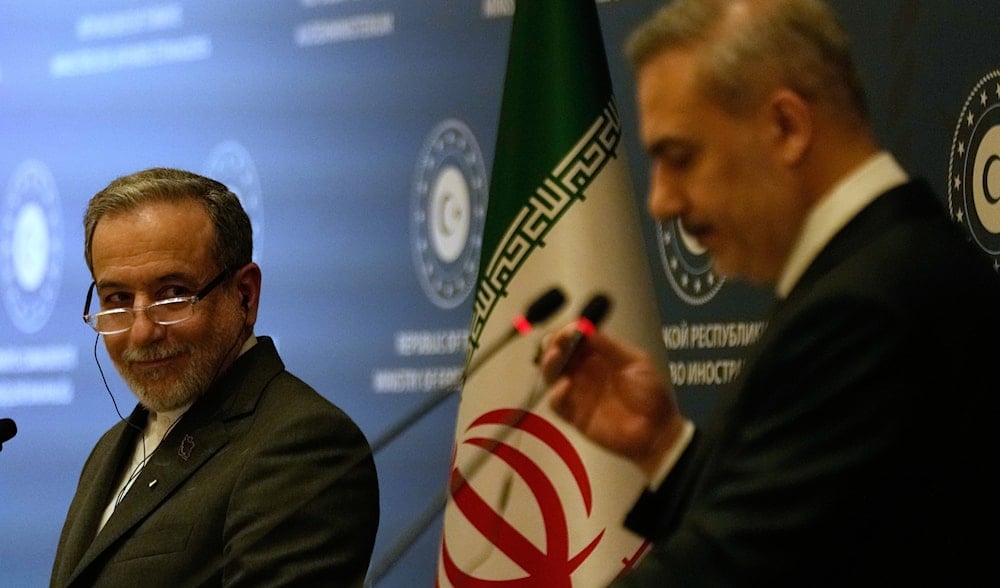
Iranian Foreign Minister Abbas Araghchi, left, looks at his Turkish counterpart Hakan Fidan during a joint press conference in Istanbul, Turkey, Friday, Jan. 30, 2026 (AP)
Türkiye “was not a target" of a missile launched from Iran that was heading toward Turkish airspace before being destroyed by NATO air defense systems, a Turkish official told AFP on Wednesday.
“We believe it aimed at a base in Greek Cyprus but veered off course,” the official said, speaking on condition of anonymity.
A missile launched from Iran and heading toward Turkish airspace through Iraq and Syria was destroyed by NATO air defence systems, Turkish officials said on Wednesday.
“A ballistic munition launched from Iran, which was detected passing through Iraqi and Syrian airspace and heading towards Turkish airspace, was engaged in a timely manner by NATO air and missile defence assets stationed in the eastern Mediterranean and rendered inactive,” the Defense Ministry said in a statement.
“The munitions fragment that fell in the Dörtyol district of Hatay province was identified as belonging to the air defence munitions that intercepted the threat after it was destroyed in the air,” the Ministry said, adding that there were no casualties.
“Any steps necessary to defend our territory and airspace will be taken decisively and without hesitation,” the statement added, reiterating that Turkey reserves "the right to respond to any hostile actions directed at our country.”
Türkiye issues warning
After the incident, Türkiye warned Tehran against any steps that could escalate the war, with Foreign Minister Hakan Fidan telling his Iranian counterpart in a phone call that “any steps that could lead to the spread of conflict should be avoided,” a Ministry source said.
Türkiye, while denying that it hosts foreign military bases on its soil, is home to long-standing NATO and US military presences, such as İncirlik Air Base and other support facilities that house US and allied forces for regional operations.
Ankara has stressed its sovereign control over all military infrastructure within its borders, amid speculation about possible Iranian targeting, but analysts say Iran avoids striking Turkish territory due to the risks of widening the conflict into a NATO member state.
Iran targets US assets in the region
Over the past days, Iran has significantly stepped up strikes against US military assets across the Middle East in retaliation for the joint US-Israeli military offensive that began with sustained air and missile attacks on Iranian territory. Tehran has launched ballistic missiles and drones at US bases and facilities in Gulf states such as Bahrain, Kuwait, Qatar, the UAE, and others where American forces are stationed, describing these sites as legitimate targets in response to what it calls aggression.
On March 4, reports indicated a suspected Iranian drone strike hit the US consulate in Dubai, and earlier this week, another attack struck a CIA station within the US Embassy in Riyadh, in addition to ongoing missile barrages against American installations in the Gulf. These actions come amid an intensified war that has also seen the closure of several US embassies in the region, evacuations of personnel, and multiple missile/drone interceptions.
Iranian officials have repeatedly warned that if the US attacks Iranian soil or military infrastructure, Tehran will retaliate not just against "Israel" but against all US military assets in the region, signaling a strategic shift toward broader confrontation with American forces. This posture reflects Tehran’s long-standing rhetoric that its missiles and drones can reach and target US bases if provoked.


