
US distances itself from Israeli actions on outset of Iran aggression
 3 Min Read
A senior Pentagon official tells the Senate that US military objectives in Iran target missile and drone programs, distinguishing Washington’s strategy from "Israel".
-
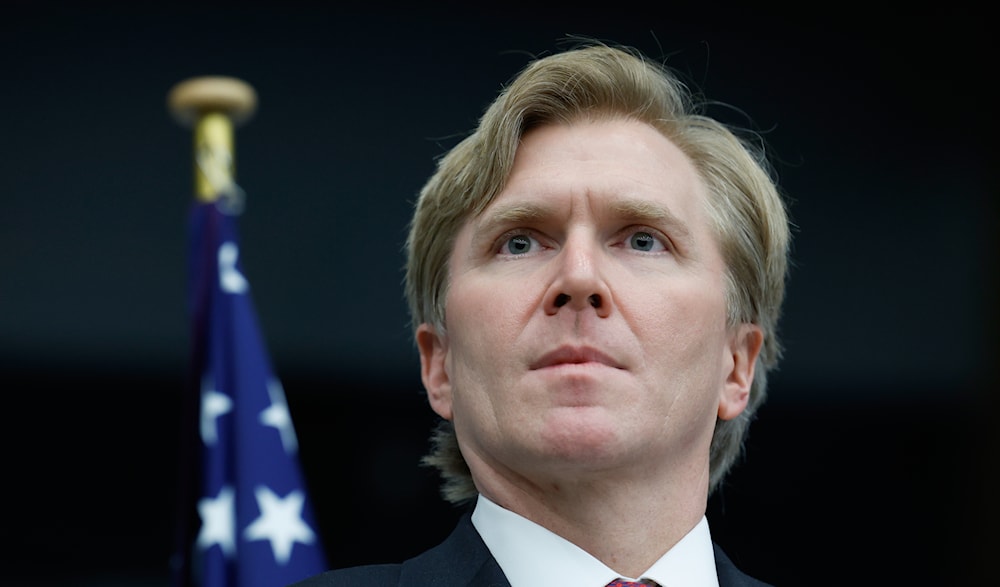
United States Undersecretary of Defense for Policy Elbridge Colby attends a meeting of the Ukraine Defense Contact Group at NATO headquarters in Brussels, Thursday, Feb. 12, 2026 (AP)
A senior Pentagon official told US lawmakers on Tuesday that Washington’s military objectives in Iran focus on dismantling the country’s missile and drone programs, drawing a clear distinction between the Trump administration’s goals and those pursued by "Israel".
Speaking before members of the US Senate, Under Secretary of Defense for Policy Elbridge Colby said the United States aims to curb Iran’s ability to “project military power” against American forces stationed across the region. He specified that US objectives include targeting Iran’s ballistic missile arsenal, its offensive drone capabilities, production infrastructure, and elements of the Iranian navy.
Colby sought to distance Washington’s strategy from actions taken in the opening hours of the aggression, which included the assassination of several Iranian commanders and the leader of Iran, Sayyed Ali Khamenei. “Those are Israeli operations,” Colby told senators, emphasizing that the US focus remains on limiting Iran’s broader military capabilities rather than conducting targeted killings.
His remarks come as lawmakers from both major parties intensify scrutiny over the Donald Trump administration’s objectives in Iran. Congress is also preparing to vote on measures that would restrict the president’s authority, reflecting growing bipartisan concerns about the scope and direction of US involvement in the escalating confrontation.
60% of Americans oppose war on Iran
Nearly six in 10 Americans disapprove of the United States’ decision to launch aggression against Iran, while a majority expect a prolonged confrontation between the two countries, according to a new poll published on March 2 by CNN and conducted by SSRS.
The survey, carried out shortly after joint US-Israeli strikes targeted Iran despite ongoing diplomatic talks, found that 59% of respondents disapproved of the initial attacks, compared with 41% who approved. Strong disapproval stood at 31%; nearly double the 16% who said they strongly approved of the action.
The poll also highlighted skepticism toward Trump’s handling of the crisis. Around 60% of respondents said they do not trust him to make the right decisions regarding the use of force, and the same proportion said he lacks a clear strategy. Nearly two-thirds (62%) believe the president should seek congressional authorization before pursuing any additional military action.
Only 27% of those surveyed felt the United States had made sufficient diplomatic efforts before resorting to force, while 39% said Washington had not tried hard enough to resolve tensions through diplomacy.
Although 44% expressed support for regime change in Iran, backing declined sharply when it came to deeper military involvement. Just 12% supported deploying US ground troops, while 60% opposed such a move. Meanwhile, 56% said a long-term military conflict between the two countries is at least somewhat likely.
The survey further indicated widespread doubts about the effectiveness of the strikes. Some 54% believe Iran will emerge as a greater threat following the US-Israeli attacks, compared with 28% who think the threat will diminish.
Partisan divisions were pronounced. Among Republicans, 77% approved of the strikes, compared with 32% of independents and 18% of Democrats. Within the Republican Party, respondents aligned with the MAGA movement expressed significantly stronger support for the president’s approach than their non-MAGA counterparts.


