
Turkey condemns Ukrainian drone strikes on tankers in Black Sea
 3 Min Read
Turkey condemned Ukraine’s reported drone attacks on tankers near its coast, warning that the expanding Black Sea strikes threaten regional maritime safety despite Ankara’s ongoing military support to Kiev.
-
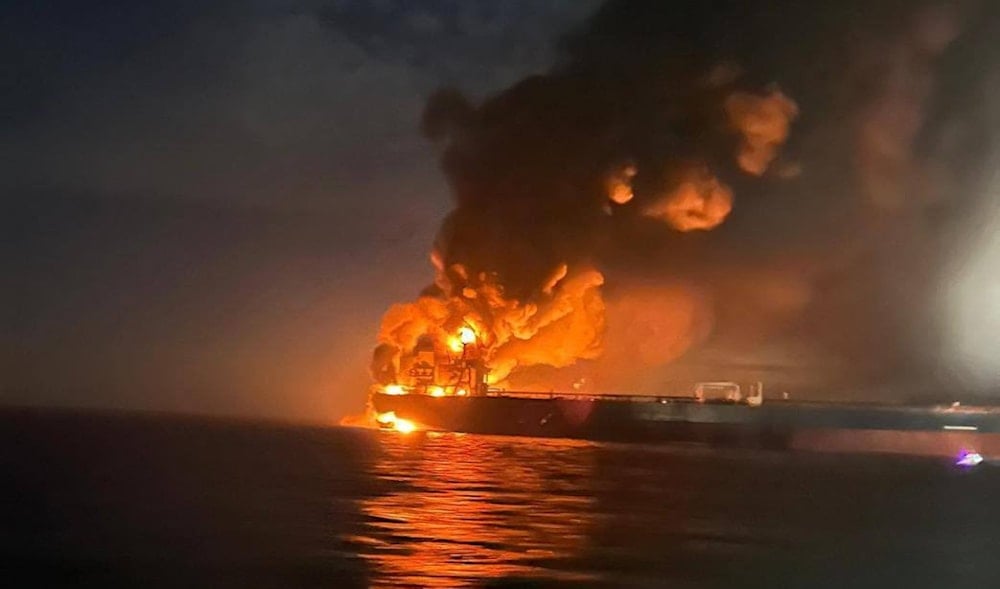
A tanker burns in the Black Sea after a reported naval-drone strike, sending flames and thick smoke into the night sky as crews attempt to contain the blaze. (Turkish maritime authorities)
Turkey has warned that the latest naval-drone attacks in the Black Sea mark a dangerous expansion of the Russia-Ukraine conflict, after The Guardian reported that Kiev acknowledged targeting two oil tankers near the Turkish shoreline.
President Recep Tayyip Erdogan addressed the nation following a cabinet meeting on Monday, stressing that the attacks jeopardize maritime safety in Turkey's exclusive economic zone.
"The conflict between Russia and Ukraine seems to threaten the safety of navigation in the Black Sea. We can in no way justify the attacks on ships in our exclusive zone on Friday [November 28]. We send all necessary warnings to all parties in connection with such situations. We are closely following the events of recent weeks aimed at ending the conflict," he said.
His response followed reporting by The Guardian, citing Ukrainian intelligence officials, confirming Kiev's involvement in the naval-drone strikes that set two tankers ablaze off Turkey's coast. The vessels, part of Russia's so-called shadow fleet used to move sanctioned oil, sustained severe damage.
Ukraine has released footage of its drones destroying civilian tankers (not Russian) with civillian crew on the Black Sea
— Chay Bowes (@BowesChay) November 29, 2025
Despite the horrific environmental impact of this insanity, it opens a new front in this War, one Russia is now fully entitled to respond in kind to pic.twitter.com/gRRmYXo50a
Strikes on energy infrastructure
The tanker incident comes amid a broader uptick in drone attacks on commercial energy facilities across the Black Sea region. Last week, a sea-drone attack hit the Caspian Pipeline Consortium (CPC) export terminal near Novorossiysk, disrupting Kazakhstan's main route for shipping oil to global markets. The strike disabled one mooring and temporarily halted loading operations.
Kazakhstan denounced the hit, describing the attack on the Russian-based but Kazakhstan-dependent terminal as "unacceptable," noting that the infrastructure handles civilian exports essential to its economy.
Throughout the year, Ukraine has launched multiple naval-drone operations targeting Russian maritime assets, including commercial tankers and facilities tied to Moscow's wartime oil revenues. These developments indicate that civilian shipping and energy corridors have increasingly become entangled in the conflict's maritime dimension.
Although Ankara has supplied Ukraine with key military hardware, including Bayraktar TB2 combat drones, Kirpi armored vehicles, and other equipment used against Russian forces, the Turkish government maintains a strict distinction between supporting Ukraine's defense and tolerating actions that could destabilize Turkey's waters or endanger regional commerce.
With tankers burning off Turkey's coast and major export terminals disabled across the sea, the risks to regional energy flows have become more visible.