
Turkish President Erdogan hints at elections as early as 2027
 4 Min Read
Turkey could hold presidential and parliamentary elections as early as 2027, with Erdogan’s remarks and new budget plans fueling speculation.
-
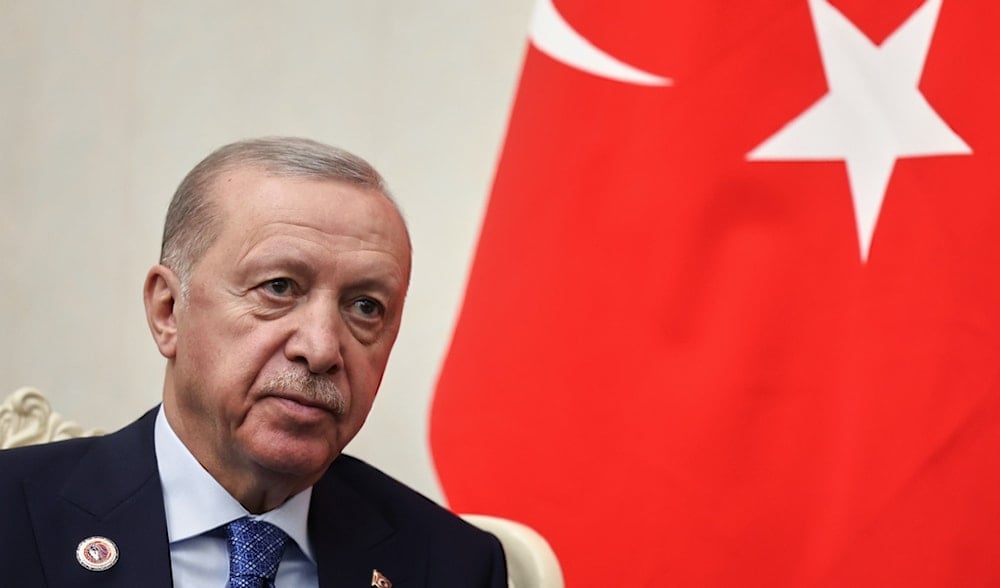
Turkish President Recep Tayyip Erdogan attends the talks with Russian President Vladimir Putin on the sidelines of the Shanghai Cooperation Organization (SCO), in Bishkek, Kyrgyzstan, on Tuesday, Sept. 1, 2026. (Vyacheslav Prokofyev via AP)
Turkey could hold early presidential and parliamentary elections as soon as 2027, according to the Turkish newspaper Ekonomim, which cited recent remarks by President Recep Tayyip Erdogan and provisions in the country’s new medium-term economic program.
Erdogan fueled speculation over an early vote last week when he told supporters in his home province of Rize that Turkey would “successfully emerge from the upcoming elections,” without specifying which elections he was referring to or when they could take place.
According to Ekonomim, the remarks have intensified debate over the possibility of bringing the elections forward from their scheduled 2028 date.
The newspaper pointed to Turkey’s updated medium-term economic program as another potential indication of preparations for an early election, particularly its budget parameters for 2027.
Erdogan recently approved the 2027-2029 medium-term program, which projects inflation falling to 9% and economic growth reaching 5% by the end of the program period. The government also raised its inflation forecast for 2026 to 28.4%, compared with the 16% projection included in its previous program.
An increase in reserve budget allocations for 2027 has also been cited as a possible sign of preparations for an early vote, Ekonomim reported.
Turkey’s next presidential and parliamentary elections are currently scheduled for 2028. Holding them earlier could potentially allow Erdogan to seek another presidential term.
What an early election could entail
Turkey’s presidential and parliamentary elections are currently scheduled for May 14, 2028. However, an early election could have major implications for Erdogan’s political future.
Under Turkey’s current constitutional system, the president is limited to two terms, although Parliament can call an early election during an incumbent president’s final term, allowing the president to seek another term. Such a move requires 360 votes in the 600-seat Parliament. Erdogan’s ruling Justice and Development Party and its allies currently control 328 seats, leaving them 32 votes short of the threshold.
The possibility of an early vote has been discussed for months. Opposition Republican People's Party (CHP) leader at the time, Özgür Özel, said in April that elections could be held by October 2027 and urged his party to prepare for a vote at any time. Erdogan and his nationalist ally, MHP leader Devlet Bahçeli, have previously rejected calls for an early election and said the vote would take place as scheduled in 2028.
Political calculations are unfolding alongside economic pressures. Turkey's new 2027-2029 Medium-Term Program projects inflation to fall to 21% in 2027, 13.5% in 2028 and 9% in 2029, while economic growth is expected to rise to 4.2% in 2027 and 4.6% in 2028. The government has nevertheless raised its 2026 inflation forecast to 28.4%, while official annual inflation stood at 31.51% in August.
The opposition's political position is another factor in the election debate. Reuters has reported that the CHP has faced significant legal and political pressure while opposition forces have become increasingly fragmented, developments that could affect the ruling bloc's calculations over the timing of any future election.
Meanwhile, a separate debate has emerged over Turkey's electoral rules. MHP leader Devlet Bahçeli has recently called for changes to the political and electoral system, reviving discussion over the presidential voting threshold and the structure of the current two-round system.


