
UK inquiry probes war crimes by British Special Forces in Afghanistan
 6 Min Read
The UK's inquiry into Special Forces operations in Afghanistan is exposing alleged extrajudicial killings by British units within a wider pattern of brutal abuses committed by Western militaries during the two-decade occupation, from unlawful executions to deadly airstrikes on civilians.
-
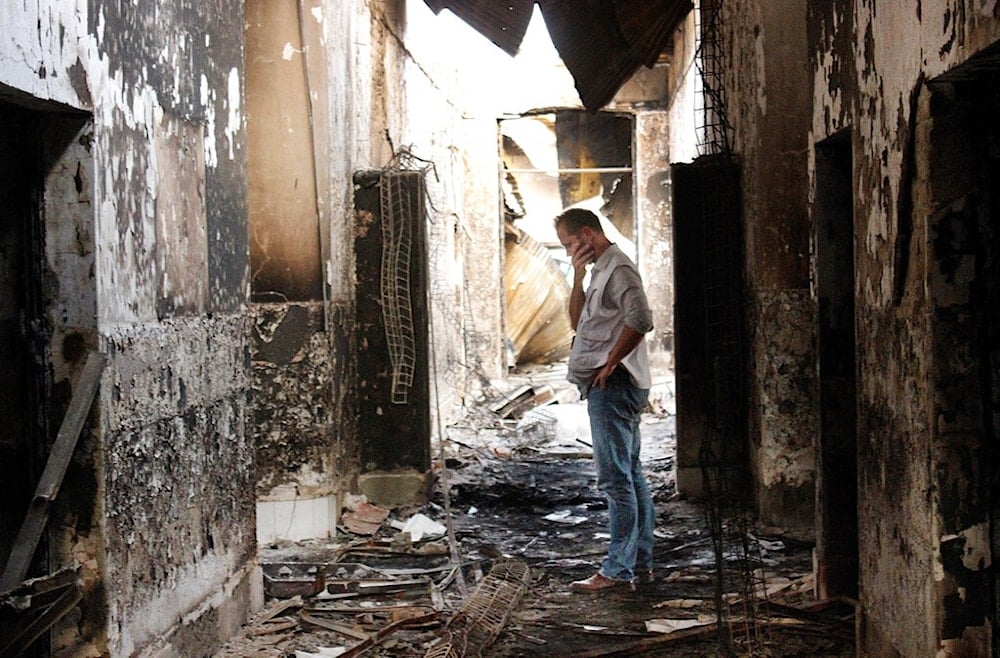
FILE - In this Friday, Oct. 16, 2015 file photo, an employee of the Doctors Without Borders hospital looks at damages after a U.S. airstrike hit in Kunduz, Afghanistan (AP Photo/Najim Rahim, File)
A statutory inquiry in London is examining whether British Special Forces executed detainees during operations in Afghanistan, according to testimony reported by Afghanistan’s Ariana News, which first detailed statements from a senior former UK officer raising alarms about suspicious killings.
The probe concerns the UK’s Special Air Service (SAS) and other units involved in “deliberate detention operations” in Helmand between mid-2010 and mid-2013, when Britain was part of the US-led coalition. The Ministry of Defence ordered the inquiry after media investigations alleged that one SAS unit killed at least 54 Afghans during night raids under suspicious circumstances.
Whistleblower says deaths and weapons did not add up
A former senior officer, known only as N1466, told the inquiry that operational reports from a unit labeled UKSF1 made him suspect unlawful killings. In many cases, the number of people classified as "enemies killed in action" was higher than the number of weapons recovered from the scene, raising questions about whether all those killed had been armed.
He said repeated explanations that detainees had "attempted to grab weapons or grenades" after being detained were improbable. According to transcripts released from a closed hearing, he concluded that some prisoners were likely shot after capture rather than killed in combat.
N1466, who served in 2011 as Assistant Chief of Staff for Operations at UK Special Forces headquarters, said he raised his concerns with the then-Director of Special Forces. Instead of a criminal investigation, he said, the response was limited to a review of tactics. He told the inquiry he regretted not going directly to the military police at the time, eventually doing so only in 2015.
A second officer, codenamed N5461, has suggested that extrajudicial killings were likely more widespread than documented raids alone would indicate.
The inquiry’s chair, Judge Charles Haddon-Cave, has said its task is to hold “those who broke the law accountable and exonerating those who acted within legal bounds.”
Alleged cover-up and culture of impunity
Testimony has also touched on internal dynamics within the UK’s Special Forces: rivalry between units such as UKSF1 and UKSF3, pressure to produce results, and frustration that detainees captured for intelligence were often freed quickly by Afghanistan’s overstretched courts.
N1466 described a “desire to keep it low-profile” at the top of the chain of command, claiming that superficial internal reviews were used to deflect scrutiny instead of opening full criminal inquiries. Other evidence before the inquiry includes allegations that IT servers linked to an earlier investigation, Operation Northmoor, were wiped, an issue now under forensic examination.
The Ministry of Defence says it is cooperating with the process and supports a full examination of past operations.
Pattern of brutality across the Western intervention
The case against British Special Forces forms part of a broader record of abuses by Western militaries during the two-decade occupation of Afghanistan.
Australian forces: A four-year inquiry led by Justice Paul Brereton found credible evidence that Australian special forces unlawfully killed 39 Afghan civilians and prisoners in 23 separate incidents, often during “catch and kill” operations in rural areas. The report described instances where prisoners were shot at close range, including so-called “blooding” practices in which junior soldiers were ordered to kill captives to gain combat experience.
German-ordered airstrike in Kunduz: In 2009, two US jets, acting on the orders of German Colonel Georg Klein, bombed two fuel tankers and a crowd of people near Kunduz. German and international investigations estimated that around 100 people, mostly civilians, were killed or injured, among them children as young as eight and twelve. The case, Hanan v Germany, reached the European Court of Human Rights, which confirmed Germany’s duty to investigate potential war crimes, even though no one was criminally prosecuted.
US strikes on hospitals and families: On 3 October 2015, a US Air Force gunship repeatedly attacked the Médecins Sans Frontières trauma hospital in Kunduz, killing 42 patients and medical staff and wounding many more, despite the facility’s coordinates being shared with all parties to the conflict. MSF called the attack a war crime and said the bombardment continued even as patients burned in their beds. The US military later apologized and issued administrative penalties to 11 personnel, but no criminal charges followed.
In one of the final US actions of the war, a drone strike in Kabul on 29 August 2021 killed 10 civilians, including 7 children, after the vehicle of aid worker Zemari Ahmadi was mistakenly identified as a terrorist threat. A Pentagon review concluded there had been no criminal misconduct, despite international outrage and repeated demands from the victims’ families for genuine accountability.
Australia’s Brereton findings, Germany’s Kunduz strike, the US attacks on a hospital and on a family car in Kabul, and now the UK SAS inquiry together expose a record in which Afghan civilians were repeatedly killed by Western forces, while meaningful justice has remained rare.
Afghans now face deportation pressure in the UK
The inquiry unfolds as Afghans living in Britain confront growing uncertainty under new Home Office policies. Rights organisations warn that Afghan asylum seekers are increasingly at risk of removal, as the government expands efforts to deport people whose claims have been rejected and restricts long-term residency pathways. Special resettlement schemes for Afghans, including the Afghan Citizens Resettlement Scheme and ARAP, have closed to new applicants, despite the worsening situation under Taliban rule.
Advocacy groups say thousands of Afghans now live in limbo, fearing deportation from the same country whose military actions are currently under investigation for killings committed on Afghan soil.
Toward a broader reckoning
For many Afghans, the detailed accounts emerging from these investigations confirm what victims and families have said for years: that foreign troops, deployed in the name of human rights and counter-terrorism, carried out killings and attacks that destroyed homes, hospitals, wedding parties, and entire families, often without those responsible ever facing a criminal court.
The UK inquiry is expected to run well into next year. Its findings will not only decide whether members of Britain’s Special Forces are referred for prosecution, but also whether one of the most secretive arms of the Western war in Afghanistan finally faces public reckoning for what was done in the villages and compounds it raided under cover of night.
Read more: SAS accused of planting weapons, executing detainees in Afghanistan


