
UK minister says Iran war has 'undoubtedly strained' relations with US
 4 Min Read
The UK Health Secretary insists that Britain made the "right decision" in not joining the US-Israeli war on Iran and criticized Trump's social media posts as "incendiary".
-
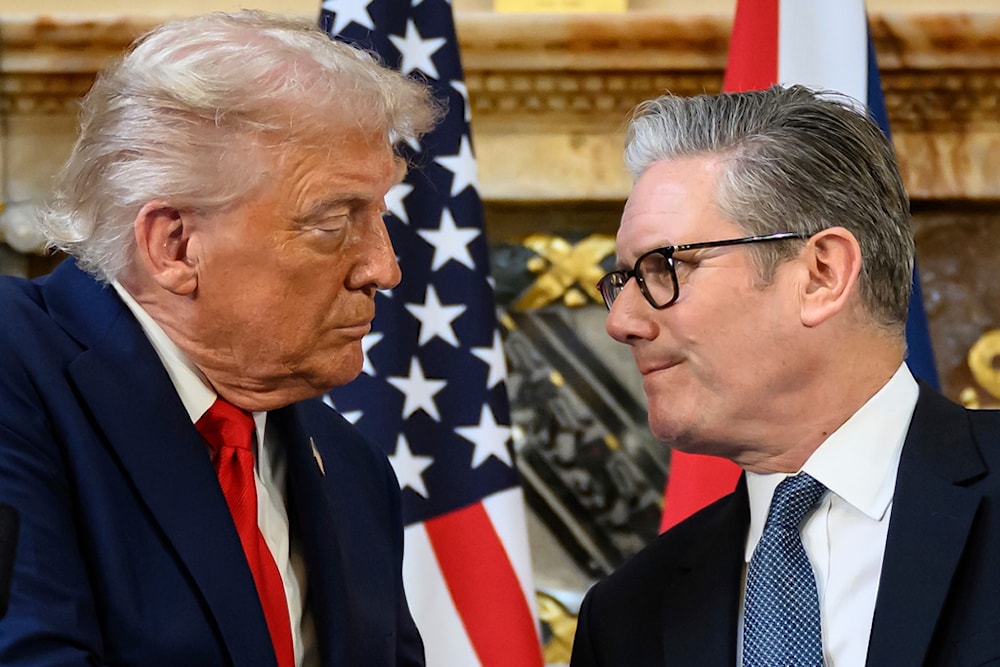
US President Donald Trump, left, and British Prime Minister Keir Starmer look at each other as they shake hands during a press conference at Chequers near Aylesbury, England, Thursday, Sept. 18, 2025 (AP)
Differences over the Iran war have "undoubtedly strained things with the Trump administration," one of Prime Minister Keir Starmer's top officials said, adding that Britain made the "right decision" in not joining the US-Israeli war on Iran.
In an interview for Sky News, UK Health Secretary Wes Streeting said he was disappointed by the failure of peace talks and criticized Trump personally.
He noted that the US president has said "incendiary, provocative, outrageous things" on social media, adding that he is "not sure it's ever clear" what Trump means in some of his posts. Trump has repeatedly criticized Britain and other European countries for staying out of a war he initiated without consulting with any of them.
"I think we've all come to learn that you judge President Trump through what he does, not just what he says," Streeting said. "And ultimately, the only way in which we're going to clear this situation up is to reach agreement with Iran, one that puts nuclear weapons beyond its ambitions and reach."
British public turns against US
Streeting's comments come as new polling shows that a majority of the British public now views the United States as a negative global force, according to a Public First poll conducted for the London Defence Conference and shared with Politico.
More than half of Brits, 53 percent, now view America as a negative force globally, up from 35 percent in December. Fewer than a third, 29 percent, now think the US plays a positive role in the world, down from 41 percent late last year.
Nearly two-thirds of British adults, 65 percent, now think the US tends to create problems for other countries, up from 46 percent in December. More than half, 57 percent, said America challenges its allies around the world, up from 41 percent in December. Almost half of Brits, 49 percent, now say the US cannot be depended upon in a crisis, a rise from 36 percent in December.
"In just five months, the UK public has entirely lost faith in their main ally, right at the moment that the world seems historically unstable," said Public First's Head of Polling Seb Wride.
A strained relationship
The polling reflects a dramatic erosion of British trust in the United States since Trump returned to the White House. His threats against Iran, his public criticism of Starmer, and his demands that allies join a war they did not consent to have all contributed to a rapid decline in America's standing with its closest partner.
For a country that has long prided itself on a "special relationship" with the US, the numbers mark a significant shift. Britain had been an outlier among comparable nations in its positive view of America as recently as December. Now, on key measures, it has caught up to its more skeptical European neighbors.
Streeting's remarks and the polling data both point to the same conclusion: the US-Israeli war on Iran has inflicted lasting damage on the transatlantic alliance. While the UK has allowed the US to use British bases for what Starmer calls "defensive" strikes, Britain has refused to become a direct participant in the offensive war. Trump has repeatedly attacked Starmer for this stance, calling him "no Winston Churchill" and accusing him of trying to "join wars after we've already won."
The Health Secretary's comments suggest that even as the UK maintains its alliance with Washington, the personal and political tensions between the two governments are not likely to fade anytime soon. And as the British public loses faith in its longtime ally, the political cost of the "special relationship" may become too high for any prime minister to ignore.
Read more: US no longer reliable ally, special ties must be dropped: UK advisor


