
UK security officials denied Mandelson clearance but were overruled
 6 Min Read
British security officials initially rejected Peter Mandelson's security clearance before his appointment as ambassador to the United States, but the Foreign Office used a rarely exercised authority to override the recommendation, according to a Guardian investigation.
-
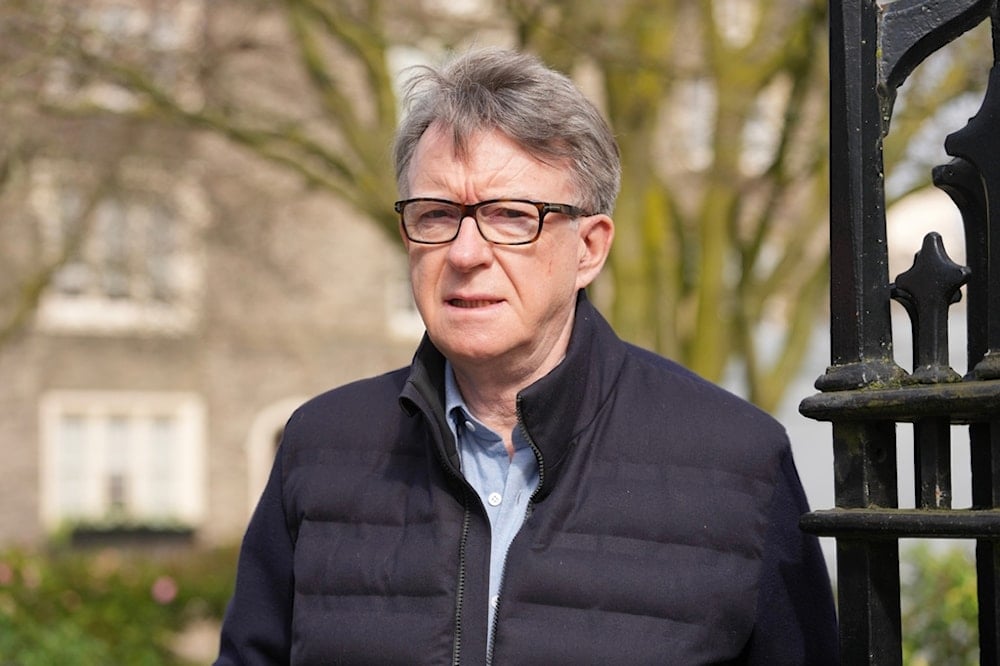
Peter Mandelson, the former U.K. ambassador to the United States, leaves his house in London, March 10, 2026. (AP)
Epstein associate Peter Mandelson failed his security vetting clearance, but the UK Foreign Office overruled the decision to ensure he could take up his post as ambassador to the United States, a Guardian investigation has revealed. Multiple sources told the outlet that Mandelson was initially denied clearance in late January 2025 after a vetting process, a highly confidential background check conducted by security officials.
Prime Minister Keir Starmer had by then announced that he would be making Mandelson the United Kingdom's chief diplomat in Washington. This announcement created a dilemma for officials at the Foreign Office, who decided to use a rarely used authority to override the recommendation from security officials.
Mandelson's failure to secure vetting approval has not previously been publicly revealed, The Guardian notes, despite intense scrutiny over his appointment and the government's release of 147 pages of documents supposedly intended to shed light on the case.
Prime Minister claims he was kept in the dark
Downing Street released a statement late on Thursday confirming The Guardian's story. The statement stressed that the prime minister had no knowledge that security officials advised Mandelson should not be given clearance, and said responsibility lay with the Foreign, Commonwealth and Development Office.
"The decision to grant developed vetting to Peter Mandelson against the recommendation of UK Security Vetting was taken by officials in the FCDO," a government spokesperson said. The statement added that neither the prime minister nor any government minister was aware that Mandelson was granted developed vetting against the advice of UK Security Vetting until earlier this week.
Once the prime minister was informed, he immediately instructed officials to establish the facts about why the developed vetting was granted in order to enact plans to update the House of Commons. Downing Street insiders said Starmer was furious about having been kept in the dark over the vetting decision.
Political opponents demand accountability
Earlier on Thursday, Conservative leader Kemi Badenoch said that if the prime minister had misled the House of Commons over Mandelson's vetting, he must take responsibility. Liberal Democrat leader Ed Davey went further, stating that if Keir Starmer has misled parliament and lied to the British people, he has to go.
The Guardian also revealed that senior government officials have been considering whether to withhold from parliament documents that would reveal Mandelson was not given vetting approval from security officials. The decision, which rests with the Cabinet Office, has not yet been taken.
Any attempt to withhold the documents from the intelligence and security committee could amount to a breach of a parliamentary motion to release all papers relating to Mandelson's appointment. In the statement released Thursday evening, the Downing Street spokesperson said the government was committed to complying with the parliamentary motion.
Questions over prime minister's judgment
The revelation that the now former ambassador was not granted clearance by UK Security Vetting, a division of the Cabinet Office that scrutinizes the background of prospective civil servants, will raise further questions about the prime minister's judgment in appointing him.
Starmer will also be pressed over whether he misled the public in remarks about the security vetting process, which he said had given Mandelson clearance for the role.
It is not known who in the Foreign Office made the decision to overrule UKSV. Sir Olly Robbins, the current permanent secretary in the Foreign Office, was the department's top civil servant in late January 2025 when the decision was made, having taken up the role earlier that month. The foreign secretary at the time was David Lammy, who is now the deputy prime minister.
Starmer's former chief of staff resigned over appointment
Starmer's then chief of staff, Morgan McSweeney, who resigned in February over his role in appointing Mandelson, could also now be asked whether he had any involvement in or knowledge of the decision to overrule UKSV's denial of clearance.
Friends of McSweeney told The Guardian that he had no knowledge of Mandelson's developed vetting process or the outcome.
The decision to overrule UKSV was made weeks before Mandelson was due to take up his post in February 2025. Seven months later, he was sacked over his relationship with convicted sex offender Jeffrey Epstein.
Starmer's public statements contradicted by revelations
At a press conference in Hastings on February 5, Starmer responded to a journalist's question by saying there had been security vetting carried out independently by the security services, which he described as an intensive exercise that gave Mandelson clearance for the role. He added that both the due diligence and the security vetting needed to be looked at again.
This appeared to partly put the blame for Mandelson's appointment on the failure of a vetting process which, according to sources, his government had overruled.
According to publicly available government documents, the UKSV developed vetting process includes a questionnaire and interviews requiring disclosure of highly private information, including about personal finances, business connections and sexual history. Developed vetting, which is a requirement even for junior civil servants in the Foreign Office, almost always ends in approval.
An outright denial, as in Mandelson's case, is rare. It is even more exceptional for a decision by UKSV to deny an applicant to then be overruled by a government department, although officials do have that power. The decision to do so in the case of Mandelson occurred over a 48 hour period in late January 2025.
A formal decision to deny him clearance was made by UKSV on January 28, 2025. UKSV informed the Foreign Office that the risk factors involving Mandelson meant that his clearance should be denied. By January 30, Mandelson was told by the Foreign Office that his security clearance had been confirmed. It is not known whether he was ever informed that UKSV had not approved his application.
Read More: Mandelson–Epstein links trigger public apology from Starmer


