
UK to ban trade with illegal Israeli settlements
 3 Min Read
Foreign Secretary Ed Miliband is set to ban UK trade in goods and services linked to illegal Israeli settlements, part of a wider policy reset.
-
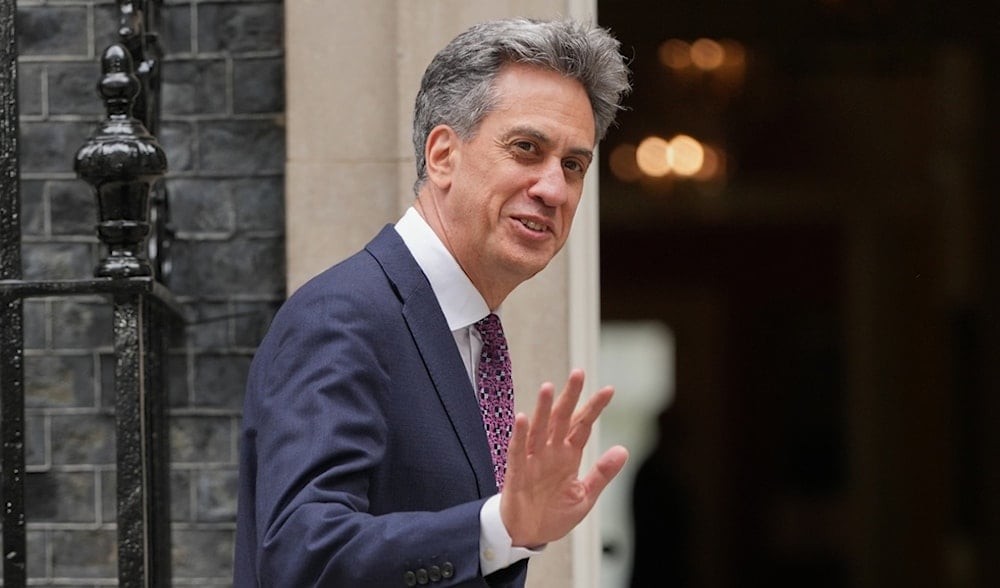
Ed Miliband, Britain's Foreign Secretary arrives for a Cabinet meeting in Downing Street in London, Tuesday, July 21, 2026. (AP Photo/Kirsty Wigglesworth)
UK Foreign Secretary Ed Miliband is set to announce a ban on trade in goods and some services linked to illegal Israeli settlements on Tuesday, as part of what he says is a broad reset of relations with "Israel."
The move is being framed as a stronger UK commitment to a "two-state solution" and to upholding international law. It also lands with strong public backing, though how effectively it can be enforced remains an open question.
New polling conducted by Opinium and published by the European Council on Foreign Relations shows that only 18 percent of UK adults oppose a ban on trade with Israeli settlements, compared with 46 percent in favor. Once undecided respondents are set aside, support rises to nearly three-quarters.
The backing cuts across the political divide, giving Miliband a stronger domestic mandate for the policy than previous UK stances on settlements have carried.
The measures would extend beyond goods to some services, including financing and advertising tied to settlement activity.
The UK already regards all Israeli settlements built on territory occupied since 1967 as illegal under international law, though this new step would make investment in them unlawful for the first time, rather than simply denying preferential treatment.
A problem the Foreign Office has already flagged
For years, the Foreign Office has resisted calls for a settlement trade ban on the grounds that it was not practically enforceable, arguing there was no reliable way to separate goods made in settlements from goods made elsewhere in "Israel". That objection has not disappeared. Miliband's announcement does not appear to include a clear answer to it, leaving open how customs authorities would verify the origin of imported goods once the ban takes effect.
Unlike some trade restrictions that can be introduced through a statutory instrument, this ban may require primary legislation. That means it would need to pass through Parliament rather than take effect through ministerial order alone, opening the door to delay, amendment, or a weaker final version than what is announced this week.
Building on earlier steps
The UK has taken smaller steps on settlements before.
Goods produced in settlements have been excluded from preferential tariffs since 2005, and the government has issued guidance warning businesses against misleading labeling and against economic activity in settlements.
This new ban goes further than either of those measures, closing gaps that businesses and Israeli settlement authorities have previously worked around.
What the reset leaves out for now
The package is not expected to include sanctions tied to Gaza aid restrictions, and it will reportedly stop short of describing Israeli actions in Gaza as genocide.
The UK has also not yet issued a formal response to the International Court of Justice's 2024 advisory opinion, which called on states to avoid aiding or assisting the occupation, though ministers have described current policy as broadly in line with it.
Total trade in goods and services between the UK and the Israeli regime reached 6 billion pounds in 2025, but there is no public breakdown yet of how much involves settlement production specifically.


