
Ukraine poll shows declining faith in NATO as security guarantee
 3 Min Read
New surveys show a sharp drop in Ukrainian confidence in NATO and the United States as security guarantors, alongside rising support for bilateral defense deals and self-reliance.
-
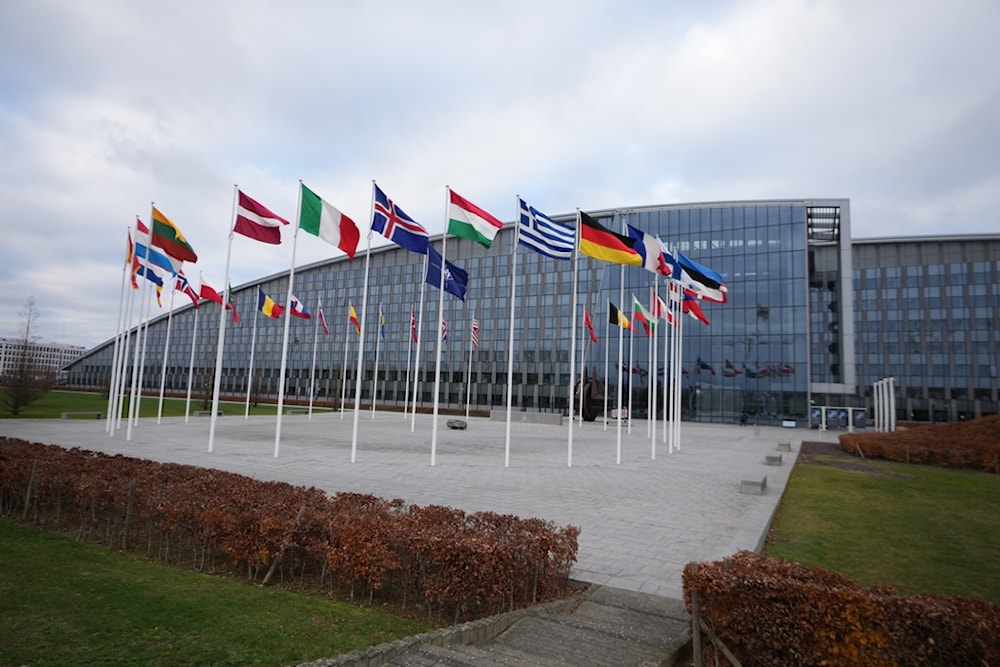
Flags flap in the wind outside of NATO headquarters in Brussels, Wednesday, Dec. 3, 2025. (AP Photo/Virginia Mayo)
Public confidence in NATO as Ukraine’s primary security guarantor has declined markedly over the past year, according to new survey results that point to growing skepticism over long-term alliance-based protection amid continued war and diplomatic uncertainty.
A poll conducted by the Ilko Kucheriv Democratic Initiatives Foundation found that 38.3% of Ukrainians now consider NATO membership the strongest guarantee of national security, down from 55.1% in December 2024. The decline comes as expectations for swift NATO accession fade and public debate increasingly shifts toward alternative security arrangements.
At the same time, support for other models has increased. The share of respondents who believe bilateral strategic defense agreements with several NATO member states could adequately protect Ukraine rose to 15.4%, compared with 9% a year earlier. Another 7.2% said Ukraine should rely primarily on its own armed forces and domestic defense industry, more than double last year’s figure.
Recalibrated security expectations
The shift appears to reflect growing doubts over the immediacy and feasibility of NATO membership, rather than outright opposition to the alliance. While support for joining NATO remains broad, the prolonged absence of a concrete accession timeline, along with mixed signals from Western capitals on long-term commitments, has led many Ukrainians to prioritize arrangements perceived as more tangible or immediately enforceable.
These attitudes have evolved alongside visible divisions within NATO itself. In recent weeks, alliance officials have acknowledged that unanimity on Ukraine’s membership remains out of reach, with several member states continuing to withhold consent. Separately, debates inside the European Union over strategic autonomy and reliance on the United States have underscored broader uncertainty about the future architecture of European and transatlantic security, particularly in relation to Ukraine.
Eroding confidence
Public trust in Western partners has also weakened. A separate survey by the Kiev International Institute of Sociology showed confidence in the United States fell to 21%, while trust in NATO declined to 34% over the past year. Analysts link this erosion to delays in military assistance, uncertainty surrounding future aid packages, and diplomatic discussions increasingly centered on security guarantees outside formal NATO membership.
The surveys were conducted through face-to-face interviews with 2,000 adult Ukrainians between December 5 and 16, with a margin of error not exceeding 2.3%. The findings suggest a broader recalibration of public expectations, as Ukrainians increasingly weigh self-reliance and bilateral guarantees alongside traditional alliance frameworks amid a protracted conflict.
Read more: US mulls 'NATO-style' security guarantees for Ukraine: Axios


