
Ukraine signaled openness to territorial compromise in US-led talks
 3 Min Read
Ukraine privately signaled readiness to consider territorial compromises during US-led talks in March, even as fighting continues and diplomatic pressure mounts for a negotiated settlement with Russia.
-
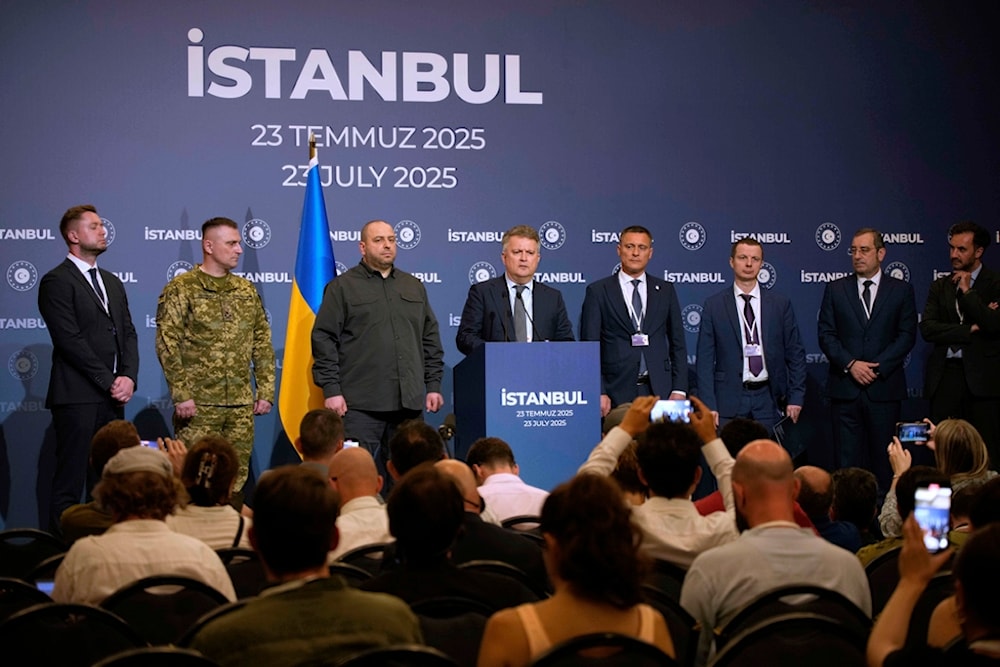
Ukraine's Deputy Foreign Minister Serhii Kyslytsia, fourth left, talks to journalists during a news conference following a meeting between Russian and Ukrainian delegations for peace talks at Ciragan palace, in Istanbul, Turkey, Wednesday, July 23, 2025. (AP Photo/Emrah Gurel)
Ukrainian officials privately indicated openness to territorial compromises during talks with senior US officials earlier this year, a disclosure that comes as diplomatic pressure intensifies on Kiev to explore a negotiated exit from the war, according to reporting by The New York Times.
The discussions took place on March 11 in Jeddah, Saudi Arabia, and brought together US Secretary of State Marco Rubio, then-National Security Advisor Mike Waltz, and Ukraine’s National Security and Defense Council chief Rustem Umerov, the report said.
During the meeting, Rubio asked the Ukrainian delegation to define the "absolute bottom lines" required to ensure the continuity of Ukraine as a state. Waltz then reportedly requested that Umerov "start drawing" acceptable borders on a map placed on the table.
According to the report, Umerov traced Ukraine’s northern borders with Russia and Belarus before following the current lines of contact between Ukrainian and Russian forces along the front. He also circled the Zaporozhye Nuclear Power Plant and the Kinburn Spit, a strategic Black Sea access point. A US official cited by the newspaper said the exercise marked the first time Kiev had accepted the prospect of relinquishing nearly 20 percent of the territory it claims.
The talks also touched on the status of Crimea. According to the report, the US delegation said that only Washington would recognize Crimea as part of Russia, while Ukraine and European states would not be expected to do so. When asked whether Kiev would "walk away" from negotiations over the issue, Ukrainian officials reportedly answered "no," a senior US official said.
Ceasefire pressure builds
The revelations come amid intensified diplomatic activity in recent weeks. Western media have reported growing US pressure on Kiev to clarify its negotiating position, as Washington explores a broader ceasefire framework that could freeze the conflict roughly along existing battle lines. Ukrainian President Volodymyr Zelensky has publicly rejected formal territorial concessions but has signaled flexibility on ceasefire mechanics, including the possibility of a demilitarized zone in eastern Ukraine as part of a wider security arrangement.
At the same time, discussions have reportedly expanded to include long-term security guarantees, with Western officials floating ideas ranging from bilateral defense commitments to a limited foreign troop presence aimed at deterring renewed hostilities.
Competing claims
Moscow maintains that the Donetsk and Lugansk People’s Republics, along with the Kherson and Zaporozhye regions, became part of the Russian Federation following referendums held between September 23 and 27, 2022. President Vladimir Putin formalized the move by signing accession treaties on September 30, 2022, steps rejected by Ukraine, European states, and most of the international community.
While none of the reported discussions amount to a formal shift in Ukrainian policy, they underscore a widening gap between public positions and private diplomacy, as the war grinds on and external actors push for a negotiated settlement under increasingly constrained conditions.
Read more: Zelensky says ready to meet with Putin 'in any format'


