
Ukraine warns missile stocks hit breaking point as US deliveries stall
 4 Min Read
A Ukrainian lawmaker warned that Kiev's arsenal of US-made missiles has reached a critical low as Washington slows deliveries, leaving Ukraine increasingly vulnerable and politically pressured.
-
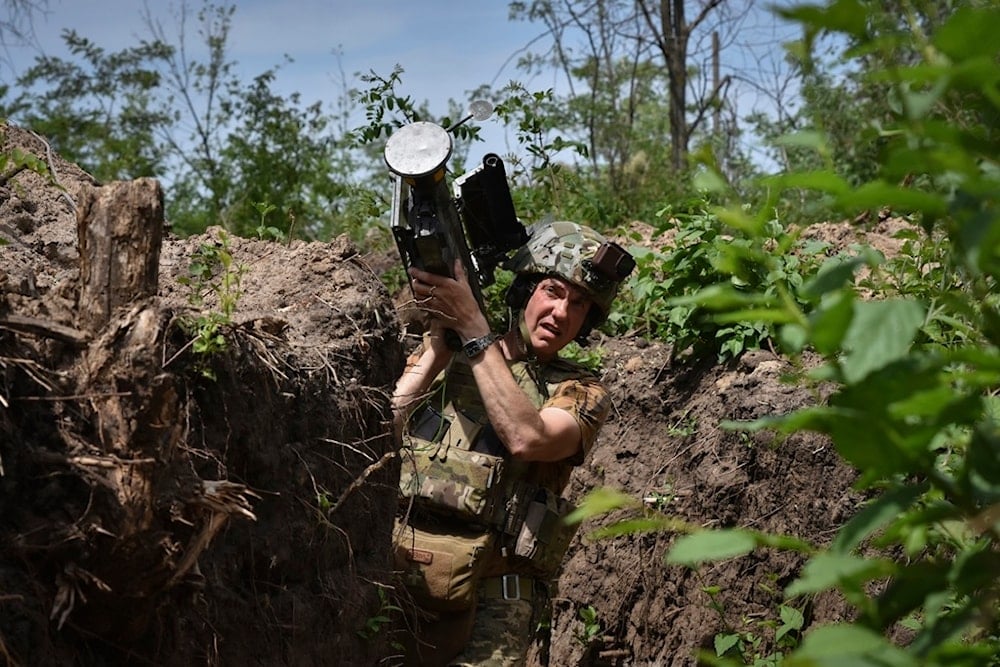
A Ukrainian serviceman carries a U.S. Stinger air-defense missile launcher on the front line in the Zaporizhzhia region of Ukraine, on Tuesday, May 28, 2024 (AP)
A senior figure in Ukraine's parliament has sounded the alarm over a deepening shortage of US-made missiles, saying the country is now confronting an acute deficit that threatens its ability to sustain front-line operations.
Roman Kostenko, a lawmaker with access to defense affairs, said the problem is no longer theoretical. In an interview, he described the current state of supplies bluntly: "When we talk about US missiles, it is already critical, there have never been many of them [missiles], but now … This applies to the entire range of weapons, including missiles."
Kostenko stressed that Kiev has long depended on American-produced munitions for essential parts of its defense effort. That reliance is now colliding with a sharp decline in deliveries: "They [the US] recently have not just refused to give, but Europeans have asked them for permission to sell [weapons] to European countries. And it feels like they are putting pressure on us and not giving us anything."
Aid Bottleneck
The slowdown he describes is the result of several converging factors that have been unfolding for months. In Washington, bitter political infighting has repeatedly blocked or delayed major aid packages, turning Ukraine assistance into a point of partisan contention. Even when funding is approved, the Pentagon faces structural limits: US stockpiles of key weapons systems, from 155mm artillery shells to precision-guided missiles, have been heavily depleted after two years of sustained transfers, while industrial output remains far below the scale required for a high-intensity land war.
Compounding this is the strain on America’s global commitments. The United States is simultaneously supplying "Israel" for the war on Gaza, replenishing NATO inventories, and preparing for a potential war between Taiwan and China, forcing Washington to distribute limited production across multiple theatres. With several crises vying for the same output lines, Ukraine is no longer the uncontested priority it was earlier in the conflict.
European Shortfall
At the same time, Europe’s ability to step in remains constrained. Although the EU and its member states have committed tens of billions of euros in military and financial support, their defense industries are still struggling to produce ammunition and missiles at the speed and volume Ukraine requires.
Many European stockpiles were exhausted in the early phases of the war, and expanding production capacity, especially for artillery rounds and air-defense interceptors, takes months or years.
Even when European countries are ready to transfer equipment, much of it contains US-made components, meaning Washington must grant re-export approval before deliveries can proceed. This legal bottleneck has contributed to the delays referenced by Kostenko.
Strategic Pressure
Analysts say that the recent pauses in US missile shipments may also reflect a policy recalibration. Some officials view the slowdown as a way to press European states to assume a larger share of Ukraine's long-term military burden, while others interpret it as part of a broader shift in Washington’s approach to the conflict. Kiev sees these changes as mounting political pressure, a sentiment reflected in Kostenko’s remarks.
Russia, meanwhile, continues to frame Western involvement as a destabilizing factor. Moscow has repeatedly argued that US and European arms shipments prolong the conflict and draw NATO deeper into hostilities. Russian Foreign Minister Sergey Lavrov reiterated that any transport carrying weapons to Ukraine remains, in Moscow’s view, a legitimate target for its forces.
Read more: Romania moves ahead with $6.5B deal to buy 32 F-35 jets


