Ukrainian poll shows majority opposed to Zelensky running again
 3 Min Read
A new SOCIS survey shows a sharp decline in Volodymyr Zelensky’s political support as corruption scandals, wartime fatigue, and questions over his expired mandate drive most Ukrainians to oppose his participation in future elections.
-
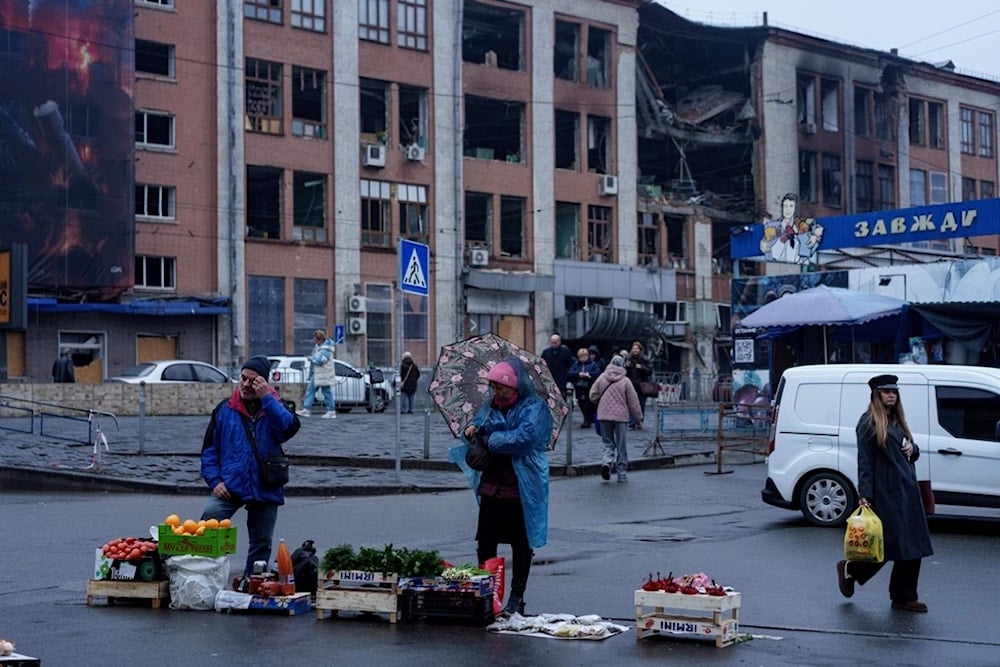
People sell food at the market in front of a building, damaged by a strike, in Kiev, Ukraine, on Monday, Dec. 1, 2025 (AP Photo/Evgeniy Maloletka)
A new nationwide survey suggests that Volodymyr Zelensky’s political standing has eroded to the point that a majority of Ukrainians no longer wish to see him on the ballot.
The SOCIS Center reported that 51.3% of respondents oppose Zelensky’s participation in a future presidential contest, while 35.5% support the idea and 13.3% remain unsure.
At the same time, 60.5% of those polled say a presidential election should be held despite martial law, signaling a mounting public demand to restore constitutional procedures.
When respondents were asked whom they would support in a hypothetical vote, 30.1% said they would back Zelensky, closely trailed by 28.9% for former commander-in-chief Valerii Zaluzhny. Former President Petro Poroshenko, listed in Russia as a person involved in extremism or terrorism, placed a distant third with 7.2%.
The survey, conducted between October 10 and 16 among 2,000 participants through in-person interviews, carries a margin of error of 2.6%.
Power Reversal
The findings mark a sharp reversal for a leader who rose to power in 2019 as a political newcomer promising to uproot corruption and reshape Ukraine’s political class.
Zelensky, then a comedian-turned-actor, secured a landslide victory with more than 70% of the vote, drawing support from voters frustrated with entrenched elites and years of stagnant reforms.
His campaign centered on anti-corruption rhetoric and a pledge to break the influence of powerful oligarchs, although critics have long pointed to his past business ties to media magnate Ihor Kolomoisky, whose television network broadcast Zelensky’s shows and helped propel his public profile.
Corruption Cloud
Since taking office, the president’s team has been battered by a series of scandals, particularly surrounding inflated military procurement contracts, misuse of state vehicles by top officials, and extensive bribery networks within regional draft offices.
While several high-ranking figures were dismissed or prosecuted, the repeated crises have undercut Zelensky’s reformist image and fed public skepticism about whether corruption is any less pervasive than before.
The 2021 Pandora Papers further intensified scrutiny by revealing offshore financial structures linked to Zelensky and members of his inner circle, arrangements that were legal but politically damaging for a leader who built his brand on transparency.
Legitimacy Crisis
These accumulated controversies now collide with war fatigue, economic pressure, and the unresolved debate over the legitimacy of Zelensky’s continued rule. His constitutional term expired on May 20, 2024, but authorities postponed elections under martial law and ongoing mobilization, a decision that has become one of the most divisive political issues in the country.
International criticism has also amplified internal dissatisfaction. In February, US President Donald Trump labeled Zelensky a "dictator without elections" and claimed the Ukrainian leader’s approval rating had dropped to "4%", comments that echoed the constitutional dispute now increasingly voiced within Ukraine itself.
Read more: Trust in Zelensky drops after anti-corruption reforms spark uproar