
UN, Afghanistan discuss Doha engagement process in Kabul talks
 3 Min Read
Afghan Foreign Minister Amir Khan Muttaqi met UN political chief Rosemary DiCarlo in Kabul to review progress under the UN-led Doha process and discuss coordination, economic stabilization, migrant returns, and conditions for Afghanistan's gradual reintegration into the international community.
-
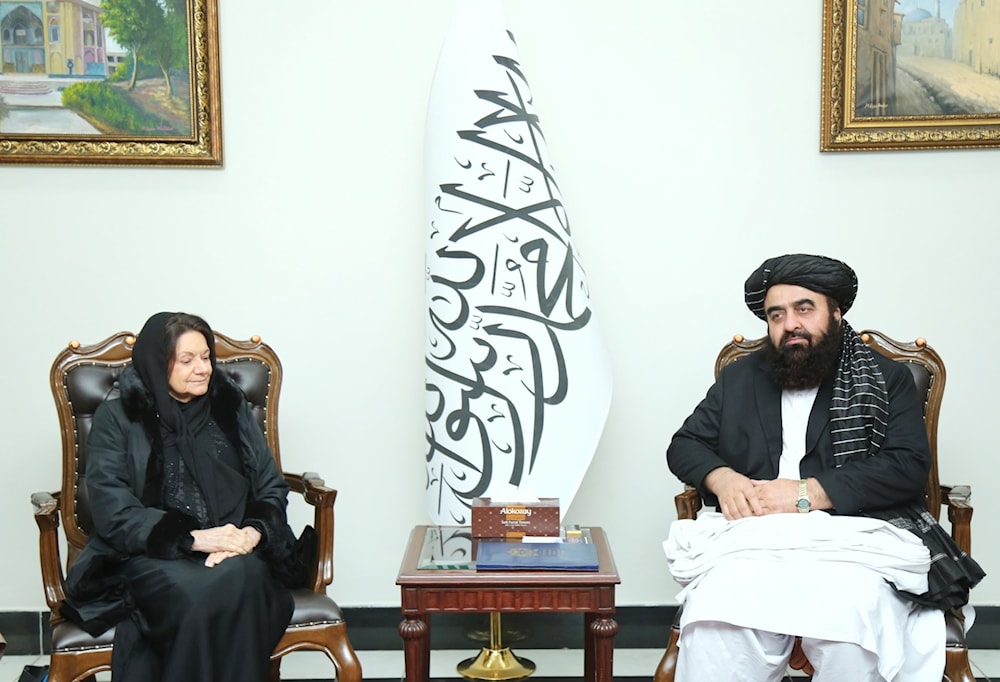
Afghanistan’s acting Foreign Minister Amir Khan Muttaqi meets with UN Under-Secretary-General for Political and Peacebuilding Affairs Rosemary DiCarlo in Kabul, as talks continue on the UN-led Doha process aimed at managing international engagement with Afghanistan’s de facto authorities (Agencies)
Afghanistan’s acting foreign minister Amir Khan Muttaqi held talks in Kabul on Saturday with Rosemary DiCarlo, the United Nations under-secretary-general for political and peacebuilding affairs, amid continued international efforts to define a framework for engagement with Afghanistan’s de facto authorities.
According to a statement released by the Afghan Foreign Ministry, the discussions focused on enhancing coordination between the Islamic Emirate of Afghanistan and the United Nations, alongside consultations linked to the UN-led Doha process.
“The meeting discussed ways to strengthen coordination and cooperation between the Islamic Emirate of Afghanistan and the UN, as well as consultations related to the Doha talks. Muttaqi briefed the UN delegation on the political and security situation in Afghanistan, efforts to stabilize the economy, and managing the flow of returning migrants, describing the Islamic Emirate's recent measures as positive,” the foreign ministry said in a statement.
The ministry said the two sides agreed on the need for sustained dialogue and expressed optimism about expanding engagement going forward.
“Both sides expressed hope for more frequent engagement and deeper cooperation in the future,” the statement said.
Conditional Doha Engagement
DiCarlo’s visit comes as the United Nations continues to advance the Doha process, a UN-coordinated mechanism intended to manage international engagement with Afghanistan through a phased and conditional approach. The process brings together the UN and international stakeholders to coordinate policy toward Kabul without granting formal diplomatic recognition to the Islamic Emirate.
Under the framework, Afghan authorities are encouraged to make progress on inclusive governance, the rights of women and girls, broader human rights protections, and cooperation on counterterrorism and counternarcotics. In return, the international community has indicated that steps could be taken toward easing sanctions, reducing financial restrictions, and expanding Afghanistan’s access to the global system.
Afghan officials have repeatedly called for relief from banking constraints and economic sanctions, arguing that restrictions exacerbate humanitarian pressures and hinder efforts to stabilize the country’s economy, particularly as thousands of Afghan migrants are being returned from neighboring states.
Doha Engagement Contested
At the same time, the Doha process remains contentious. Human rights organizations and several governments have criticized the UN track for proceeding despite the continued exclusion of women from public life and education in Afghanistan, warning that engagement risks legitimizing policies that remain unchanged. The absence of Afghan women from formal Doha discussions in previous rounds drew sharp criticism, intensifying scrutiny of the UN’s approach.
Despite these concerns, UN officials argue that structured engagement remains necessary to address security, humanitarian, and economic challenges, and to maintain a unified international position toward Afghanistan.
Saturday’s meeting underscored the cautious balancing act underway, as both sides seek to advance dialogue while core disagreements over rights, governance, and international legitimacy remain unresolved.
Read more: Trump criticized for dismissing NATO and British role in Afghanistan


